
Stablecoins have become an essential part of the cryptocurrency ecosystem, allowing users to send and store digital dollars without the price volatility of many cryptocurrencies.
While USDT (Tether) is the world’s largest stablecoin, some users are looking for alternatives that offer greater privacy and decentralization. One of those alternatives is fUSD, a privacy-focused stablecoin built on Zano, a privacy-first blockchain designed for confidential transactions.
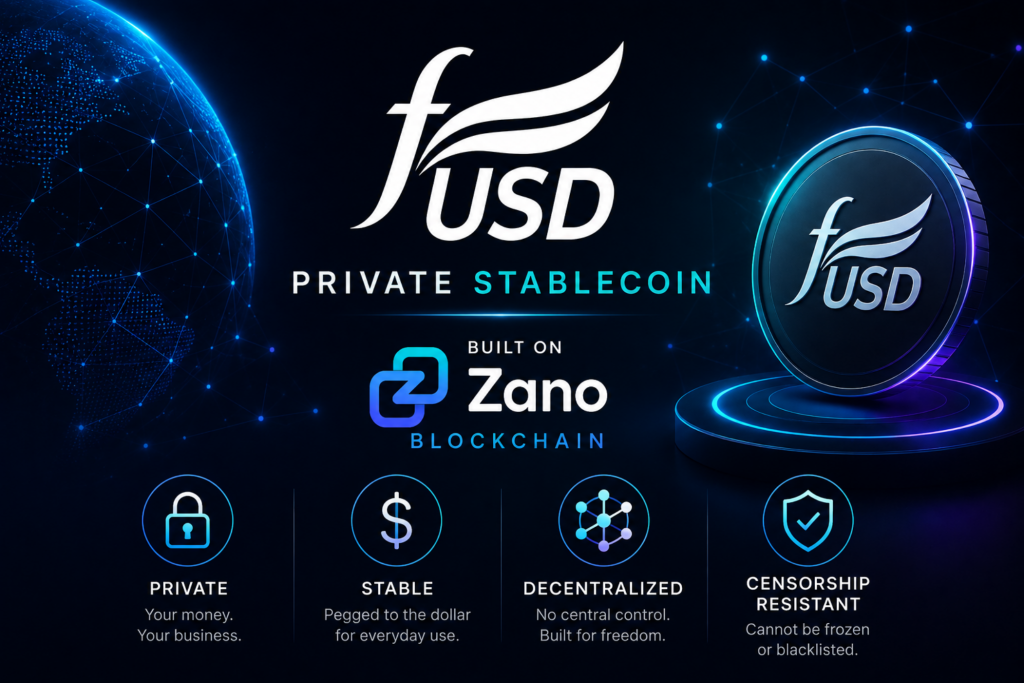
Table of Contents
1. What Is fUSD?
fUSD (Freedom Dollar) is a decentralized stablecoin built on the Zano blockchain.
Its goal is to provide a digital dollar that combines price stability with the privacy and censorship resistance that Zano is known for.
According to the Freedom Dollar project, fUSD is designed to be:
- Private
- Decentralized
- Censorship-resistant
- Suitable for peer-to-peer digital payments
Unlike centrally issued stablecoins, fUSD is designed so that no single company controls user balances or can freeze individual wallets.
2. Why Was fUSD Created?
Most of today’s leading stablecoins are issued by centralized companies.
For example, Tether, the company that issues USDT, can freeze USDT held in specific wallet addresses. This capability is typically used to comply with legal orders, enforce sanctions, or help prevent the movement of funds linked to fraud, theft, or other illicit activity.
According to Freedom Dollar’s USDT Freeze Tracker, Tether has frozen more than $4.536 billion worth of USDT held in blacklisted wallet addresses to date.
This does not mean all USDT is frozen or that every USDT holder is affected. Instead, it highlights that USDT is a centrally issued stablecoin, meaning its issuer has the authority to freeze tokens held in specific wallet addresses when required.
Freedom Dollar developed fUSD as a privacy-focused, decentralized alternative built on the Zano blockchain for users who value financial privacy, censorship resistance, and greater control over their digital assets.
3. How Does fUSD Compare to USDT?
Although both are designed to maintain a stable value, they are built with different priorities.
- Issued by a centralized company.
- Supported by most major exchanges and trading platforms.
- Tether can freeze USDT held in specific wallet addresses when required.
- Built on the Zano blockchain.
- Designed with privacy as a core feature.
- Aims to be censorship-resistant.
- Does not rely on a central issuer to control user funds.
Neither approach is inherently better—they simply serve different use cases. Some users prioritize liquidity and widespread adoption, while others prefer greater privacy and decentralization.
4. Who Is fUSD For?
fUSD may appeal to users who:
- Want a privacy-focused stablecoin.
- Prefer decentralized financial tools.
- Value censorship resistance.
- Are active within the Zano ecosystem.
As the Freedom Dollar project develops, it aims to provide a stable digital currency that aligns with Zano’s privacy-first approach to blockchain technology.
5. Looking Ahead
Stablecoins are likely to remain an important part of the cryptocurrency ecosystem, but not every stablecoin is built the same way.
USDT continues to be the most widely used stablecoin, offering deep liquidity and broad adoption. At the same time, its centralized design means Tether can freeze USDT held in specific wallet addresses when necessary.
For users who want a different approach, fUSD on the Zano blockchain offers a privacy-focused and decentralized alternative. As the project continues to evolve, it gives users another option for storing and transferring value while emphasizing privacy, censorship resistance, and greater control over their digital assets.
To learn more, visit:
Disclaimer: ZanoNews.com is an independent news and information website. This article is for informational purposes only and should not be considered financial, investment, or legal advice.
2 thoughts on “What Is fUSD? Zano’s Private Stablecoin”
Comments are closed.