How Zanoโ€™s Hybrid Consensus Keeps Its Network Secure ๐Ÿ•Š๏ธ ๐Ÿ”

How does a blockchain decide which transactions are valid? The answer is consensus. It is the process that allows thousands of computers to agree on the same version of a digital ledger.

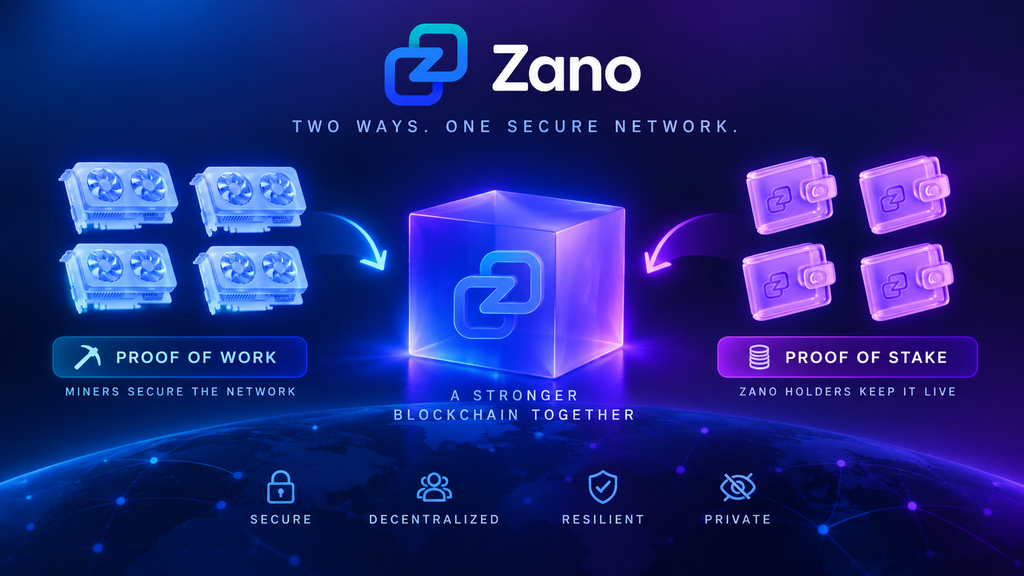
Zano uses a combination of Proof of Work (PoW) and Proof of Stake (PoS) to help maintain network security, resilience, and participation.

Check out the video here ๐ŸŽฅ ๐Ÿ‘‡

Table of Contents

  1. What Is Blockchain Consensus?
  2. How Zanoโ€™s Hybrid Model Works
  3. Proof of Work: The Mining Side
  4. Proof of Stake: The Staking Side
  5. Why Combine Both Methods?
  6. Key Takeaway

1. What Is Blockchain Consensus?

A blockchain is maintained by a network of computers called nodes. These nodes need to agree on which transactions happened and in what order.

Consensus is the process that makes this agreement possible. Without it, different computers could have different versions of the ledger, making digital money unreliable.

2. How Zanoโ€™s Hybrid Model Works

Zano uses a hybrid consensus model, alternating blocks between Proof of Work and Proof of Stake.

Some blocks are produced by miners, while others are produced by stakers. Regardless of how a block is created, the result is the same: a verified addition to the blockchain.

This approach combines the security benefits of mining with the participation and resilience of staking.

3. Proof of Work: The Mining Side

In Proof of Work, miners compete to solve a computational puzzle. The first miner to find a valid solution can propose the next block.

Zanoโ€™s mining is GPU-friendly, allowing participants to use graphics processing units to contribute to block production.

In simple terms, miners use computing power to help secure the network and confirm transactions.

4. Proof of Stake: The Staking Side

Proof of Stake allows Zano holders to participate in block creation and validation by running a Zano node and staking their coins.

Stakers earn rewards for helping keep the network operating honestly and reliably.

According to Zanoโ€™s model, there are no lockups or minimum staking requirements, and it does not support delegated staking. Each staker operates their own wallet rather than handing control to a large staking pool.

This design aims to keep participation more distributed among individual coin holders.

5. Why Combine Both Methods?

The hybrid approach provides multiple layers of protection and helps the network remain resilient.

Proof of Work contributes computational security, while Proof of Stake allows coin holders to participate directly in network operations. Staking can also help maintain block production when mining activity changes.

For users, the important outcome is that transactions continue to be confirmed on a single, verified ledger. This helps protect against issues such as double spending.

6. Key Takeaway

Zanoโ€™s hybrid consensus combines mining and staking to support a secure and distributed blockchain.

By involving both miners and coin holders, the model is designed to provide resilience while supporting Zanoโ€™s broader goal of private digital money and the assets built on its network.

Learn More

Disclaimer: ZanoNews.com is an independent news and information website. This article is for informational purposes only and does not constitute financial or investment advice.

๐Ÿ’ต๐Ÿ”’ Zano Works Like Cash, But On-Chain: Why Digital Money Needs Privacy ๐Ÿฆ

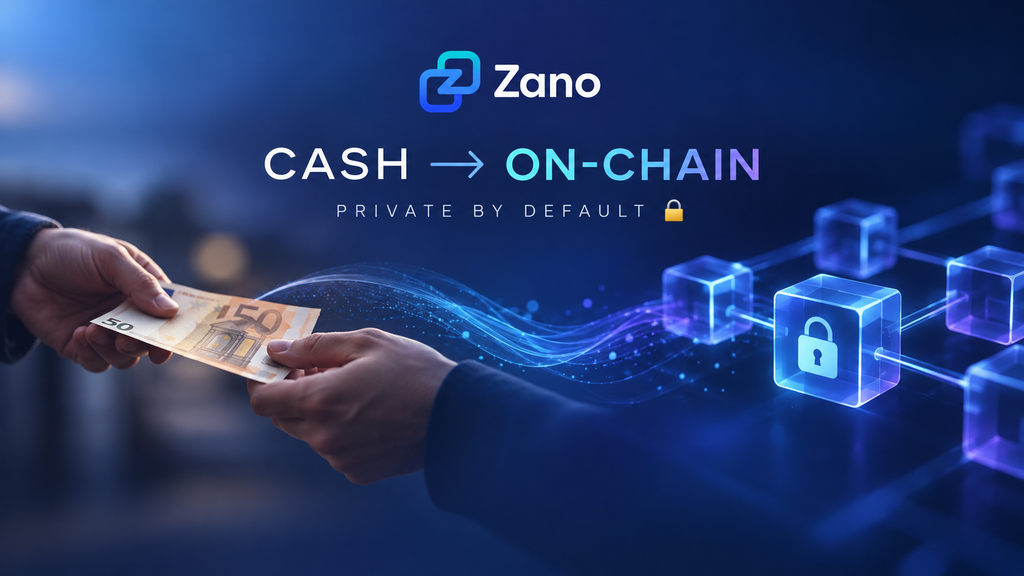
Cash has a simple privacy advantage: when you hand someone cash, there is usually no public record showing what you bought, how much you paid, or who received it.

Blockchain payments can be very different.

Table of Contents

  1. Cash Was Private by Nature
  2. The Problem With Transparent Blockchains
  3. Zano Brings Cash-Like Privacy On-Chain
  4. What Zano Keeps Private
  5. Privacy Without Giving Up Choice
  6. A Different Kind of Digital Money

1. Cash Was Private by Nature

For centuries, cash has allowed people to make everyday payments without creating a permanent public financial record.

You hand someone a โ‚ฌ50 note, and the transaction is finished.

There is no public blockchain showing your balance, payment amount or transaction history.

2. The Problem With Transparent Blockchains

With transparent blockchains such as Bitcoin, transaction information is publicly visible on-chain.

This can allow anyone to examine transaction history and potentially track the movement of funds.

Your financial activity can become much more permanent than it would be with cash.

3. Zano Brings Cash-Like Privacy On-Chain

Zano takes a different approach.

Zano is designed so that transactions are private by default at the protocol level. Users don’t need to activate a separate privacy feature.

The idea is simple:

Cash-like privacy, but with digital money.

4. What Zano Keeps Private

Zano’s privacy technology is designed to hide important transaction details, including:

  • Sender
  • Receiver
  • Amount
  • Asset type

Ring signatures help hide the sender, stealth addresses protect the receiver, and cryptographic commitments hide transaction amounts.

For someone looking at the blockchain from the outside, these details are not publicly exposed.

5. Privacy Without Giving Up Choice

Privacy does not mean everything has to remain hidden forever.

Zano also supports auditable wallets, allowing users or organisations to selectively provide transaction and balance information when verification is required.

So the approach is:

Private by default. Reveal when you choose.

6. A Different Kind of Digital Money

Digital money doesn’t have to mean giving up the privacy people have traditionally expected from cash.

Zano is building a blockchain where financial privacy is part of the protocol rather than an optional add-on.

Cash is private by nature. Zano aims to bring that idea on-chain. ๐Ÿ”’

Learn More

Disclaimer: ZanoNews.com is an independent news and information website. This article is for informational purposes only and does not constitute financial or investment advice.
Privacy by Default: Why Zano Keeps Transactions Private

Crypto privacy is not just about having a privacy option. It is about making privacy the normal way transactions work.

๐ŸŽฅ This Video Explains It ๐Ÿ‘‡

Table of Contents

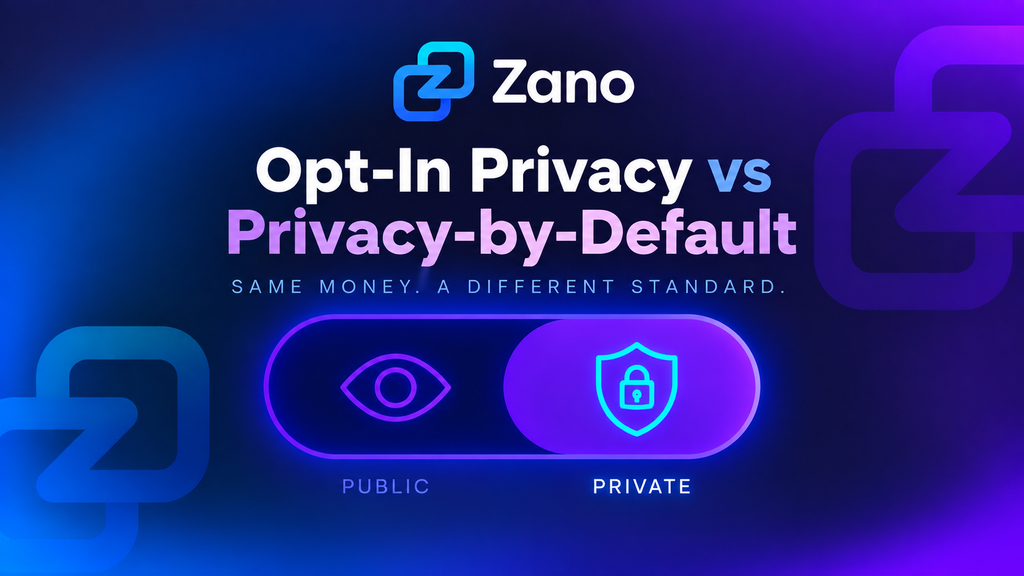
  1. The Problem With Opt-In Privacy
  2. What Makes Zano Different?
  3. A Bigger Privacy Crowd
  4. Why It Matters
  5. The Zano Difference

1. The Problem With Opt-In Privacy

Some blockchains let users choose whether to make their transactions private.

The problem? If only a small number of users choose privacy, they can potentially stand out from the crowd.

In simple terms, choosing privacy can itself become a signal.

2. What Makes Zano Different?

Zano takes another approach: privacy is enabled by default.

There is no separate “private mode” that users need to activate. Zano’s privacy technology is built into the blockchain.

This helps protect key transaction details such as:

  • Sender
  • Receiver
  • Transaction amount
  • Asset type

3. A Bigger Privacy Crowd

Think of privacy like hiding in a crowd.

If only 10 people are hiding, they are easier to identify.

But if everyone is part of the crowd, there is no obvious group of people who specifically chose to hide.

That’s the idea behind Zano’s Privacy by Default approach.

4. Why It Matters

For crypto users, privacy should not have to be an unusual choice.

Zano makes privacy part of the normal transaction experience, helping users transact without publicly exposing sensitive financial information.

Privacy isn’t an extra feature. It’s the default.

5. The Zano Difference

Opt-in privacy can create a smaller group of users who stand out.

Zano takes a different path by making transactions private by default.

Everyone is in the privacy crowd.

Learn More

Disclaimer: ZanoNews.com is an independent news and information website. This article is for informational purposes only and does not constitute financial or investment advice.
Zano Ionic Swaps: Private Crypto Trading ๐Ÿ”„

Most people trade crypto through centralized exchanges. You deposit your coins, make a trade, and the exchange takes care of the rest.

But there is another way.

Zano lets users trade directly with each other without giving their coins to a centralized exchange.

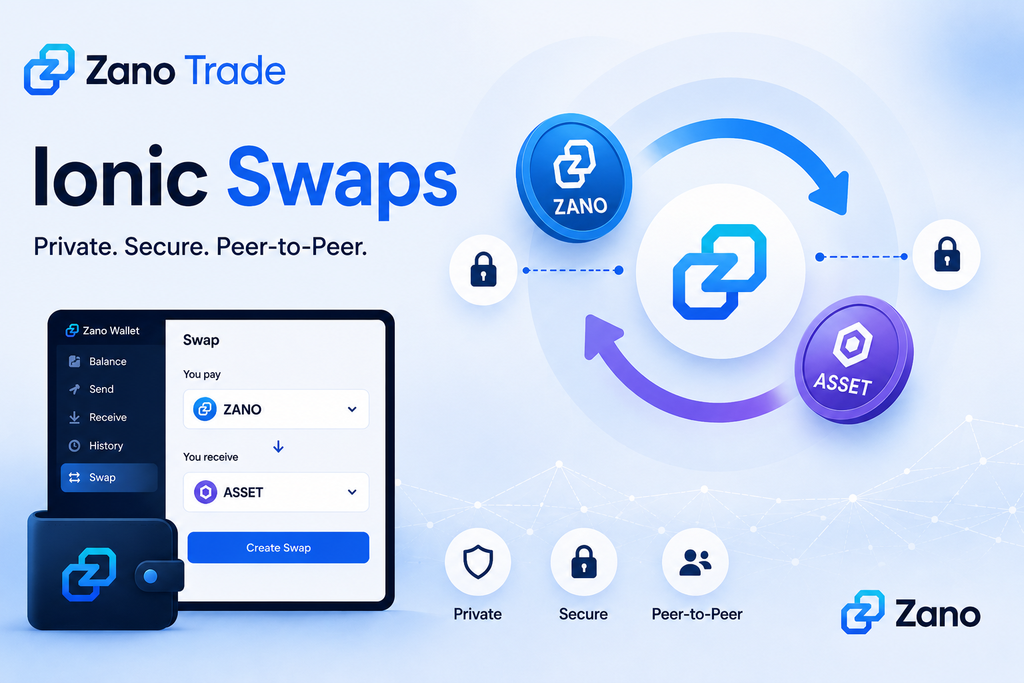
This is possible through Ionic Swaps, a built-in feature of the Zano blockchain.

In simple terms, Ionic Swaps allow two people to exchange crypto assets directly, while keeping control of their funds and protecting their transaction privacy.

Table of Contents

  1. What Are Zano Ionic Swaps?
  2. What Do You Need to Trade?
  3. How Do Ionic Swaps Work?
  4. What Is Zano Trade?
  5. Do You Have to Give Up Your Coins?
  6. How Does Zano Protect Your Privacy?
  7. What Can You Trade?
  8. Ionic Swaps vs Traditional Crypto Exchanges
  9. Why Are Ionic Swaps Important?
  10. Why This Matters

1. What Are Zano Ionic Swaps?

Ionic Swaps are a way to trade crypto directly with another person on the Zano blockchain.

Imagine you have ZANO and want another asset.

Instead of sending your ZANO to an exchange, you can create a trade offer saying:

“I will give you this amount of ZANO in exchange for this amount of another asset.”

Another user can accept your offer.

The Zano blockchain then handles the swap.

The important part is that you keep control of your funds throughout the process.

There is no need for a centralized exchange to hold your coins.

2. What Do You Need to Trade?

To use Ionic Swaps, you need a Zano wallet with the asset you want to trade.

Your wallet is where you keep control of your funds and where you can create or accept an Ionic Swap. The official Ionic Swaps guide also includes screenshots showing the different steps, so readers can follow along visually.

In simple terms, if you want to create a swap:

  1. Open your Zano wallet and select the Swap tab.
  2. Choose the asset you want to sell and the asset you want to receive.
  3. Enter the amount and the wallet address or alias of the person you want to trade with.
  4. Set an expiration time for the swap.
  5. Create the proposal and share the generated swap code with the other trader.

If you receive a swap proposal, you can open the Swap tab in your wallet, select Confirm Swap, enter the proposal code, check the trade details and accept the proposal. The swap is then submitted to the Zano blockchain.

For users who want an easier way to find trades, Zano Trade provides a platform where you can browse available offers, while the actual exchange is handled through Ionic Swaps on the Zano blockchain.

3. How Do Ionic Swaps Work?

The process is easier than it might sound.

Step 1: Create a trade offer

You choose:

  • What you want to sell
  • What you want to receive
  • How much you want to trade
  • The price or exchange rate

Step 2: Someone accepts your offer

Another user finds your offer and decides they want to make the trade.

Step 3: The swap is created

Both sides agree to the transaction and sign it from their own wallets.

Step 4: The blockchain completes the trade

The transaction is processed on the Zano network.

The basic idea is:

Both sides get what they agreed to, or the trade does not happen.

This means users don’t have to simply trust the other person to send their side of the deal.

4. What Is Zano Trade?

Zano Trade makes Ionic Swaps easier to use.

Instead of finding someone yourself and arranging a trade manually, Zano Trade lets you browse available offers from other users.

You can look at the available trades, choose one you are interested in and accept it.

Behind the scenes, the actual exchange is handled by Ionic Swaps on the Zano blockchain.

So you can think of it this way:

Zano Trade = where you find the trade

Ionic Swap = how the trade is completed

Zano Trade is also non-custodial, meaning it does not take control of your crypto.

5. Do You Have to Give Up Your Coins?

No.

This is one of the main differences between Ionic Swaps and traditional centralized exchanges.

With a centralized exchange, you normally deposit your crypto into a wallet controlled by the exchange before trading.

With Ionic Swaps, your assets remain under your control until the swap is completed.

You don’t need to send your coins to a company and wait for the company to process your trade.

Instead, the trade happens directly between the participants through the Zano blockchain.

6. How Does Zano Protect Your Privacy?

Privacy is a major part of Zano.

On many public blockchains, people can look at transactions and see information such as wallet addresses and transaction amounts.

Zano takes a different approach.

Its privacy technology is designed to hide important transaction information, including:

  • Wallet addresses
  • Transaction amounts
  • Asset information
  • Transaction history

This also applies when using Zano Trade.

For someone looking at the public blockchain, the details of a completed trade are not simply displayed for everyone to see.

That can be important for people who don’t want their financial activity publicly exposed.

7. What Can You Trade?

Ionic Swaps are not only for trading ZANO.

They can also be used with Confidential Assets created on the Zano blockchain.

For example, users can potentially trade:

ZANO โ†” Confidential Asset

or

Confidential Asset โ†” Confidential Asset

depending on the available trading pairs.

Confidential Assets are tokens that use Zano’s privacy technology.

This gives projects the ability to create their own assets while benefiting from the privacy features built into the Zano network.

8. Ionic Swaps vs Traditional Crypto Exchanges

So how is this different from using a normal crypto exchange?

Traditional ExchangeZano Ionic Swaps
Exchange holds your fundsYou keep control of your funds
Centralized platformPeer-to-peer
Trading happens through the exchangeTrading happens on the Zano blockchain
Transaction information may be publicly visible depending on the platformZano provides privacy by design
Requires trusting the exchangeUses blockchain-based settlement

This doesn’t necessarily mean centralized exchanges are bad.

They can be convenient and offer many trading features.

But Ionic Swaps provide another option for people who value privacy, self-custody and peer-to-peer trading.

9. Why Are Ionic Swaps Important?

Ionic Swaps bring several useful features together.

๐Ÿ” Privacy

Your trading activity benefits from Zano’s privacy-focused blockchain.

๐Ÿ‘› Self-custody

You keep control of your crypto instead of depositing it with a centralized exchange.

๐Ÿค Peer-to-peer trading

You can trade directly with another user.

โ›“๏ธ On-chain trading

The blockchain handles the transaction rather than a centralized company.

๐Ÿšซ No traditional middleman

Zano Trade helps users find trading offers, while the actual swap is handled on-chain.

โšก Fast settlement

Zano’s documentation says Ionic Swaps require one confirmation and typically complete in around one minute.

Together, these features create a different way to think about crypto trading.

10. Why This Matters

Crypto trading doesn’t always have to mean sending your coins to a centralized exchange.

Zano Ionic Swaps provide another option.

You can trade directly with another person, keep control of your funds and benefit from Zano’s privacy technology.

And with Zano Trade, finding and accepting these trades becomes easier for everyday users.

You don’t need to understand all the technical details behind Ionic Swaps to understand the main idea:

Trade directly. Keep control. Keep your transactions private.

That’s what makes Ionic Swaps an interesting part of the Zano ecosystem.

Learn More

Disclaimer: ZanoNews.com is an independent news and information website. This article is for informational purposes only and does not constitute financial or investment advice.