
A recent post from @SimpleSwap shared a message from Zano co-founder Pavel Nikienkov:
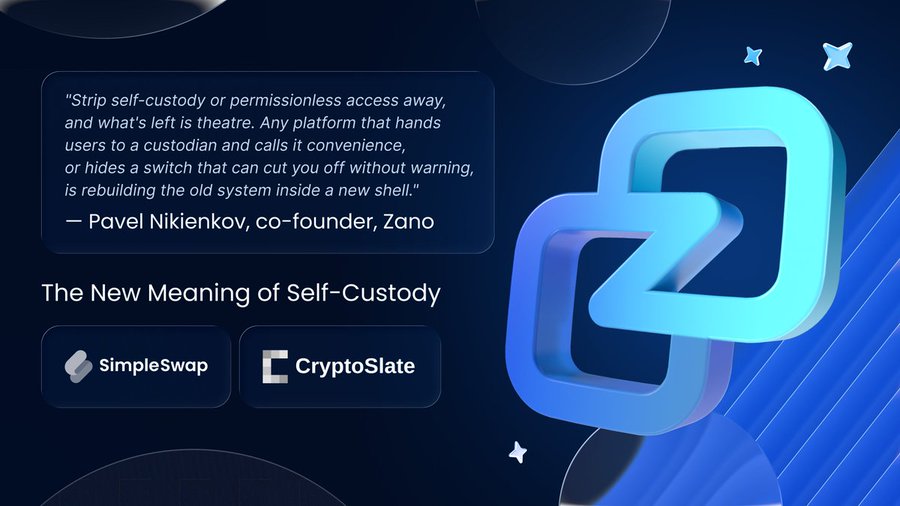
“Strip self-custody or permissionless access away, and what’s left is theatre.”
His point is simple: if a crypto platform controls users’ funds or can remove access without warning, it may be rebuilding the same system that crypto was meant to improve.
Table of Contents
1. What Self-Custody Means
Self-custody means you control your own crypto assets and private keys.
You do not need to rely on an exchange, bank or other company to hold your funds. This gives users more control, but it also means they are responsible for keeping their recovery phrase and wallet access secure.
2. Why Permissionless Access Matters
Permissionless access means people can use a blockchain network without needing approval from a company or central authority.
This can reduce the risk of:
- Account restrictions
- Frozen withdrawals
- Unexpected service shutdowns
- Dependence on one platform
Convenient services can still be useful, but users should understand the trade-off between convenience and control.
3. Zano’s Approach
Zano focuses on privacy, self-custody and decentralised access. Its goal is to give users more control over their transactions and assets without relying on a central operator.
As crypto continues to grow, the key question remains: should users prioritise convenience, full control, or a balance of both?