
The Zano ecosystem has introduced three new developer tools to its Block Explorer, making it easier for developers and users to inspect addresses, understand transaction structures, and investigate transaction outputs.
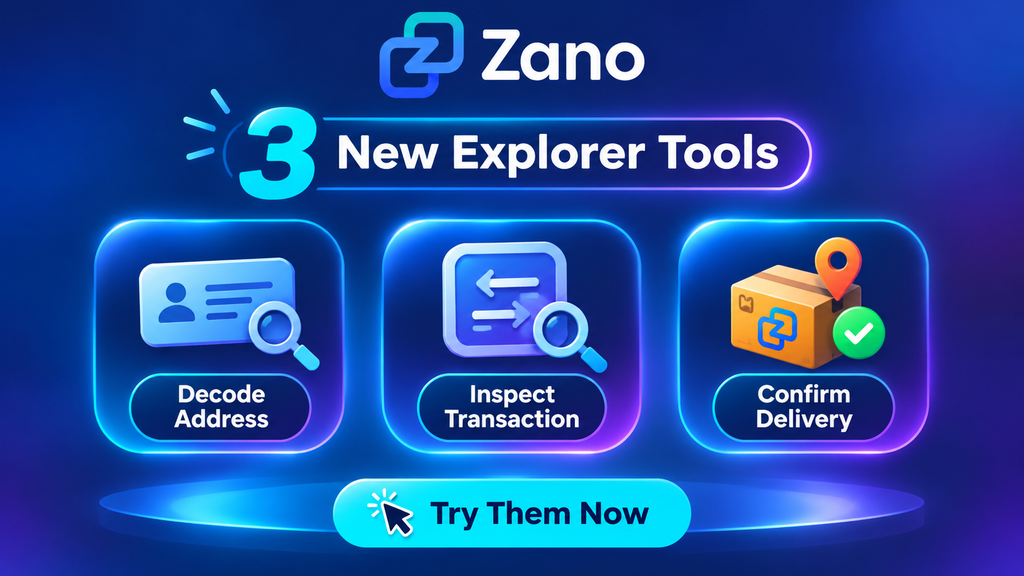
The new tools are designed to support developers integrating with the Zano blockchain, but they can also be useful for anyone who wants to verify their own transactions or understand why a transaction did not reach its expected destination.
All three tools are now available through the official Zano Block Explorer.
Table of Contents
- Introduction to the New Zano Developer Tools
- Address Decoder: Understanding Zano Addresses
- Transaction Decoder: Inspecting Transaction Structures
- Transaction Output Decryptor: Verifying Transaction Destinations
- Who Can Benefit From These Tools?
- Where to Access the New Tools?
- Making Zano Development and Transaction Debugging More Accessible
1. Introduction to the New Zano Developer Tools
Blockchain explorers are essential for checking transactions and understanding activity on a blockchain. However, developers sometimes need more detailed information than a standard transaction page provides.
To address these needs, Zano has added three dedicated tools to its Block Explorer:
- Address Decoder
- Transaction Decoder
- Transaction Output Decryptor
Each tool serves a different purpose, helping users extract address information, inspect transaction structures, and verify where transaction outputs were sent.
These additions are particularly useful for developers working on integrations, applications, and services built around the Zano blockchain.
2. Address Decoder: Understanding Zano Addresses
The Address Decoder extracts information that is already encoded within a Zano address.
Instead of manually trying to interpret the different components of an address, developers can use this tool to view the information in a more understandable format.
This can be helpful when building applications that interact with Zano addresses or when checking address details during integration and testing.
In simple terms, it helps developers understand what information is contained within a Zano address.
3. Transaction Decoder: Inspecting Transaction Structures
The Transaction Decoder allows users to inspect the internal structure of a transaction using its transaction secret key.
This provides developers with another way to examine transaction details when investigating how a transaction was constructed or processed.
For developers integrating Zano into their applications, understanding transaction structures can be important when testing payment functionality, investigating unexpected behaviour, or troubleshooting integration issues.
Rather than relying only on the visible transaction information, the decoder provides access to additional transaction details using the supplied secret key.
4. Transaction Output Decryptor: Verifying Transaction Destinations
The third addition is the Transaction Output Decryptor.
Its purpose is to help users confirm what was sent and where the transaction output landed.
The tool processes the information server-side using the transaction secret key and the destination addresses supplied by the user.
This can be particularly useful when someone sends a transaction but wants to verify whether the funds reached the intended destination.
For example, if a developer is testing a payment integration and a transaction does not appear where expected, the decryptor can help investigate the transaction outputs and identify what was actually sent.
It adds another practical option for troubleshooting transactions on the Zano network.
5. Who Can Benefit From These Tools?
Although these tools are primarily designed with developers in mind, their usefulness extends beyond software development.
Some practical use cases include:
- Blockchain developers: Inspect transaction structures and understand address information when building Zano integrations.
- Application developers: Test payment functionality and investigate unexpected transaction behaviour.
- Businesses integrating Zano: Verify transactions as part of payment and application testing.
- Regular users: Investigate their own transactions and better understand where their funds were sent.
The tools bring several technical operations together in one place, making transaction investigation and integration work more straightforward.
6. Where to Access the New Tools?
All three developer tools are now live and accessible through the official Zano Block Explorer.
You can find them here:
Explore Zano’s New Developer Tools 👈
The tools are available directly through the explorer, providing developers and users with a dedicated place to inspect address information, decode transactions, and investigate transaction outputs.
7. Making Zano Development and Transaction Debugging More Accessible
The introduction of these three tools adds another practical set of resources to the Zano ecosystem.
By bringing address decoding, transaction inspection, and output verification into the Block Explorer, Zano is making it easier for developers to work with the network and investigate issues during integration.
For anyone building applications on Zano or simply looking to understand their own transactions in more detail, these tools provide additional ways to explore what is happening behind the scenes.
Learn More
To learn more about Zano and its growing ecosystem, visit the following resources:
Disclaimer: ZanoNews.com is an independent news and information website. This article is for informational purposes only and should not be considered financial or investment advice.