
Zano is preparing to give users more ways to use their digital assets.
With the upcoming Zano Execution Layer, users could eventually be able to lend, borrow, earn yield and provide liquidity using $ZANO and Confidential Assets such as $FUSD.
If terms like “DeFi” or “liquidity” sound complicated, don’t worry. Here’s what it means in simple terms.
Want to understand the Zano Execution Layer in more detail? 👇
Read the full Zano Execution Layer (ZEL) explained article
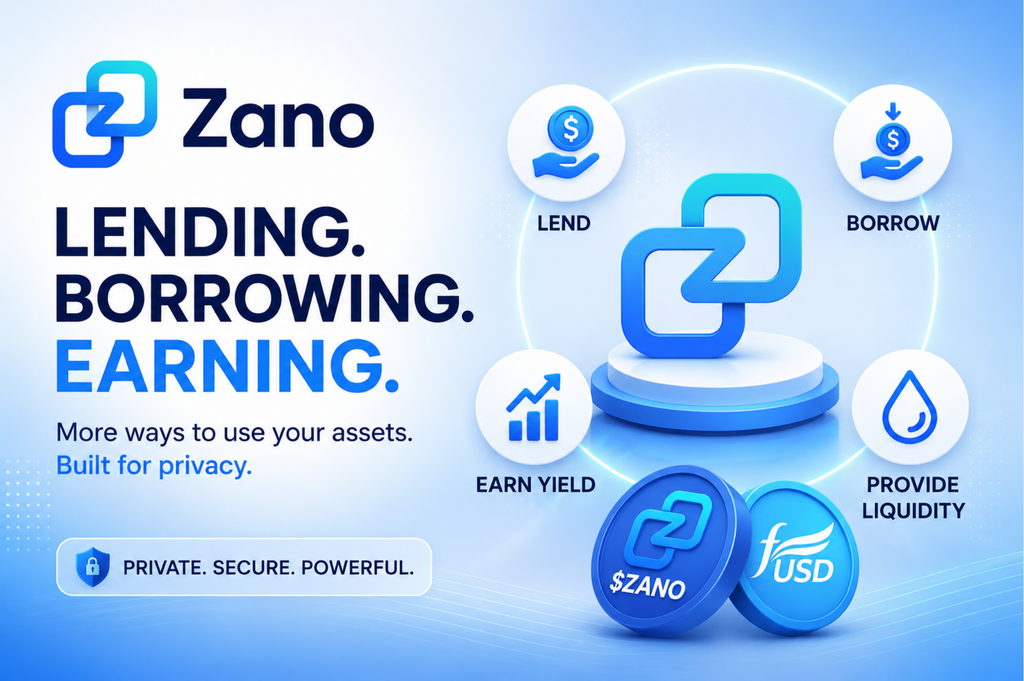
Table of Contents
- What is the Zano Execution Layer?
- What could you do with it?
- What does lending mean?
- What does borrowing mean?
- What does earning yield mean?
- What does providing liquidity mean?
- What about $ZANO and $FUSD?
- Why is this interesting?
- What happens next?
1. What is the Zano Execution Layer?
The Zano Execution Layer is being developed to bring more financial features to the Zano ecosystem.
Today, Zano can be used for private transactions and managing private digital assets.
The Execution Layer could take this further by allowing users to use their assets in different financial activities.
Simply put:
More ways to use your assets, while keeping privacy at the centre.
2. What could you do with it?
Zano says the Execution Layer will make activities such as these possible:
- Lending
- Borrowing
- Earning yield
- Providing liquidity
These are common activities in DeFi, which simply means using blockchain-based applications for financial services.
You don’t need to be a crypto expert to understand the basic idea.
It’s about giving your digital assets more uses than simply holding or sending them.
3. What does lending mean?
Imagine you have some $ZANO that you don’t need right now.
In the future, you could potentially lend those assets through a DeFi application and receive a return.
It’s similar to putting your money to work instead of simply leaving it unused.
The exact lending system and rates for Zano have not yet been announced.
4. What does borrowing mean?
Borrowing could allow users to access another asset without necessarily selling their $ZANO.
For example, you could potentially use your ZANO as collateral and borrow another asset.
This could be useful if you need access to funds but don’t want to sell your crypto.
The exact rules and requirements will depend on how the future Zano applications are designed.
5. What does earning yield mean?
Yield simply means earning a return from your assets.
Instead of only holding your assets, you could potentially put them into a DeFi application and earn something in return.
However, earning yield does not mean guaranteed profit.
DeFi can involve risks, so users should understand how a product works before putting their assets into it.
6. What does providing liquidity mean?
Liquidity simply means making your assets available so other people can trade between different assets.
For example, a decentralized exchange needs assets available in its pools so users can swap between them.
People who provide those assets may receive rewards.
The exact details of how liquidity provision will work on Zano have not yet been announced.
7. What about $ZANO and $FUSD?
Zano specifically mentioned $ZANO and Confidential Assets such as $FUSD..
This could be interesting because $FUSD is a private stablecoin within the Zano ecosystem.
The goal is to give users more ways to use these assets within the ecosystem instead of simply holding or transferring them.
8. Why is this interesting?
For everyday users, the biggest change could be simple:
Your Zano assets could have more uses.
Instead of just:
Buy → Hold → Send
the future could look more like:
Hold → Lend → Borrow → Earn → Provide Liquidity
And privacy remains an important part of the Zano approach.
The idea is to bring more financial functionality to an ecosystem built around private digital assets.
9. What happens next?
The Zano Execution Layer is still coming soon, so there are many details we don’t know yet.
Zano has not announced all the specific applications, rates, requirements or risks involved.
For now, the direction is clear.
Zano is looking beyond private payments and exploring what private digital assets can do next.
If the Execution Layer delivers on this vision, users could eventually have more ways to use and interact with their assets, while keeping privacy at the heart of the experience.
Sources
Disclaimer: ZanoNews.com is an independent news and information website. This article is for informational purposes only and does not constitute financial or investment advice.