
Zano Ionic Swaps: Private Crypto Trading πŸ”„

Most people trade crypto through centralized exchanges. You deposit your coins, make a trade, and the exchange takes care of the rest.

But there is another way.

Zano lets users trade directly with each other without giving their coins to a centralized exchange.

This is possible through Ionic Swaps, a built-in feature of the Zano blockchain.

In simple terms, Ionic Swaps allow two people to exchange crypto assets directly, while keeping control of their funds and protecting their transaction privacy.
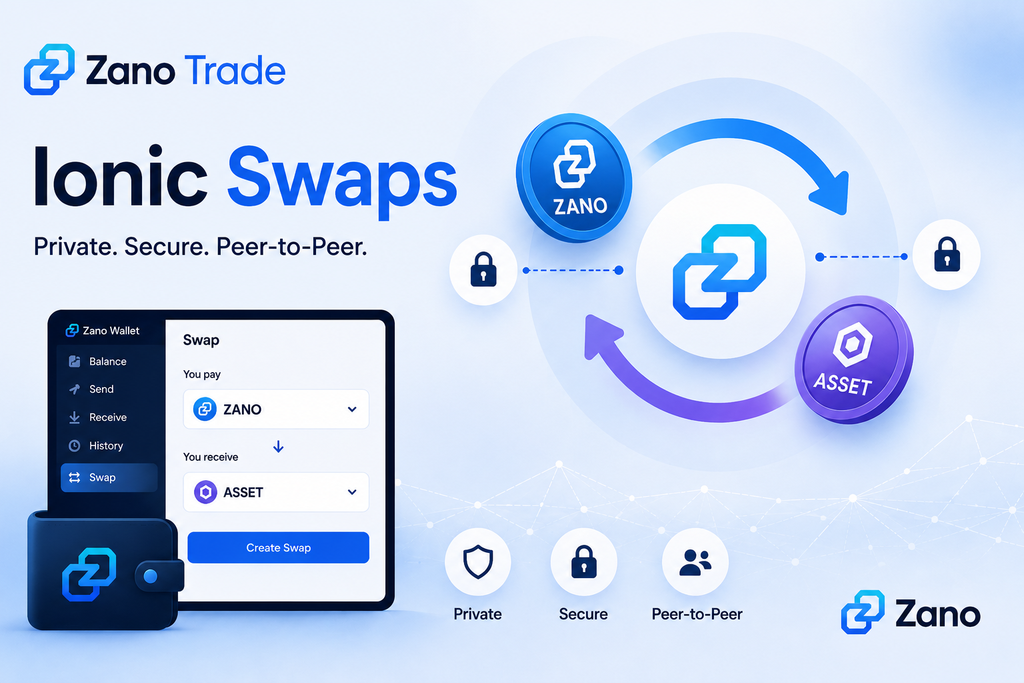
Table of Contents

  1. What Are Zano Ionic Swaps?
  2. What Do You Need to Trade?
  3. How Do Ionic Swaps Work?
  4. What Is Zano Trade?
  5. Do You Have to Give Up Your Coins?
  6. How Does Zano Protect Your Privacy?
  7. What Can You Trade?
  8. Ionic Swaps vs Traditional Crypto Exchanges
  9. Why Are Ionic Swaps Important?
  10. Why This Matters

1. What Are Zano Ionic Swaps?

Ionic Swaps are a way to trade crypto directly with another person on the Zano blockchain.

Imagine you have ZANO and want another asset.

Instead of sending your ZANO to an exchange, you can create a trade offer saying:

“I will give you this amount of ZANO in exchange for this amount of another asset.”

Another user can accept your offer.

The Zano blockchain then handles the swap.

The important part is that you keep control of your funds throughout the process.

There is no need for a centralized exchange to hold your coins.

2. What Do You Need to Trade?

To use Ionic Swaps, you need a Zano wallet with the asset you want to trade.

Your wallet is where you keep control of your funds and where you can create or accept an Ionic Swap. The official Ionic Swaps guide also includes screenshots showing the different steps, so readers can follow along visually.

In simple terms, if you want to create a swap:

  1. Open your Zano wallet and select the Swap tab.
  2. Choose the asset you want to sell and the asset you want to receive.
  3. Enter the amount and the wallet address or alias of the person you want to trade with.
  4. Set an expiration time for the swap.
  5. Create the proposal and share the generated swap code with the other trader.

If you receive a swap proposal, you can open the Swap tab in your wallet, select Confirm Swap, enter the proposal code, check the trade details and accept the proposal. The swap is then submitted to the Zano blockchain.

For users who want an easier way to find trades, Zano Trade provides a platform where you can browse available offers, while the actual exchange is handled through Ionic Swaps on the Zano blockchain.

3. How Do Ionic Swaps Work?

The process is easier than it might sound.

Step 1: Create a trade offer

You choose:

  • What you want to sell
  • What you want to receive
  • How much you want to trade
  • The price or exchange rate

Step 2: Someone accepts your offer

Another user finds your offer and decides they want to make the trade.

Step 3: The swap is created

Both sides agree to the transaction and sign it from their own wallets.

Step 4: The blockchain completes the trade

The transaction is processed on the Zano network.

The basic idea is:

Both sides get what they agreed to, or the trade does not happen.

This means users don’t have to simply trust the other person to send their side of the deal.

4. What Is Zano Trade?

Zano Trade makes Ionic Swaps easier to use.

Instead of finding someone yourself and arranging a trade manually, Zano Trade lets you browse available offers from other users.

You can look at the available trades, choose one you are interested in and accept it.

Behind the scenes, the actual exchange is handled by Ionic Swaps on the Zano blockchain.

So you can think of it this way:

Zano Trade = where you find the trade

Ionic Swap = how the trade is completed

Zano Trade is also non-custodial, meaning it does not take control of your crypto.

5. Do You Have to Give Up Your Coins?

No.

This is one of the main differences between Ionic Swaps and traditional centralized exchanges.

With a centralized exchange, you normally deposit your crypto into a wallet controlled by the exchange before trading.

With Ionic Swaps, your assets remain under your control until the swap is completed.

You don’t need to send your coins to a company and wait for the company to process your trade.

Instead, the trade happens directly between the participants through the Zano blockchain.

6. How Does Zano Protect Your Privacy?

Privacy is a major part of Zano.

On many public blockchains, people can look at transactions and see information such as wallet addresses and transaction amounts.

Zano takes a different approach.

Its privacy technology is designed to hide important transaction information, including:

  • Wallet addresses
  • Transaction amounts
  • Asset information
  • Transaction history

This also applies when using Zano Trade.

For someone looking at the public blockchain, the details of a completed trade are not simply displayed for everyone to see.

That can be important for people who don’t want their financial activity publicly exposed.

7. What Can You Trade?

Ionic Swaps are not only for trading ZANO.

They can also be used with Confidential Assets created on the Zano blockchain.

For example, users can potentially trade:

ZANO ↔ Confidential Asset

or

Confidential Asset ↔ Confidential Asset

depending on the available trading pairs.

Confidential Assets are tokens that use Zano’s privacy technology.

This gives projects the ability to create their own assets while benefiting from the privacy features built into the Zano network.

8. Ionic Swaps vs Traditional Crypto Exchanges

So how is this different from using a normal crypto exchange?

Traditional ExchangeZano Ionic Swaps
Exchange holds your fundsYou keep control of your funds
Centralized platformPeer-to-peer
Trading happens through the exchangeTrading happens on the Zano blockchain
Transaction information may be publicly visible depending on the platformZano provides privacy by design
Requires trusting the exchangeUses blockchain-based settlement

This doesn’t necessarily mean centralized exchanges are bad.

They can be convenient and offer many trading features.

But Ionic Swaps provide another option for people who value privacy, self-custody and peer-to-peer trading.

9. Why Are Ionic Swaps Important?

Ionic Swaps bring several useful features together.

πŸ” Privacy

Your trading activity benefits from Zano’s privacy-focused blockchain.

πŸ‘› Self-custody

You keep control of your crypto instead of depositing it with a centralized exchange.

🀝 Peer-to-peer trading

You can trade directly with another user.

⛓️ On-chain trading

The blockchain handles the transaction rather than a centralized company.

🚫 No traditional middleman

Zano Trade helps users find trading offers, while the actual swap is handled on-chain.

⚑ Fast settlement

Zano’s documentation says Ionic Swaps require one confirmation and typically complete in around one minute.

Together, these features create a different way to think about crypto trading.

10. Why This Matters

Crypto trading doesn’t always have to mean sending your coins to a centralized exchange.

Zano Ionic Swaps provide another option.

You can trade directly with another person, keep control of your funds and benefit from Zano’s privacy technology.

And with Zano Trade, finding and accepting these trades becomes easier for everyday users.

You don’t need to understand all the technical details behind Ionic Swaps to understand the main idea:

Trade directly. Keep control. Keep your transactions private.

That’s what makes Ionic Swaps an interesting part of the Zano ecosystem.

Learn More

Disclaimer: ZanoNews.com is an independent news and information website. This article is for informational purposes only and does not constitute financial or investment advice.
Lending, Borrowing & Earning with Zano πŸš€

Zano is preparing to give users more ways to use their digital assets.

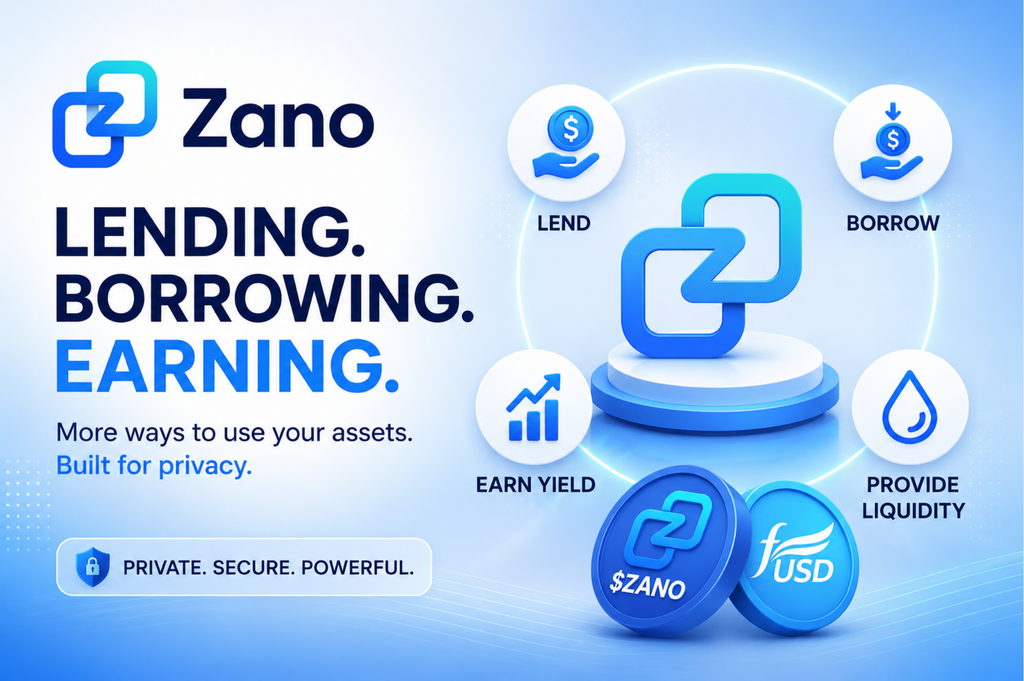
With the upcoming Zano Execution Layer, users could eventually be able to lend, borrow, earn yield and provide liquidity using $ZANO and Confidential Assets such as $FUSD.

If terms like “DeFi” or “liquidity” sound complicated, don’t worry. Here’s what it means in simple terms.

Want to understand the Zano Execution Layer in more detail? πŸ‘‡
Read the full Zano Execution Layer (ZEL) explained article

Table of Contents

  1. What is the Zano Execution Layer?
  2. What could you do with it?
  3. What does lending mean?
  4. What does borrowing mean?
  5. What does earning yield mean?
  6. What does providing liquidity mean?
  7. What about $ZANO and $FUSD?
  8. Why is this interesting?
  9. What happens next?

1. What is the Zano Execution Layer?

The Zano Execution Layer is being developed to bring more financial features to the Zano ecosystem.

Today, Zano can be used for private transactions and managing private digital assets.

The Execution Layer could take this further by allowing users to use their assets in different financial activities.

Simply put:

More ways to use your assets, while keeping privacy at the centre.

2. What could you do with it?

Zano says the Execution Layer will make activities such as these possible:

  • Lending
  • Borrowing
  • Earning yield
  • Providing liquidity

These are common activities in DeFi, which simply means using blockchain-based applications for financial services.

You don’t need to be a crypto expert to understand the basic idea.

It’s about giving your digital assets more uses than simply holding or sending them.

3. What does lending mean?

Imagine you have some $ZANO that you don’t need right now.

In the future, you could potentially lend those assets through a DeFi application and receive a return.

It’s similar to putting your money to work instead of simply leaving it unused.

The exact lending system and rates for Zano have not yet been announced.

4. What does borrowing mean?

Borrowing could allow users to access another asset without necessarily selling their $ZANO.

For example, you could potentially use your ZANO as collateral and borrow another asset.

This could be useful if you need access to funds but don’t want to sell your crypto.

The exact rules and requirements will depend on how the future Zano applications are designed.

5. What does earning yield mean?

Yield simply means earning a return from your assets.

Instead of only holding your assets, you could potentially put them into a DeFi application and earn something in return.

However, earning yield does not mean guaranteed profit.

DeFi can involve risks, so users should understand how a product works before putting their assets into it.

6. What does providing liquidity mean?

Liquidity simply means making your assets available so other people can trade between different assets.

For example, a decentralized exchange needs assets available in its pools so users can swap between them.

People who provide those assets may receive rewards.

The exact details of how liquidity provision will work on Zano have not yet been announced.

7. What about $ZANO and $FUSD?

Zano specifically mentioned $ZANO and Confidential Assets such as $FUSD..

This could be interesting because $FUSD is a private stablecoin within the Zano ecosystem.

The goal is to give users more ways to use these assets within the ecosystem instead of simply holding or transferring them.

8. Why is this interesting?

For everyday users, the biggest change could be simple:

Your Zano assets could have more uses.

Instead of just:

Buy β†’ Hold β†’ Send

the future could look more like:

Hold β†’ Lend β†’ Borrow β†’ Earn β†’ Provide Liquidity

And privacy remains an important part of the Zano approach.

The idea is to bring more financial functionality to an ecosystem built around private digital assets.

9. What happens next?

The Zano Execution Layer is still coming soon, so there are many details we don’t know yet.

Zano has not announced all the specific applications, rates, requirements or risks involved.

For now, the direction is clear.

Zano is looking beyond private payments and exploring what private digital assets can do next.

If the Execution Layer delivers on this vision, users could eventually have more ways to use and interact with their assets, while keeping privacy at the heart of the experience.

Sources

Disclaimer: ZanoNews.com is an independent news and information website. This article is for informational purposes only and does not constitute financial or investment advice.
From Bitcoin’s Original Vision to Zano’s Private Digital Economy πŸ”

Bitcoin started with a simple idea: people should be able to send money directly to each other without needing a bank in the middle.

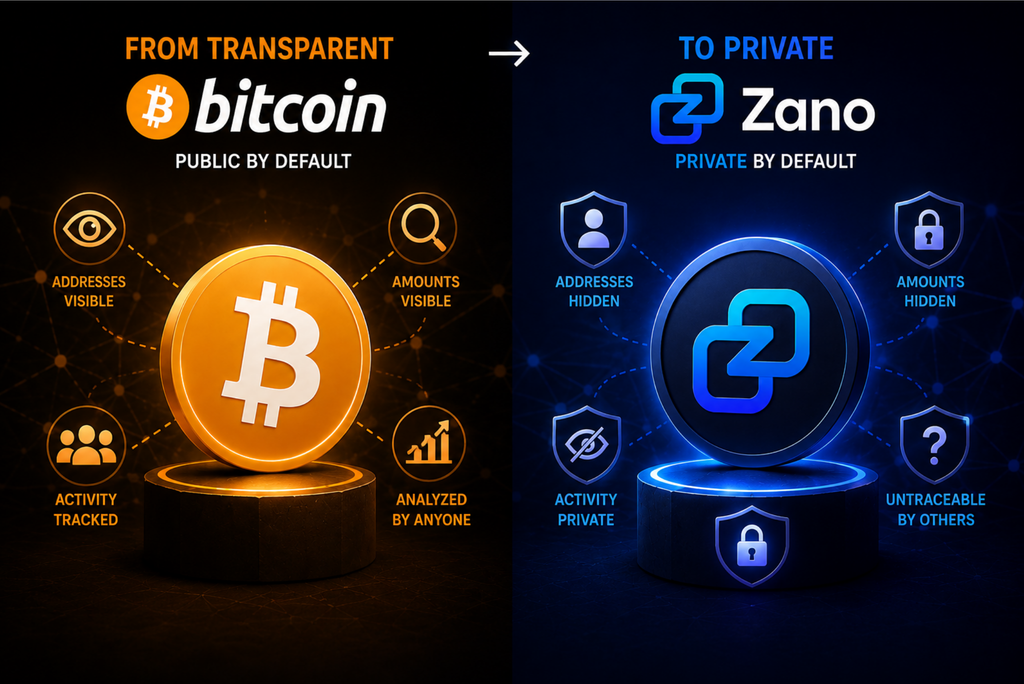
But Bitcoin transactions are publicly recorded, meaning wallet addresses, amounts and transaction history can be analysed. Zano takes a different approach by making privacy part of the network from the beginning.

πŸŽ₯ From Bitcoin’s Original Vision to Zano’s Private Digital Economy πŸ‘‡

Table of Contents

  1. Bitcoin’s Original Idea
  2. What Changed Over Time?
  3. Why Privacy Matters
  4. What Makes Zano Different?
  5. More Than Just Private Payments
  6. From Bitcoin to Private Digital Assets
  7. Why This Matters

1. Bitcoin’s Original Idea

When Bitcoin was introduced in 2008, its goal was to create peer to peer electronic cash.

In simple terms, that means one person could send digital money directly to another person without relying on a bank or other middleman.

That idea changed how people thought about money and financial control.

2. What Changed Over Time?

Bitcoin has grown far beyond its early use as digital cash.

Today, many people see Bitcoin primarily as a long term investment or digital store of value.

Bitcoin itself still works as a peer to peer network, but its public blockchain creates an important difference from traditional cash:

Bitcoin transactions can be viewed and analysed by anyone.

Wallet addresses, transaction amounts and the movement of funds are recorded publicly.

For users who value financial privacy, this can be a serious concern.

3. Why Privacy Matters

Imagine if every time you paid for something, anyone could look up:

  • How much you spent
  • Where your money came from
  • Where you sent it
  • How much money remained in your wallet

That is essentially the problem with transparent blockchains.

Your real name may not appear next to a wallet address, but activity can potentially be analysed and connected to people over time.

Zano was designed with a different approach.

4. What Makes Zano Different?

On Zano, privacy is enabled by default.

The network is designed to hide important transaction information, including:

  • The sender
  • The receiver
  • The amount
  • The type of asset being transferred

Instead of making users find and activate privacy tools themselves, Zano builds privacy directly into the blockchain.

This means privacy is part of the normal experience rather than an optional extra.

5. More Than Just Private Payments

Zano is not focused only on sending its native $ZANO coin.

The network also supports Confidential Assets, which are private digital tokens that can represent different types of value.

For example, Zano supports private versions of assets such as Bitcoin and other cryptocurrencies through its broader ecosystem.

This means the idea is bigger than simply creating a private cryptocurrency.

The goal is to build a private digital economy where different types of digital assets can be used while keeping transaction information confidential.

6. From Bitcoin to Private Digital Assets

One example is BTCx, a Bitcoin backed asset on Zano.

The basic idea is:

BTC β†’ Zano β†’ BTCx

Bitcoin can be brought into the Zano ecosystem and represented as BTCx, allowing users to benefit from Zano’s privacy features while maintaining exposure to Bitcoin.

We have explained this in more detail here:

πŸ‘‰ From Bitcoin to BTCx: A More Private Way to Use Bitcoin

This approach could give people another choice: keep exposure to familiar digital assets while using them in a more private environment.

7. Why This Matters

Bitcoin showed that digital money could work without a traditional bank sitting in the middle.

Zano is taking that idea in another direction by asking another important question:

Can digital money also give people greater control over their financial privacy?

For Zano, privacy is not an optional feature added later. It is part of the foundation of the network.

And with Confidential Assets, the idea goes beyond private payments toward a broader private digital economy.

Sources

Disclaimer: ZanoNews.com is an independent news and information website. This article is for informational purposes only and does not constitute financial or investment advice.
Zano Updates Its Introduction Guide With the Latest Developments πŸ“˜

New to Zano or trying to explain it to someone else?

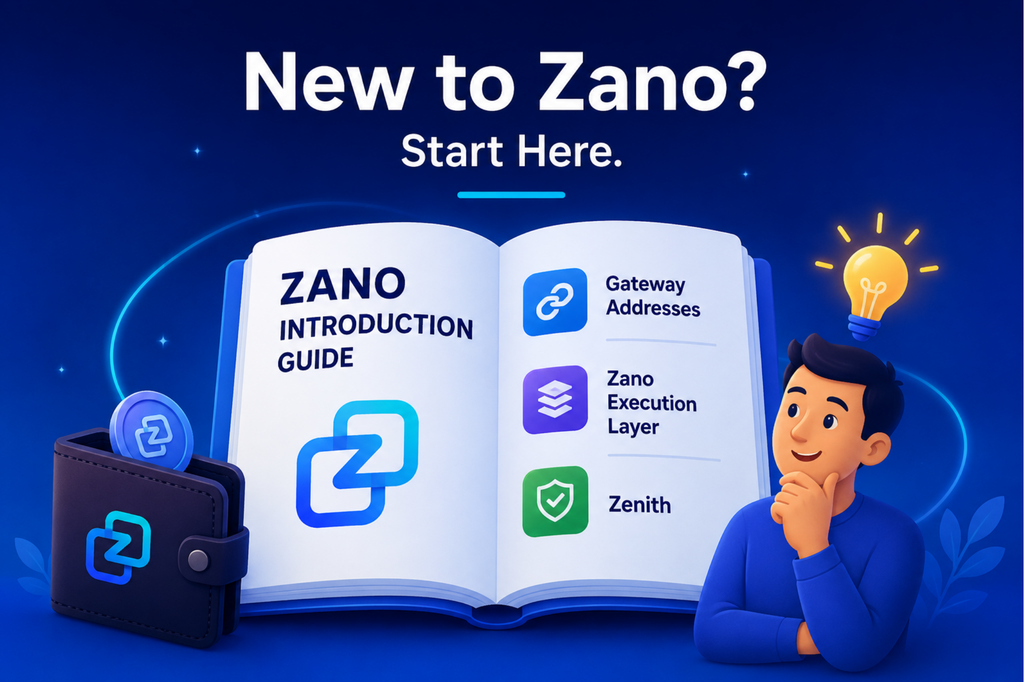
Zano has updated its official Introduction Guide to include some of its latest developments, including Gateway Addresses, the Zano Execution Layer and Zenith. It gives newcomers a simple place to learn about Zano, its privacy technology and where the project is heading.

Table of Contents

  1. What Is the Zano Introduction Guide?
  2. What Has Been Updated?
  3. Gateway Addresses
  4. The Zano Execution Layer
  5. Zenith
  6. Who Is the Guide For?
  7. Where Can You Read It?
  8. What This Means for New Users

1. What Is the Zano Introduction Guide?

The Zano Introduction Guide is a beginner friendly resource designed to explain the Zano ecosystem in one place.

It helps readers understand the basics of Zano, including its privacy features, wallets, Confidential Assets, staking, mining and other parts of the ecosystem.

The latest version has now been updated to reflect some of Zano’s newest developments.

2. What Has Been Updated?

The updated guide includes information about three important areas of Zano’s development:

Gateway Addresses
A new address system designed to make it easier for exchanges, bridges and other services to connect with Zano.

Zano Execution Layer
A planned environment for smart contracts and decentralized applications that works alongside Zano’s privacy focused main blockchain.

Zenith
A planned upgrade that would move Zano from its current hybrid Proof of Work and Proof of Stake system toward pure Proof of Stake.

Each of these developments could play an important role in Zano’s future.

3. Gateway Addresses

Gateway Addresses are designed to make Zano easier for exchanges, wallets, bridges and other crypto services to integrate.

For everyday users, the idea is simple: make it easier for more services to support Zano without removing its privacy.

We have already explained Gateway Addresses in more detail here:

πŸ‘‰ How Gateway Addresses Could Bring Zano to More Exchanges

You can also read our earlier overview:

πŸ‘‰ Gateway Addresses Are Coming: The Game-Changer for Zano Adoption

4. The Zano Execution Layer

The Zano Execution Layer, or ZEL, is designed to give Zano a separate environment for smart contracts and decentralized applications.

Think of it simply as an additional layer that can handle applications such as trading, lending and other Web3 services, while Zano’s main blockchain continues to focus on privacy.

We have already covered ZEL in detail:

πŸ‘‰ Zano Execution Layer (ZEL) Explained: Smart Contracts Without Changing Zano’s Privacy

5. Zenith

Zenith is Zano’s longer term plan to move from its current hybrid Proof of Work and Proof of Stake system to pure Proof of Stake.

In simple terms, Proof of Stake allows users to help secure the network by staking their coins instead of relying on mining.

Zenith is still under development, so it is a future upgrade rather than something users need to change today.

For a deeper explanation, read:

πŸ‘‰ Zenith: Zano’s Move to Pure Proof of Stake Explained

We also covered the bigger picture behind Zenith here:

πŸ‘‰ The Biggest Change in Zano’s History Is Coming 🧭

6. Who Is the Guide For?

You do not need to be a blockchain expert to use the guide.

It is useful if you:

  • Are completely new to Zano
  • Want to understand Zano’s privacy features
  • Want to learn about the Zano ecosystem
  • Want to explain Zano to a friend or colleague
  • Want a simple overview of where Zano is heading

Instead of searching through different articles and technical documents, the guide brings the main information together in one place.

7. Where Can You Read It?

You can read the updated Zano Introduction Guide here:

πŸ‘‰ Zano Introduction Guidebook

You can also visit the Zano introduction website for more information about the project and its ecosystem:

πŸ‘‰ Zano Introduction Website

8. What This Means for New Users

Zano continues to develop beyond its original focus on private cryptocurrency transactions.

Gateway Addresses are designed to make integrations easier, the Execution Layer could bring more applications and smart contracts to the ecosystem, and Zenith represents a future move toward pure Proof of Stake.

For someone discovering Zano today, the updated guide provides a useful starting point to understand where Zano is now and where it could be heading next.

If you have been curious about Zano but did not know where to start, this is a good place to begin. πŸ‘‡

Sources

Disclaimer: ZanoNews.com is an independent news and information website. This article is for informational purposes only and does not constitute financial or investment advice.
From Bitcoin to BTCx: A More Private Way to Use Bitcoin πŸ”

Bitcoin was created with a simple idea: people should be able to send money directly to each other without a bank in the middle.

But Bitcoin transactions are public. Anyone can look at the blockchain and follow the history of a Bitcoin from one wallet to another.

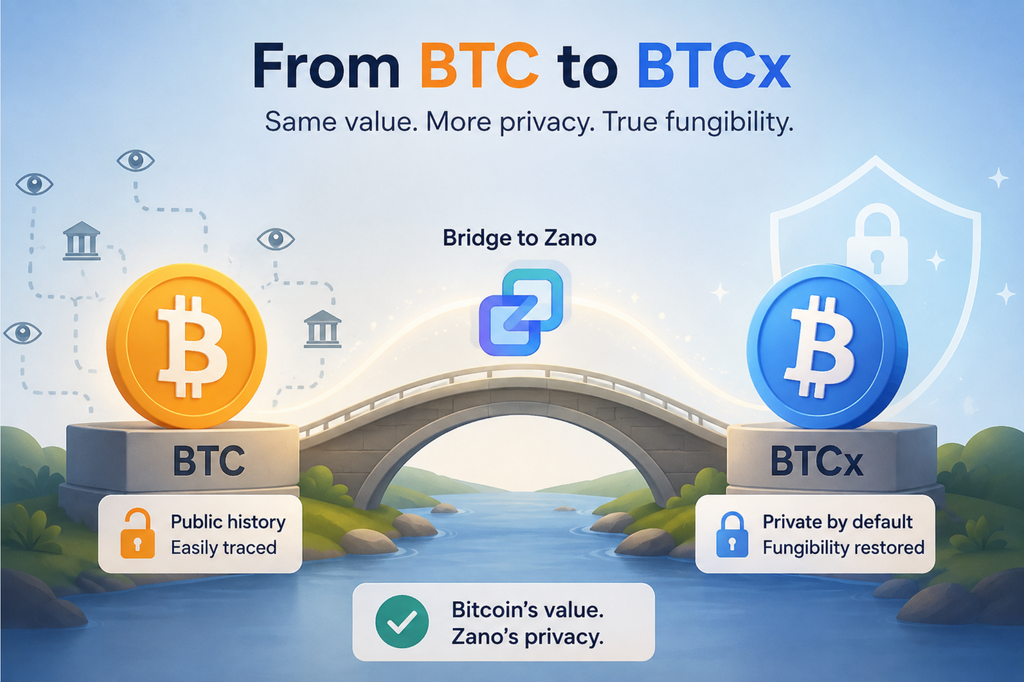
Zano is taking a different approach. By bridging Bitcoin (BTC) to Zano, users can receive BTCx, a Bitcoin-backed asset designed to provide greater privacy and restore fungibility.

Table of Contents

  1. What Does Fungibility Mean?
  2. Why Bitcoin’s History Matters
  3. What Is Confidential Layer?
  4. How BTCx Works
  5. What Makes BTCx Different?
  6. Why This Could Matter

1. What Does Fungibility Mean?

Fungibility simply means that one unit is equal and interchangeable with another unit of the same thing.

For example, if you have a €20 note and someone gives you another €20 note, you normally do not care which specific note you receive.

Money should ideally work the same way.

With Bitcoin, however, every transaction is recorded on a public blockchain. This means the history of individual coins can be tracked.

Zano argues that privacy is important for true fungibility because coins should not be treated differently based on where they have previously been.

2. Why Bitcoin’s History Matters

Bitcoin’s public history makes transactions easy to track.

Blockchain analysis can be used to follow where coins have moved and identify their previous activity. This can create a situation where someone may look at a Bitcoin differently because of its transaction history.

The Bitcoin itself has not changed. Only its history is visible.

This is where fungibility becomes important. If every Bitcoin can be traced and potentially judged by its past, then not every Bitcoin may be treated exactly the same.

3. What Is Confidential Layer?

Confidential Layer is a decentralized bridge that connects assets such as Bitcoin and Ethereum with Zano’s private blockchain. It allows users to bring their existing crypto assets into Zano and use them with Zano’s privacy features.

In simple terms, you can think of it as a bridge between two blockchains.

For Bitcoin, the process looks like this:

BTC β†’ Confidential Layer β†’ BTCx on Zano

The original BTC is locked on the Bitcoin network, while a corresponding wrapped version, BTCx, is created on Zano and backed 1:1 by the original asset.

πŸ‘‰ Bridge your BTC to Zano

Want to understand how the bridge works? πŸ‘‰ Read our beginner-friendly guide to Confidential Layer

4. How BTCx Works

Zano offers a way to move Bitcoin into its private ecosystem.

The basic process is:

BTC β†’ Bridge to Zano β†’ BTCx

BTCx is a Bitcoin-backed asset on Zano. Once Bitcoin is represented as BTCx on Zano, it can use Zano’s privacy features.

This means users can move from the public Bitcoin network into a system where transaction information is designed to remain private.

Want to see how BTCx works? πŸ‘‰ Read our beginner-friendly guide to BTCx

4. What Makes BTCx Different?

The main difference is privacy.

On Bitcoin, transaction information is publicly visible. On Zano, confidential transactions can hide important details such as the amount being transferred and the addresses involved.

This gives BTCx a different experience from regular BTC.

Instead of every BTCx being publicly linked to its previous movements, Zano’s privacy system is designed to make individual BTCx units difficult to distinguish from one another.

In simple terms:

BTC has a visible history. BTCx is designed to keep that history private.

5. Why This Could Matter

Bitcoin made it possible to send money without relying on a bank.

The next question is whether people should also be able to use digital money without exposing their entire transaction history to the public.

That is the problem Zano is trying to address with BTCx.

By bringing Bitcoin into Zano’s private environment, users can keep exposure to Bitcoin while gaining access to a more private way of moving and using a Bitcoin-backed asset.

For people who value financial privacy, this could make BTCx an interesting bridge between Bitcoin’s liquidity and Zano’s privacy technology.

Sources:

Disclaimer: ZanoNews.com is an independent news and information website. This article is for informational purposes only and does not constitute financial or investment advice.
Zano’s Private $fUSD Could Soon Reach More Crypto Markets

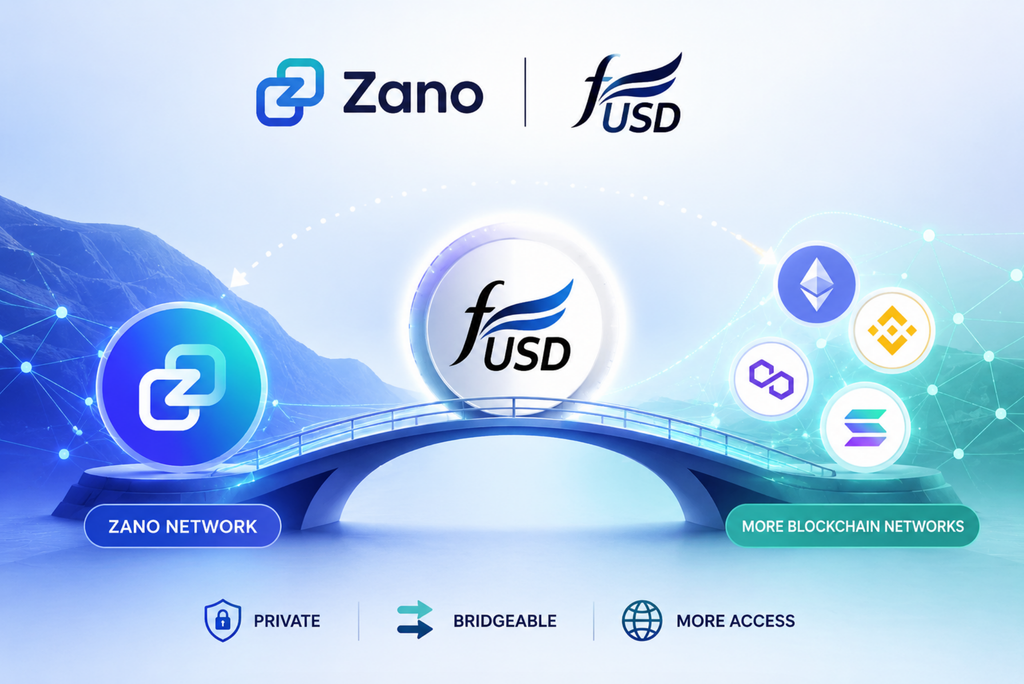
Zano is working on a way to connect its private stablecoin, $fUSD, with other crypto networks. This could let people keep their funds private on Zano while also accessing more crypto markets and services when they want.

Table of Contents

  1. Zano Is More Than $ZANO
  2. What Is $fUSD?
  3. Why Does $fUSD Need to Reach Other Networks?
  4. How Could Zano’s Execution Layer Help?
  5. A Simple Example
  6. What Could This Mean for Users?
  7. The Bigger Picture

1. Zano Is More Than $ZANO

When people hear about Zano, they often think about its native cryptocurrency, $ZANO.

But Zano is also building an ecosystem of private digital assets called Confidential Assets.

One example is $fUSD, a private stablecoin designed to maintain a value close to the US dollar while benefiting from Zano’s privacy features.

According to Zano, Confidential Assets such as fUSD will be able to move beyond the Zano network once the Zano Execution Layer arrives.

This could make private assets like fUSD useful in a much wider part of the crypto world.

2. What Is $fUSD?

A stablecoin is a type of cryptocurrency designed to keep a relatively stable value, usually by tracking a traditional currency such as the US dollar.

$fUSD is Zano’s private stablecoin.

The idea is to combine the convenience of a digital dollar with Zano’s focus on financial privacy.

For people who are new to crypto, you can think of fUSD as a private digital version of the US dollar that can be used within the Zano ecosystem.

If you want to understand fUSD before going deeper, check out our beginner friendly guide: πŸ‘‰ What Is fUSD? Zano’s Private Stablecoin

3. Why Does $fUSD Need to Reach Other Networks?

Why would a private stablecoin need to leave Zano?

The simple answer is access.

Some of the biggest crypto markets and financial applications operate on other blockchain networks.

These include DeFi, short for decentralized finance. DeFi allows people to trade, lend and borrow digital assets using blockchain based applications rather than traditional banks.

Today, a private stablecoin like fUSD has limited access to these wider markets.

Bridging could change that.

4. How Could Zano’s Execution Layer Help?

Zano is developing an Execution Layer designed to expand what can be built and used around the Zano ecosystem.

According to Zano, once the Execution Layer arrives, Confidential Assets such as fUSD will be bridgeable to other blockchain networks.

In simple terms, a bridge is a way to move an asset between different blockchain networks so it can be used in another ecosystem.

This could allow users to:

  1. Hold fUSD privately on Zano.
  2. Bridge it to a supported blockchain.
  3. Use it in available DeFi applications and markets.
  4. Bring it back to Zano when they want.

The bigger idea is to give users more choice without forcing them to give up the privacy benefits available on Zano.

5. A Simple Example

Imagine you have $1,000 worth of fUSD.

You want to keep your funds private, so you hold them on Zano.

Later, you want to use some of that money in a DeFi application operating on another blockchain.

With the planned bridging capability, you could potentially move your fUSD to that network and use the available services.

When you are finished, you could bring the asset back to the Zano ecosystem.

Think of it like a bridge between two cities.

You can keep your money in one place when you want, but when you need access to something in another place, you have a way to get there.

6. What Could This Mean for Users?

If the planned functionality becomes available, it could make fUSD more useful beyond the Zano network.

For everyday users, this could mean:

More choice: Use fUSD privately on Zano or access supported markets elsewhere.

More opportunities: Potentially use fUSD for trading, lending and other DeFi activities on supported networks.

Privacy when needed: Keep your funds within Zano when privacy is your priority.

Access to wider markets: Connect a private stablecoin with markets and services available on other blockchain networks.

This could help address one of the challenges faced by private cryptocurrencies today: having privacy while still being able to access the wider crypto ecosystem.

7. The Bigger Picture

Zano is working toward a future where private assets do not have to stay isolated from the rest of the crypto world.

With the planned Execution Layer, Confidential Assets such as $fUSD are expected to become bridgeable to other blockchain networks.

That could allow users to keep their funds private on Zano, access wider crypto markets when they want, and return to Zano when they need its privacy features.

The idea is simple:

Privacy does not have to mean isolation.

If successful, Zano could give users a way to combine the privacy of its network with access to a much wider range of crypto markets and DeFi services.

Sources:

Disclaimer: ZanoNews.com is an independent news and information website. This article is for informational purposes only and does not constitute financial or investment advice.
What Is Zano? A Beginner’s Guide

If you’re new to cryptocurrency, you’ve probably heard about Bitcoin and Ethereum. But what is Zano, and why are more people paying attention to it?

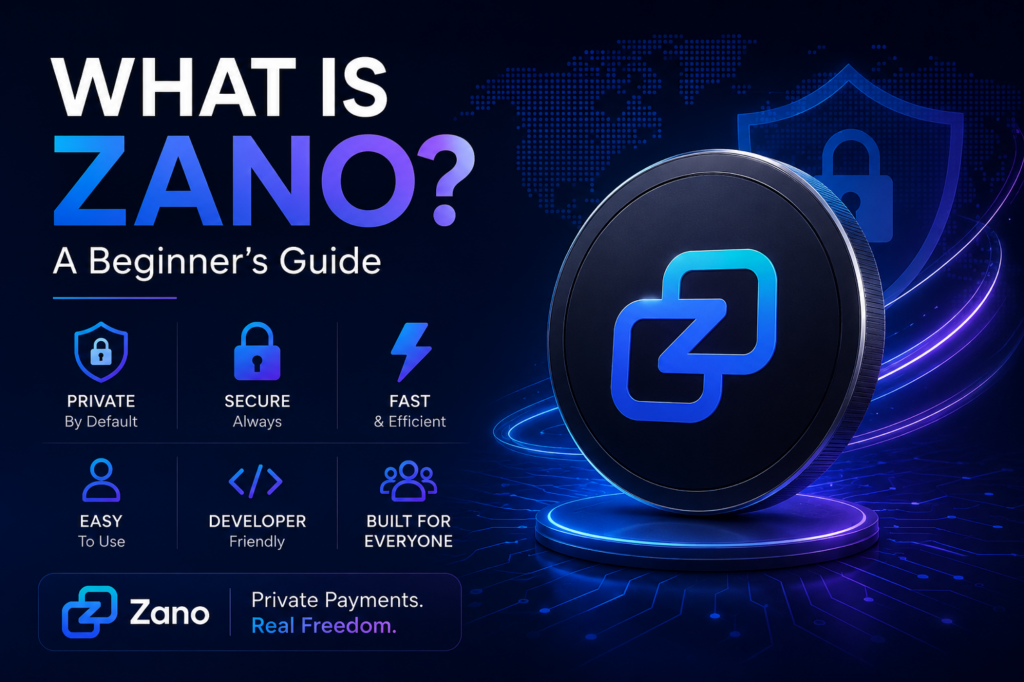
Zano is a privacy-focused blockchain designed to make digital payments secure, confidential, and easy to use. It combines modern privacy technology with features for businesses, developers, and everyday users.

Whether you’re completely new to crypto or simply curious about Zano, this guide explains everything in simple language.

Table of Contents

  1. What Is Zano?
  2. Why Was Zano Created?
  3. Key Features of Zano
  4. What Can You Do With Zano?
  5. Is Zano Good for Beginners?
  6. Where Should You Start?
  7. Frequently Asked Questions
  8. Final Thoughts

1. What Is Zano?

Zano is a Layer 1 blockchain launched in 2019 that focuses on privacy, security, and usability.

Unlike many cryptocurrencies where transactions can be viewed publicly, Zano keeps transaction details private by default. This means the sender, receiver, and transaction amount remain confidential while still being securely verified on the blockchain.

Its goal is to provide digital money that protects financial privacy without sacrificing security.

2. Why Was Zano Created?

Many blockchains allow anyone to view wallet balances and transaction history.

While transparency has advantages, it also means anyone can potentially track your financial activity.

Zano was built to give users greater financial privacy while remaining decentralized and secure.

3. Key Features of Zano

3.1 Privacy by Default

Every Zano transaction is private, helping protect your financial information from public view.

3.2 Low Transaction Fees

Sending Zano costs only a small network fee, making it suitable for everyday payments.

3.3 Fast Transactions

Transactions are confirmed quickly, allowing users to send and receive funds without long waiting times.

3.4 Hybrid Consensus

Zano uses a hybrid Proof-of-Work and Proof-of-Stake (PoW + PoS) consensus model to help secure the network while allowing eligible holders to earn staking rewards.

3.5 Confidential Assets

One of Zano’s standout features is Confidential Assets, which allow developers and businesses to create private digital assets while keeping transaction information confidential.

3.6 Cross-Chain Transfers

Recent network upgrades allow native ZANO to move between supported blockchain ecosystems while maintaining Zano’s privacy-focused infrastructure.

4. What Can You Do With Zano?

Zano can be used in many different ways:

  • Send private payments
  • Receive payments securely
  • Stake ZANO to earn rewards
  • Create Confidential Assets
  • Buy and sell on ZanoBay
  • Explore decentralized applications built on Zano

5. Is Zano Good for Beginners?

Yes.

Zano is designed to be beginner-friendly while offering advanced privacy features for experienced users.

If you’re just starting, learning how to install the wallet and securely back up your recovery seed is the best place to begin.

6. Where Should You Start?

If you’re new to Zano, these guides are recommended:

  1. Install the Zano Wallet
  2. Create Your First Wallet
  3. Back Up Your Recovery Seed
  4. Learn How Staking Works
  5. Understand Zano Privacy
  6. Explore Confidential Assets

7. Frequently Asked Questions

7.1 Is Zano anonymous?

Zano is privacy-focused, meaning transaction details are confidential by default while the blockchain remains secure and verifiable.

7.2 Can I stake Zano?

Yes. Eligible holders can stake ZANO to help secure the network and earn rewards.

7.3 Is Zano open source?

Yes. Zano is an open-source blockchain project, allowing anyone to inspect the code and contribute to development.

8. Final Thoughts

Zano is more than just another cryptocurrency. It is a privacy-first blockchain designed for secure payments, confidential digital assets, and long-term usability.

Whether you’re looking to make private transactions, earn staking rewards, or simply learn about privacy-focused blockchain technology, Zano provides a solid starting point.

If you’re completely new to Zano, continue with the Getting Started guides below to learn how to install your wallet, create your first address, and begin exploring the ecosystem.

Learn more:

Disclaimer: ZanoNews.com is an independent news and information website. This article is for informational purposes only and should not be considered financial, investment, or legal advice.

Inside the Zano-Verse Episode 3: What Zarcanum Means for Zano πŸ”

Originally recorded on February 8, 2024, Episode 3 of Inside the Zano-Verse focused on Zarcanum and the major privacy improvements it was designed to bring to Zano.

Some details discussed in the video were plans at the time and have since changed. So instead of asking you to watch the full video, we’ve broken down the main ideas in simple terms and added some current context.

πŸŽ₯ The full hour-long Episode 3 is here if you’d like to check it out: πŸ‘‡

Table of Contents

  1. What Is Zarcanum?
  2. Private Staking With Hidden Amounts
  3. Create Private Assets on Zano
  4. Why More Activity Can Help Privacy
  5. What Does This Mean for Developers?
  6. How Zano Has Evolved Since the Video

1. What Is Zarcanum?

Zarcanum is a major privacy technology used by Zano.

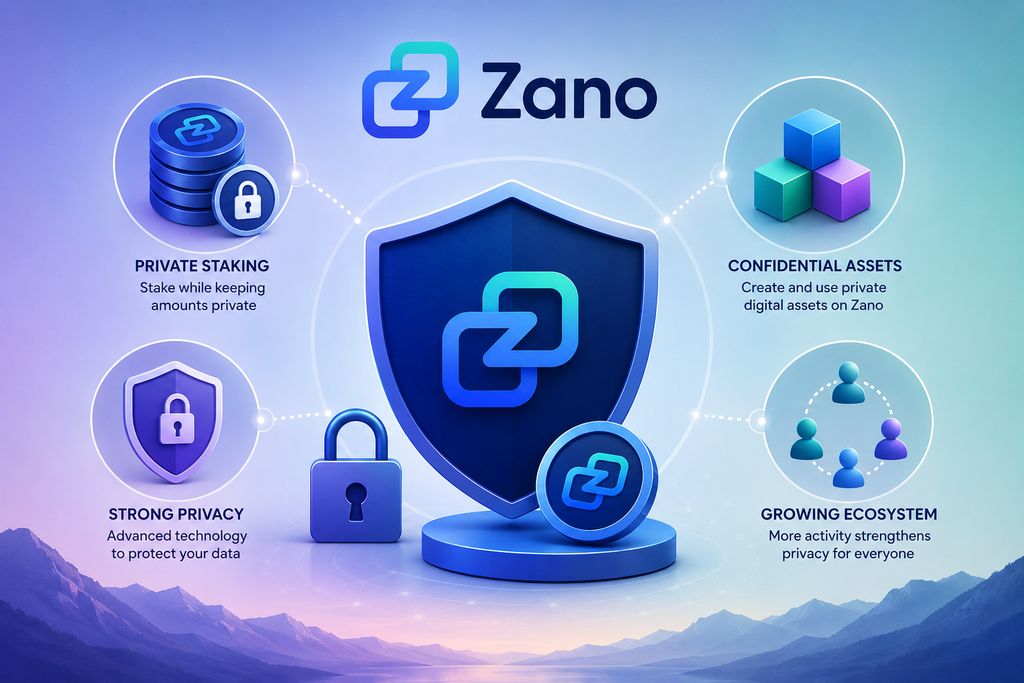
It introduced a new approach to Proof of Stake, allowing people to help secure the network while keeping their staking amounts hidden. The episode described this as one of the biggest privacy upgrades planned for Zano at the time.

In simple terms:

Zarcanum helps Zano keep more financial information private. πŸ”’

πŸ‘‰ We’ve explained this part in more detail in How Zano Keeps Your Staking Amount Private πŸ”’.

2. Private Staking With Hidden Amounts

Staking means putting your crypto to work to help support and secure a blockchain while earning staking rewards.

The challenge is that a blockchain normally needs to know how much someone has staked.

Zarcanum was designed to solve this while keeping the amount hidden.

The network can still use the stake, but people looking at the blockchain don’t simply see the amount being staked.

The team also discussed improvements to transaction selection to strengthen Zano’s privacy.

3. Create Private Assets on Zano

Another major part of Zarcanum is Confidential Assets.

Confidential Assets are digital assets on Zano where important transaction details, such as amounts and addresses, can remain private.

This could include things such as:

  • Stablecoins
  • Tokens
  • Other digital assets

The idea was to expand Zano from a network focused mainly on ZANO into a privacy-focused platform for multiple assets.

πŸ‘‰ You can also read our guide on Zano Confidential Assets.

4. Why More Activity Can Help Privacy

Privacy can become stronger when there are more users and transactions taking place.

Think of it like trying to find one person in a crowd.

A small crowd makes it easier to identify someone. A much larger crowd makes it harder.

The same basic idea applies to privacy technology: more activity can create a larger pool of transactions and information to hide among.

5. What Does This Mean for Developers?

Zarcanum wasn’t designed only for people who want to hold or send ZANO.

It also gives developers the ability to build privacy-focused applications and assets on Zano.

The episode discussed the potential for projects such as private stablecoins, decentralised exchanges and other privacy-focused applications.

These were ideas discussed during the episode, rather than promises of specific future products.

The bigger idea is simple:

Developers can use Zano’s privacy technology instead of building an entire privacy blockchain from scratch.

6. How Zano Has Evolved Since the Video

A lot has changed since this 2024 episode.

For example, Zano now has several wallet options, including its mobile wallet, full desktop wallet, Lite Wallet beta, Edge Wallet, Cake Wallet and other third-party options.

The Lite Wallet is designed to connect to a remote node instead of requiring users to download the entire blockchain, making Zano easier to access for everyday users.

Zano has also continued expanding its ecosystem with Confidential Assets, wallet integrations and other privacy-focused applications.

So while the video is now more than two years old, its main discussion around private staking, Confidential Assets and building a privacy-focused ecosystem remains useful for understanding why Zarcanum is important.

The Simple Takeaway

You don’t need to watch the entire video to understand the main idea.

Zarcanum was designed to make Zano more private while also giving developers more ways to build on the network.

Private staking.
Private assets.
More possibilities for privacy-focused applications.

That’s the bigger picture behind Zarcanum. πŸ”

Sources

Disclaimer: ZanoNews.com is an independent news and information website. This article is for informational purposes only and does not constitute financial or investment advice.