Zano is preparing to give users more ways to use their digital assets.
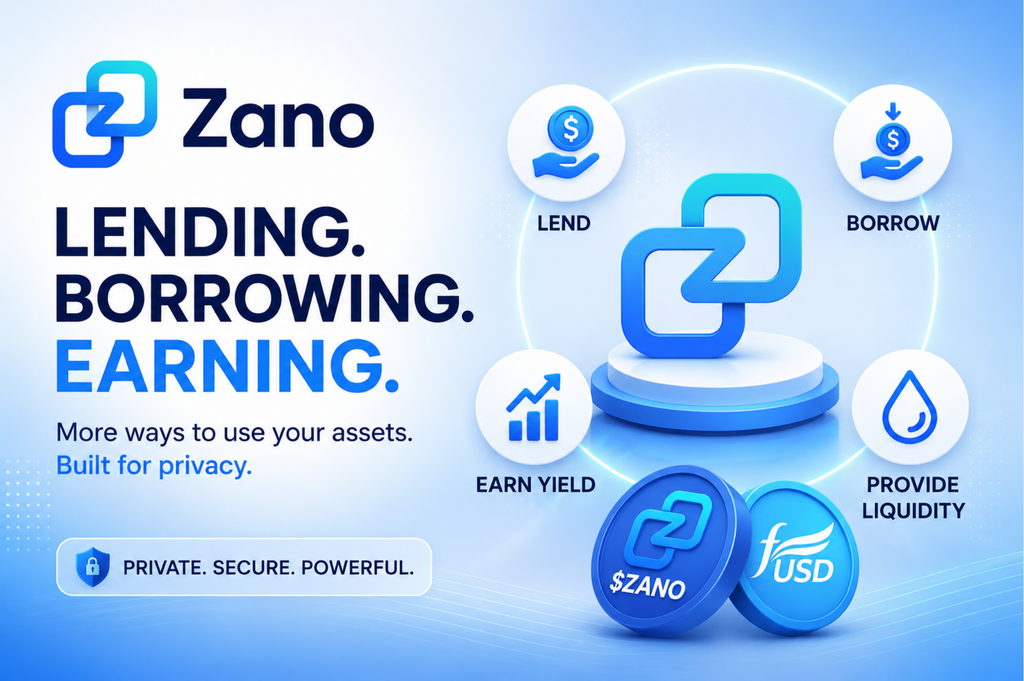
With the upcoming Zano Execution Layer, users could eventually be able to lend, borrow, earn yield and provide liquidity using $ZANO and Confidential Assets such as $FUSD.
If terms like “DeFi” or “liquidity” sound complicated, don’t worry. Here’s what it means in simple terms.
The Zano Execution Layer is being developed to bring more financial features to the Zano ecosystem.
Today, Zano can be used for private transactions and managing private digital assets.
The Execution Layer could take this further by allowing users to use their assets in different financial activities.
Simply put:
More ways to use your assets, while keeping privacy at the centre.
2. What could you do with it?
Zano says the Execution Layer will make activities such as these possible:
Lending
Borrowing
Earning yield
Providing liquidity
These are common activities in DeFi, which simply means using blockchain-based applications for financial services.
You don’t need to be a crypto expert to understand the basic idea.
It’s about giving your digital assets more uses than simply holding or sending them.
3. What does lending mean?
Imagine you have some $ZANO that you don’t need right now.
In the future, you could potentially lend those assets through a DeFi application and receive a return.
It’s similar to putting your money to work instead of simply leaving it unused.
The exact lending system and rates for Zano have not yet been announced.
4. What does borrowing mean?
Borrowing could allow users to access another asset without necessarily selling their $ZANO.
For example, you could potentially use your ZANO as collateral and borrow another asset.
This could be useful if you need access to funds but don’t want to sell your crypto.
The exact rules and requirements will depend on how the future Zano applications are designed.
5. What does earning yield mean?
Yield simply means earning a return from your assets.
Instead of only holding your assets, you could potentially put them into a DeFi application and earn something in return.
However, earning yield does not mean guaranteed profit.
DeFi can involve risks, so users should understand how a product works before putting their assets into it.
6. What does providing liquidity mean?
Liquidity simply means making your assets available so other people can trade between different assets.
For example, a decentralized exchange needs assets available in its pools so users can swap between them.
People who provide those assets may receive rewards.
The exact details of how liquidity provision will work on Zano have not yet been announced.
7. What about $ZANO and $FUSD?
Zano specifically mentioned $ZANO and Confidential Assets such as $FUSD..
This could be interesting because $FUSD is a private stablecoin within the Zano ecosystem.
The goal is to give users more ways to use these assets within the ecosystem instead of simply holding or transferring them.
8. Why is this interesting?
For everyday users, the biggest change could be simple:
Your Zano assets could have more uses.
Instead of just:
Buy → Hold → Send
the future could look more like:
Hold → Lend → Borrow → Earn → Provide Liquidity
And privacy remains an important part of the Zano approach.
The idea is to bring more financial functionality to an ecosystem built around private digital assets.
9. What happens next?
The Zano Execution Layer is still coming soon, so there are many details we don’t know yet.
Zano has not announced all the specific applications, rates, requirements or risks involved.
For now, the direction is clear.
Zano is looking beyond private payments and exploring what private digital assets can do next.
If the Execution Layer delivers on this vision, users could eventually have more ways to use and interact with their assets, while keeping privacy at the heart of the experience.
Disclaimer: ZanoNews.com is an independent news and information website. This article is for informational purposes only and does not constitute financial or investment advice.
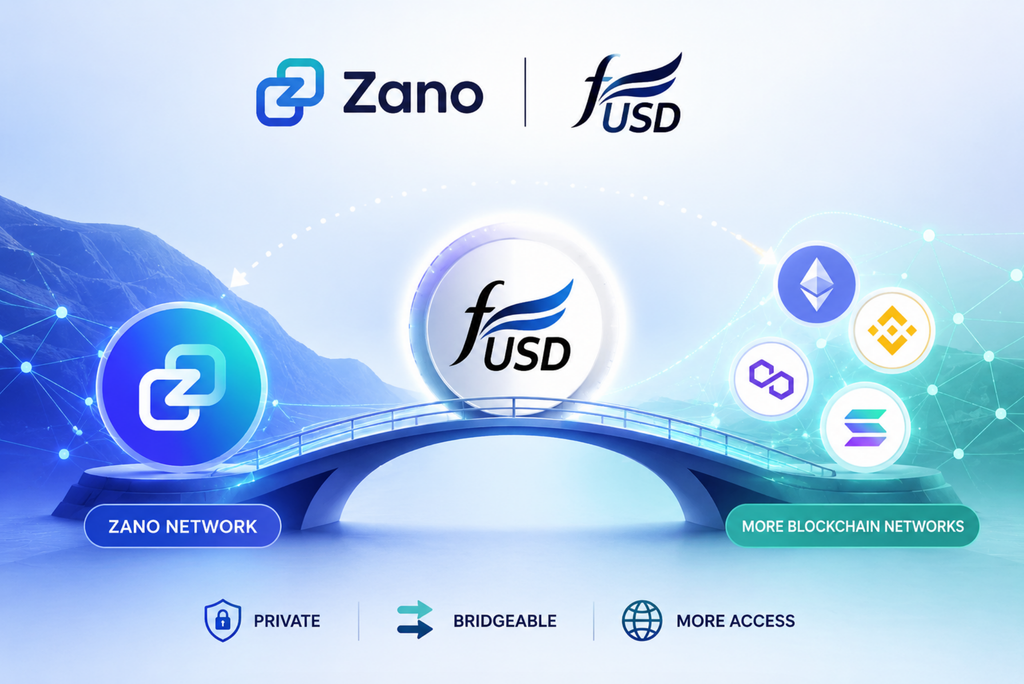
Zano is working on a way to connect its private stablecoin, $fUSD, with other crypto networks. This could let people keep their funds private on Zano while also accessing more crypto markets and services when they want.
Why would a private stablecoin need to leave Zano?
The simple answer is access.
Some of the biggest crypto markets and financial applications operate on other blockchain networks.
These include DeFi, short for decentralized finance. DeFi allows people to trade, lend and borrow digital assets using blockchain based applications rather than traditional banks.
Today, a private stablecoin like fUSD has limited access to these wider markets.
Bridging could change that.
4. How Could Zano’s Execution Layer Help?
Zano is developing an Execution Layer designed to expand what can be built and used around the Zano ecosystem.
According to Zano, once the Execution Layer arrives, Confidential Assets such as fUSD will be bridgeable to other blockchain networks.
In simple terms, a bridge is a way to move an asset between different blockchain networks so it can be used in another ecosystem.
This could allow users to:
Hold fUSD privately on Zano.
Bridge it to a supported blockchain.
Use it in available DeFi applications and markets.
Bring it back to Zano when they want.
The bigger idea is to give users more choice without forcing them to give up the privacy benefits available on Zano.
5. A Simple Example
Imagine you have $1,000 worth of fUSD.
You want to keep your funds private, so you hold them on Zano.
Later, you want to use some of that money in a DeFi application operating on another blockchain.
With the planned bridging capability, you could potentially move your fUSD to that network and use the available services.
When you are finished, you could bring the asset back to the Zano ecosystem.
Think of it like a bridge between two cities.
You can keep your money in one place when you want, but when you need access to something in another place, you have a way to get there.
6. What Could This Mean for Users?
If the planned functionality becomes available, it could make fUSD more useful beyond the Zano network.
For everyday users, this could mean:
More choice: Use fUSD privately on Zano or access supported markets elsewhere.
More opportunities: Potentially use fUSD for trading, lending and other DeFi activities on supported networks.
Privacy when needed: Keep your funds within Zano when privacy is your priority.
Access to wider markets: Connect a private stablecoin with markets and services available on other blockchain networks.
This could help address one of the challenges faced by private cryptocurrencies today: having privacy while still being able to access the wider crypto ecosystem.
7. The Bigger Picture
Zano is working toward a future where private assets do not have to stay isolated from the rest of the crypto world.
With the planned Execution Layer, Confidential Assets such as $fUSD are expected to become bridgeable to other blockchain networks.
That could allow users to keep their funds private on Zano, access wider crypto markets when they want, and return to Zano when they need its privacy features.
The idea is simple:
Privacy does not have to mean isolation.
If successful, Zano could give users a way to combine the privacy of its network with access to a much wider range of crypto markets and DeFi services.
Disclaimer: ZanoNews.com is an independent news and information website. This article is for informational purposes only and does not constitute financial or investment advice.
THORChain is a decentralized cross-chain liquidity protocol. In simple terms, it allows users to swap native cryptocurrencies across different blockchains without relying on a centralized exchange.
3. Why Is a Comeback Being Discussed?
THORChain has been an established name in cross-chain DeFi, but the crypto landscape has changed significantly.
The discussion will look at whether THORChain can attract new users, liquidity and attention while competing with newer projects.
4. Zano’s Role
Zano is joining the conversation as a co-host alongside THORChain, bringing another perspective to the discussion.
The episode should be interesting for anyone following privacy, DeFi and cross-chain technology.
5. What to Watch
The key question is simple: Can THORChain make a comeback, or is it too late?
Tune in to Crypto Quorum Episode 63 to hear the debate. ⚡
Disclaimer:ZanoNews.com is an independent news and information website. This article is for informational purposes only and should not be considered financial, investment, or legal advice.
Its main blockchain, or Layer 1, is designed to keep transactions, amounts and other financial information private.
But there is one area where Zano has not traditionally focused: smart contracts.
Smart contracts are programs that run on a blockchain. They power things like decentralized exchanges, lending platforms, token applications and other Web3 services.
So how can Zano add smart contracts without changing the privacy that makes Zano different?
The answer is Zano Execution Layer, or ZEL.
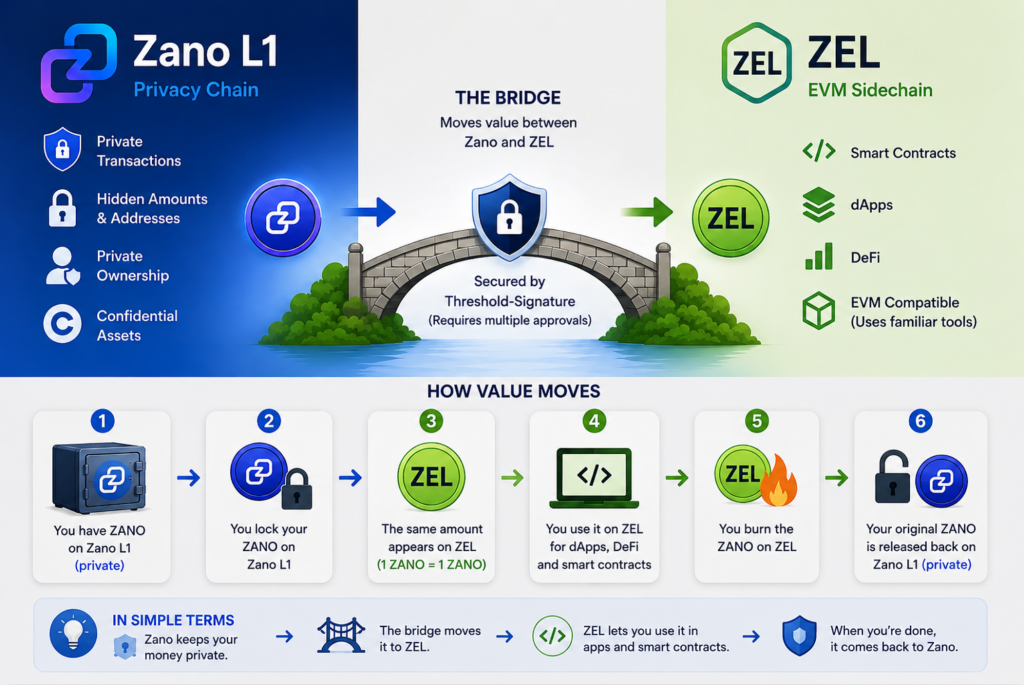
ZEL is designed to be a separate blockchain that works alongside Zano. It can handle smart contracts and other applications while Zano’s main blockchain continues to focus on privacy.
Zano is the private blockchain. ZEL is the smart-contract blockchain connected to it.
Zano’s main blockchain handles things such as:
Private transactions
Private ownership
Confidential Assets
Hidden transaction amounts
Hidden addresses
ZEL is designed to handle:
Smart contracts
Decentralized applications
Trading
Lending
Other EVM-based applications
Zano’s roadmap describes ZEL as an EVM-compatible sidechain. This means developers can use technology and tools similar to those used on Ethereum and other EVM networks.
In simple terms, ZEL gives Zano an additional place where smart contracts can run.
2. Why Does Zano Need ZEL?
This is easier to understand if we look at what Zano is designed to do.
Zano’s main blockchain is built around privacy.
When you make a transaction on Zano, information such as the amount and addresses can be protected.
Smart contracts work differently.
For smart contracts to operate properly, their activity generally needs to be visible and verifiable by the network.
For example, if you use a decentralized exchange, people need to be able to verify what the smart contract is doing.
This creates a challenge:
How can Zano add smart contracts without turning its private blockchain into a public one?
ZEL provides one possible answer.
Instead of putting smart contracts directly onto Zano’s private Layer 1, Zano can have a separate environment for smart contracts.
So:
Zano L1 = privacy
ZEL = smart contracts
This allows the two networks to focus on different jobs.
3. How Do Zano and ZEL Work Together?
Think of Zano and ZEL as two connected roads.
One road is designed for private activity.
The other is designed for public applications.
The connection between them is a bridge.
The basic journey looks like this:
Zano L1
↓
Bridge
↓
ZEL
You can move ZANO from the Zano blockchain to ZEL.
Once there, it can be used with smart contracts and applications on ZEL.
You can then move the value back to Zano.
The important thing is that ZEL does not replace Zano.
It works alongside it.
4. What Happens When ZANO Moves to ZEL?
This is one of the most important parts to understand.
Let’s say you have:
100 ZANO
on the Zano blockchain.
You want to use that ZANO on ZEL.
First, your 100 ZANO is locked on Zano.
Then, 100 ZANO is represented on ZEL.
So you effectively have:
100 ZANO on Zano → locked
100 ZANO on ZEL → available to use
The amount is intended to remain 1:1.
You can then use the ZANO on ZEL to interact with applications and pay transaction fees.
What happens when you want to come back?
The process works in reverse.
Your ZANO on ZEL is burned.
The corresponding ZANO locked on the Zano side is then released.
So the basic process is:
Lock → Move to ZEL → Use → Burn → Return to Zano
5. What Is the Bridge?
The bridge is the part that connects Zano and ZEL.
You can think of it like a secure doorway between two buildings.
Zano is one building.
ZEL is another.
The bridge allows assets to move between them.
The ZEL design uses a threshold-signature bridge.
That sounds complicated, but the basic idea is quite simple.
Instead of one person having a single key that can control the bridge, multiple authorized participants are involved.
A required number of them must work together to approve certain actions.
This reduces the risk of one person being able to control the funds by themselves.
Why is the bridge important?
Because the bridge is where the two networks meet.
Zano and ZEL are separate networks.
Therefore, users need to trust the mechanism that connects them.
This means the bridge is an important part of ZEL’s overall security.
6. Is ZEL Private Like Zano?
No.
This is extremely important.
Zano and ZEL have different purposes.
Zano
Zano’s Layer 1 is designed for privacy.
ZEL
ZEL is designed for public smart-contract activity.
Once ZANO moves to ZEL, activity on ZEL can be publicly visible.
For example, imagine you move:
1,000 ZANO → ZEL
The 1,000 ZANO is represented on ZEL.
If you then use it to:
Trade
Swap tokens
Use a lending application
Interact with a smart contract
Send it to another ZEL address
that activity takes place on the public ZEL network.
So users should not think of ZEL as another privacy layer.
A simple way to remember it is:
Zano protects your privacy. ZEL provides the smart-contract environment.
7. What Can People Do on ZEL?
The biggest reason for creating ZEL is to give developers a place to build applications connected to the Zano ecosystem.
Because ZEL is designed to be EVM-compatible, developers can use familiar smart-contract technology.
This could allow applications such as:
Decentralized exchanges
Users could potentially trade tokens through smart contracts.
Lending
Users could potentially lend assets or borrow against them.
Token applications
Developers could create different types of blockchain-based tokens.
DeFi applications
Developers could build financial applications using smart contracts.
Other Web3 applications
EVM compatibility could make it easier for developers already familiar with Ethereum-style development to work with ZEL.
8. Why Not Put Smart Contracts Directly on Zano?
This is probably the biggest question.
Why create another blockchain instead of simply adding smart contracts to Zano?
The answer comes back to privacy.
Zano’s main blockchain was built with privacy as a priority.
Smart contracts generally need public information about their code, state and execution so that users and network participants can verify what is happening.
Trying to make Zano L1 do both jobs could make its design much more complicated.
Instead, Zano can separate the two:
Zano L1
Private transactions and assets.
ZEL
Public smart-contract execution.
This means Zano does not necessarily have to give up its privacy-focused design just to gain access to smart contracts.
9. What Are the Risks?
ZEL also introduces some things users need to understand.
Because ZEL is a separate network, users are not relying only on Zano.
They also need to consider:
ZEL’s validators
ZEL’s network security
Smart-contract security
The bridge
The people or entities operating the bridge
The bridge is particularly important because it connects the value on Zano with its representation on ZEL.
House of Chimera’s analysis of ZEL describes the threshold-signature bridge as the main trust boundary between the two networks.
That does not automatically mean the system is unsafe.
It simply means users should understand that ZEL and Zano are separate systems with different security and trust assumptions.
10. Why Could ZEL Be Important for Zano?
Zano already has a clear identity:
A blockchain focused on financial privacy.
ZEL could add something that Zano has been missing:
Smart-contract functionality.
This could potentially make the Zano ecosystem more useful to developers and users.
Instead of trying to turn Zano into another Ethereum-like blockchain, the project is taking a different approach.
It can keep the private Layer 1 while providing another network for public applications.
This creates a simple division:
Zano
ZEL
Privacy
Smart contracts
Private transactions
Public transactions
Confidential Assets
EVM applications
Private ownership
DeFi and other applications
Zano L1
Separate execution layer
The idea is not necessarily to make Zano and ZEL identical.
It is to make them work together.
11. ZEL Explained in One Simple Example
Imagine you have €1,000 in a private bank account.
You want to use €500 of it in a public online marketplace.
You move €500 from your private account into the marketplace.
Once there, you can use it to buy things, trade or interact with different services.
The marketplace is public, so activity there can be visible.
When you’re finished, you move your money back into the private account.
The basic idea behind ZEL is similar:
Zano = private place where your value starts
↓
Bridge = moves the value
↓
ZEL = public place where smart contracts can be used
↓
Bridge = brings the value back
↓
Zano = private environment again
Of course, blockchain bridges are technically much more complicated than this example, but this is the basic concept.
12. A New Direction for Zano
ZEL could give Zano a way to expand into smart contracts without changing the main purpose of its Layer 1.
Instead of forcing privacy and public smart contracts into the same blockchain, the architecture separates them.
Zano handles privacy.
ZEL handles smart contracts.
The bridge connects them.
According to Zano’s roadmap, the ZEL public testnet is targeted for Q3 2026, with a mainnet target of Q4 2026. These are roadmap targets and can change as development continues.
If the system works as intended, ZEL could give developers a familiar EVM environment while allowing Zano’s main blockchain to remain focused on what it does best: privacy.
In simple terms, ZEL is Zano’s attempt to add smart contracts without turning Zano itself into a transparent smart-contract blockchain.
Disclaimer:ZanoNews.com is an independent news and information website. This article is for informational purposes only and should not be considered financial, investment, or legal advice.