How Zano’s Hybrid Consensus Keeps Its Network Secure 🕊️ 🔐

How does a blockchain decide which transactions are valid? The answer is consensus. It is the process that allows thousands of computers to agree on the same version of a digital ledger.

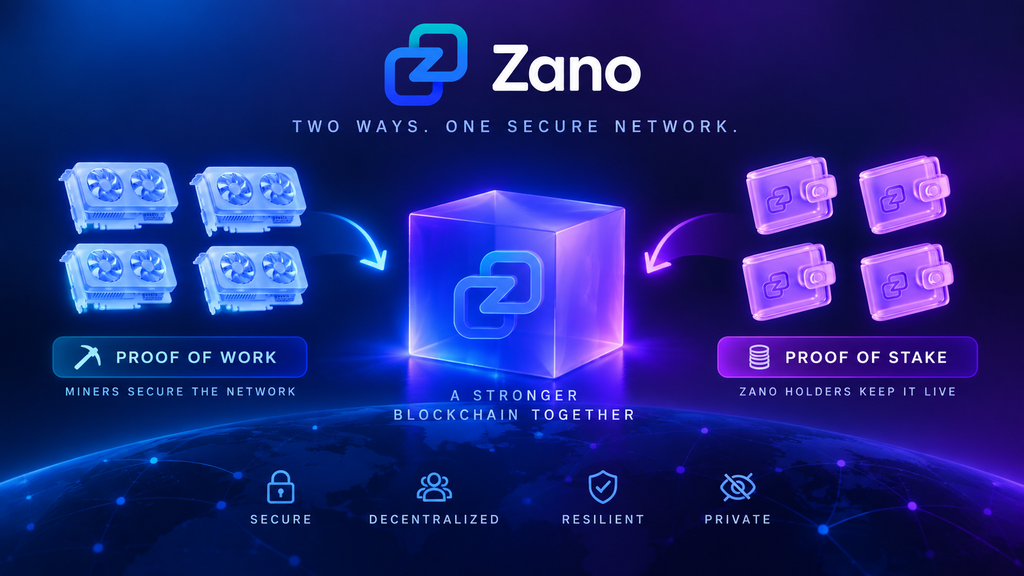
Zano uses a combination of Proof of Work (PoW) and Proof of Stake (PoS) to help maintain network security, resilience, and participation.
Check out the video here 🎥 👇

Table of Contents

  1. What Is Blockchain Consensus?
  2. How Zano’s Hybrid Model Works
  3. Proof of Work: The Mining Side
  4. Proof of Stake: The Staking Side
  5. Why Combine Both Methods?
  6. Key Takeaway

1. What Is Blockchain Consensus?

A blockchain is maintained by a network of computers called nodes. These nodes need to agree on which transactions happened and in what order.

Consensus is the process that makes this agreement possible. Without it, different computers could have different versions of the ledger, making digital money unreliable.

2. How Zano’s Hybrid Model Works

Zano uses a hybrid consensus model, alternating blocks between Proof of Work and Proof of Stake.

Some blocks are produced by miners, while others are produced by stakers. Regardless of how a block is created, the result is the same: a verified addition to the blockchain.

This approach combines the security benefits of mining with the participation and resilience of staking.

3. Proof of Work: The Mining Side

In Proof of Work, miners compete to solve a computational puzzle. The first miner to find a valid solution can propose the next block.

Zano’s mining is GPU-friendly, allowing participants to use graphics processing units to contribute to block production.

In simple terms, miners use computing power to help secure the network and confirm transactions.

4. Proof of Stake: The Staking Side

Proof of Stake allows Zano holders to participate in block creation and validation by running a Zano node and staking their coins.

Stakers earn rewards for helping keep the network operating honestly and reliably.

According to Zano’s model, there are no lockups or minimum staking requirements, and it does not support delegated staking. Each staker operates their own wallet rather than handing control to a large staking pool.

This design aims to keep participation more distributed among individual coin holders.

5. Why Combine Both Methods?

The hybrid approach provides multiple layers of protection and helps the network remain resilient.

Proof of Work contributes computational security, while Proof of Stake allows coin holders to participate directly in network operations. Staking can also help maintain block production when mining activity changes.

For users, the important outcome is that transactions continue to be confirmed on a single, verified ledger. This helps protect against issues such as double spending.

6. Key Takeaway

Zano’s hybrid consensus combines mining and staking to support a secure and distributed blockchain.

By involving both miners and coin holders, the model is designed to provide resilience while supporting Zano’s broader goal of private digital money and the assets built on its network.

Learn More

Disclaimer: ZanoNews.com is an independent news and information website. This article is for informational purposes only and does not constitute financial or investment advice.
Zano On-Chain Voting: A Simple Way for Stakers to Have Their Say

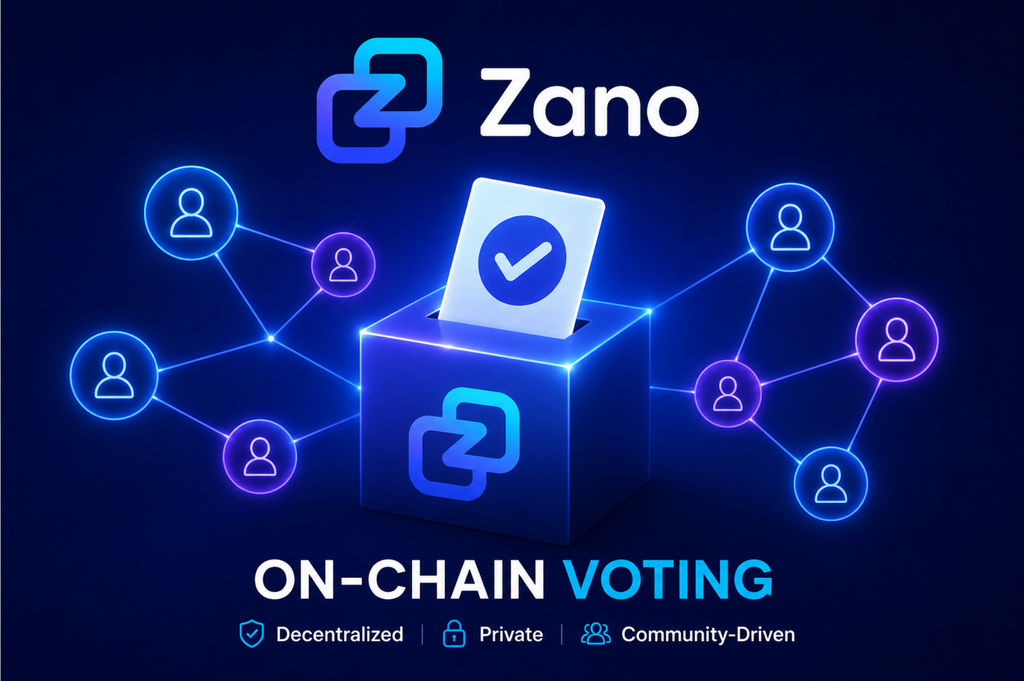
Zano has introduced on-chain voting, giving people who stake $ZANO a way to have a voice in decisions that affect the Zano ecosystem.

But what does that actually mean for an everyday user?

You don’t need to be a developer or understand how blockchain technology works to understand the basic idea.

📺 Watch the full Zano On-Chain Voting explainer on YouTube 👇

Table of Contents

  1. What is Zano on-chain voting?
  2. Who can vote?
  3. What can you vote on?
  4. How does voting work?
  5. Does staking more ZANO mean more voting power?
  6. Is the vote private?
  7. Why does on-chain voting matter?
  8. What does this mean for Zano users?
  9. How to learn more

1. What is Zano on-chain voting?

Imagine you are part of a community and the community needs to decide what it should support next.

Instead of only a small group making that decision, the people who actively support the community can also give their opinion.

That is the basic idea behind Zano on-chain voting.

People who stake $ZANO can signal whether they support or don’t support certain proposals.

They can choose:

  • Yes
  • No
  • Abstain

The votes are recorded through the Zano blockchain, making the overall result transparent.

2. Who can vote?

On-chain voting is designed for Zano stakers.

Staking means locking or committing your $ZANO to help support and secure the network while earning staking rewards.

If you are already staking ZANO, you don’t have to manually vote every time a new proposal appears.

Your staking activity can automatically carry your chosen vote.

This makes the process much simpler for users.

3. What can you vote on?

The voting system is mainly focused on decisions affecting the Zano ecosystem.

For example, the community may be asked about:

  • Projects that should appear in Zano Wallet
  • Assets that should be supported
  • Projects or assets related to Zano Trade
  • Other ecosystem-level decisions

However, on-chain voting is not intended to decide everything about Zano.

Technical decisions involving areas such as cryptography, network security, privacy and protocol upgrades remain under the responsibility of the Zano core team.

This helps keep important technical and security decisions in the hands of the people responsible for maintaining the network.

4. How does voting work?

You don’t need to sit in front of your computer and click a button every time you want to vote.

Once you have configured your staking setup and selected your vote, your staking activity does the work.

When you find a block while staking, that block automatically carries your chosen signal:

Yes, No, or Abstain.

The more blocks you find, the more voting signals you can contribute.

Think of each block as another opportunity to make your voice heard.

5. Does staking more ZANO mean more voting power?

Yes, generally.

Your voting influence is connected to how much ZANO you stake and how many blocks you find.

For example, Zano explains that someone staking 10,000 $ZANO could find around 11 blocks over two weeks.

Those blocks could provide around 11 voting signals for a proposal.

So, in simple terms:

More ZANO staked → higher chance of finding blocks → more voting signals.

Being online and keeping your staking setup working also matters.

6. Is the vote private?

This is one of the important parts of Zano’s system.

The overall voting results are public, but individual votes are designed to remain private.

That means people can see how the community voted overall, but they cannot simply look at the results and see:

“This person voted Yes.”

This is particularly relevant for Zano because privacy is one of the project’s main focuses.

However, Zano recommends that stakers properly secure their staking setup, including protecting their IP address.

So privacy doesn’t just depend on the voting system itself. Your own staking setup also matters.

7. Why does on-chain voting matter?

For someone new to crypto, the easiest way to understand this is:

It gives people who support the network a way to have a say in its future.

Without a system like this, decisions about an ecosystem could be made mainly by a small number of people.

With on-chain voting, Zano stakers can signal what they support.

It doesn’t mean every person gets exactly one vote. Your voting influence is connected to your staking participation.

But it does create a direct connection between supporting the network and having a voice in the ecosystem.

8. What does this mean for Zano users?

For regular Zano users, the change may not immediately look dramatic.

You can still use Zano, hold $ZANO, make transactions and use the ecosystem as before.

But for people who stake ZANO, there is now another reason to participate.

You are not only helping secure the network and earning staking rewards.

You can also help signal what you think the Zano ecosystem should support in the future.

This could become particularly interesting as the Zano ecosystem continues to grow and more projects, assets and services are introduced.

9. How to learn more

Zano’s on-chain voting system is available at vote.zano.org, where users can learn more about current proposals and participation.

The bigger idea is easy to understand:

Stake ZANO.
Help secure the network.
Have your voice heard.
Help shape the ecosystem.

You don’t need to be a blockchain expert to understand the concept.

Zano is essentially trying to make decentralization more practical by giving its stakers a direct way to participate in the future of the ecosystem, while keeping individual votes private.

Sources

Disclaimer: ZanoNews.com is an independent news and information website. This article is for informational purposes only and does not constitute financial or investment advice.
How Zano Keeps Your Staking Amount Private 🔒

When you stake cryptocurrency, the network normally needs to know how much you have staked. Zano takes a different approach.

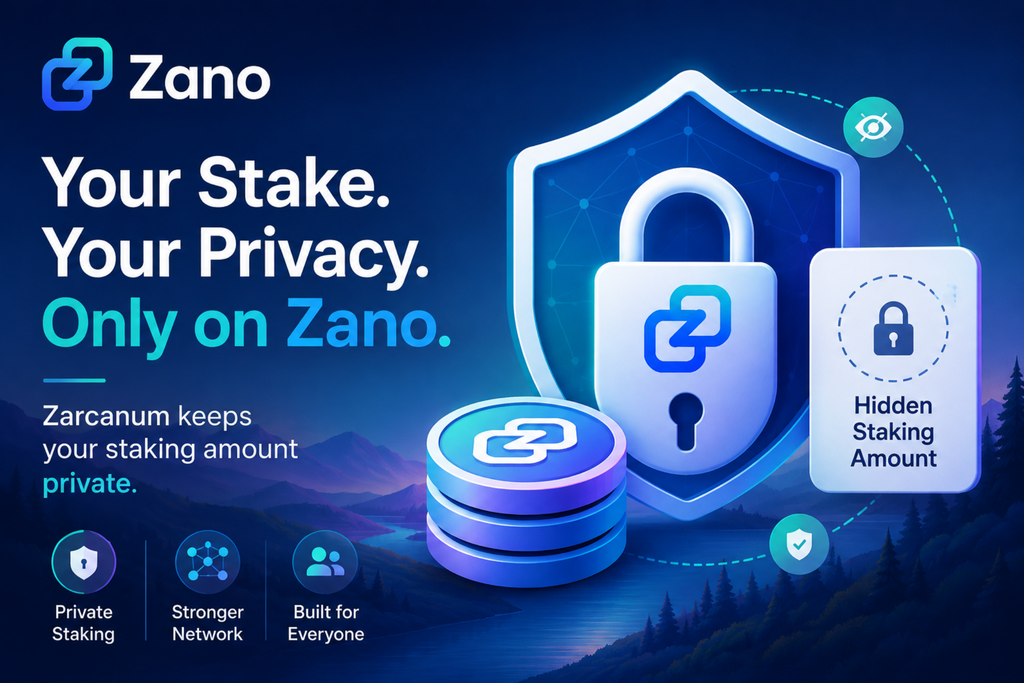
With Zarcanum, Zano can use your stake to help secure the network while keeping the amount hidden.

For everyday users, the idea is simple: you can help secure Zano without publicly showing how much you are staking.

Table of Contents

  1. What Is Staking?
  2. What Is Zarcanum?
  3. How Can Zano Hide Your Staking Amount?
  4. Why Does This Matter?
  5. Zarcanum Is Already Live

1. What Is Staking?

Staking is a way of helping a blockchain network operate and stay secure.

Instead of using computers to mine blocks, people can stake their coins and help the network confirm transactions and create new blocks.

Generally, the more someone stakes, the greater their chance of being selected to create a block.

This can create a privacy problem because many Proof of Stake networks make staking amounts visible.

2. What Is Zarcanum?

Zarcanum is Zano’s privacy focused Proof of Stake technology.

It was designed to solve a simple but important problem: how can a network use someone’s stake without publicly revealing how much they have?

Zarcanum uses cryptography to hide the amount being staked while still allowing the network to verify that everything is valid. Zano describes it as the first Proof of Stake scheme designed with hidden amounts.

If you want to understand Zarcanum in more detail, we have already covered it here:

👉 Zarcanum: Zano’s Private Proof of Stake

3. How Can Zano Hide Your Staking Amount?

Think of it like a competition.

The organiser needs to know that you qualify to participate, but does not necessarily need to know your exact score.

Zarcanum uses cryptography to achieve something similar.

The network can verify that your stake is valid and use it when deciding who can create a block without publicly revealing the exact amount. Zano’s documentation explains that confidential transactions, commitments, range proofs and ring signatures work together to hide the amount and staking output while still allowing the network to verify the block.

For everyday users, the main idea is:

Your stake can help secure the network without exposing how much you have staked.

4. Why Does This Matter?

On a transparent blockchain, visible staking information can reveal more about someone’s financial position.

For people who value financial privacy, that may be information they would rather keep private.

Zano’s approach allows staking and financial privacy to work together.

Instead of choosing between Proof of Stake and privacy, Zarcanum was designed to provide both.

5. Zarcanum Is Already Live

Zarcanum is not just a future plan.

The Zarcanum upgrade went live on the Zano mainnet in 2024, introducing private Proof of Stake with hidden amounts and Confidential Assets.

The technology also forms the foundation for Zenith, Zano’s planned move to a fully Proof of Stake network. Zenith is designed to keep staking private while making the network more efficient.

👉 Want to learn what Zenith means for Zano? Read our guide: Zenith: Zano’s Move to Pure Proof of Stake Explained

Sources

Disclaimer: ZanoNews.com is an independent news and information website. This article is for informational purposes only and does not constitute financial or investment advice.
Why Zano Could Become a Deflationary Cryptocurrency 🔥

On July 15, 2025, the Zano team explained how the network’s token supply is designed to change as adoption grows. Unlike many cryptocurrencies that continually increase their supply, Zano combines a fixed block reward with transaction fee burns that can eventually offset new coin issuance.

Table of Contents

  1. Introduction
  2. How Zano Creates New Coins
  3. How Zano Burns Coins
  4. When Does Inflation Reach Zero?
  5. What Happens if Network Usage Increases?
  6. Why This Matters
  7. Learn More About Zano
  8. Source

1. Introduction

Many cryptocurrencies increase their circulating supply over time through mining or staking rewards. This process is known as inflation because more coins enter circulation.

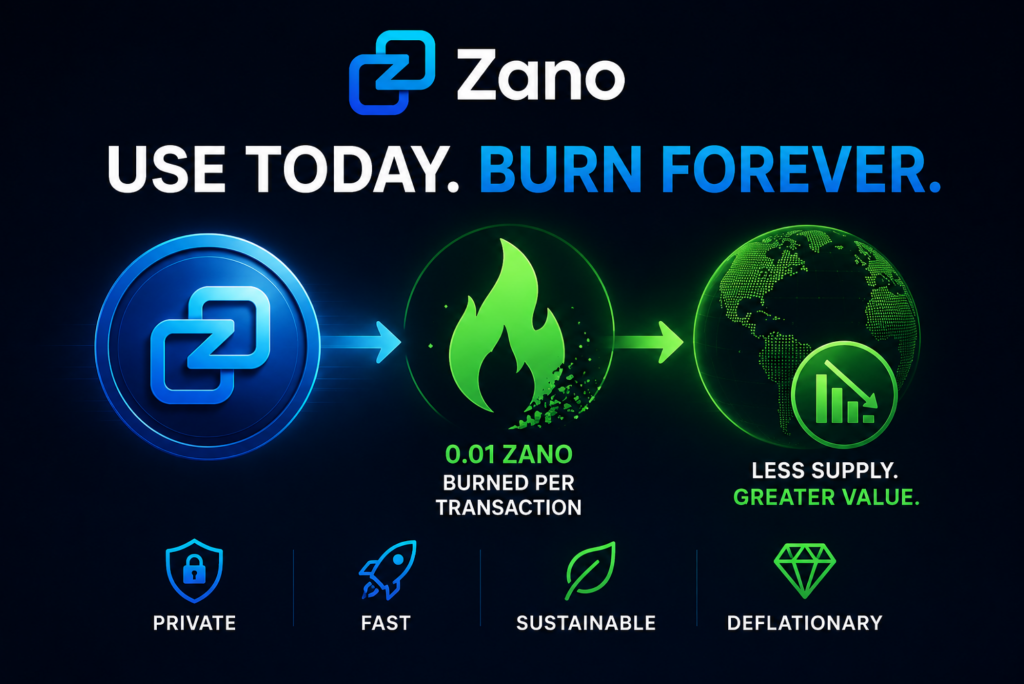
Zano takes a different approach. While new ZANO coins are created through block rewards, every transaction also permanently removes a small amount of ZANO from circulation. As network usage grows, the number of coins burned increases, helping reduce inflation over time.

2. How Zano Creates New Coins

New ZANO enters circulation through block rewards.

The network is designed to produce:

Network ActivityAmount
Block reward1 ZANO
Block time1 minute
New ZANO created each dayApproximately 1,440 ZANO

This emission remains consistent, providing predictable issuance for the network.

3. How Zano Burns Coins

Every transaction on the Zano network permanently burns part of the transaction fee.

Specifically:

  • Each transaction burns 0.01 ZANO.
  • Burned coins are permanently removed from circulation.
  • The more transactions processed by the network, the more ZANO is burned.

Unlike the block reward, which remains relatively constant, the number of coins burned depends entirely on network activity.

4. When Does Inflation Reach Zero?

According to the Zano team, the network reaches net zero inflation when the amount of ZANO burned equals the amount of new ZANO created.

This happens at approximately:

Daily TransactionsNetwork Effect
Around 144,000Burned coins equal newly created coins
Above 144,000More ZANO is burned than created

At this point, transaction fee burns completely offset the daily block rewards.

5. What Happens if Network Usage Increases?

If daily transaction volume continues to grow beyond approximately 144,000 transactions, the network begins removing more ZANO from circulation than it creates.

This is known as a deflationary supply, where the total supply gradually decreases over time.

Rather than relying on scheduled token burns, Zano’s supply becomes increasingly influenced by real network usage. As more people use the blockchain, more transaction fees are burned.

6. Why This Matters

Zano’s tokenomics are designed so that network activity directly affects the coin’s supply.

Instead of having inflation that continually increases circulating supply, transaction fee burns help reduce inflation as adoption grows. If network usage becomes high enough, the blockchain can transition from inflationary to deflationary.

This approach links the long-term supply of ZANO to actual blockchain activity rather than fixed issuance alone.

7. Learn More About Zano

If you’re new to the Zano ecosystem, visit the official website to learn more about its privacy-focused blockchain, ecosystem, and latest developments:

https://zano.org

8. Source

Official Zano Announcement on X

Disclaimer: ZanoNews.com is an independent news and information website. This article is for informational purposes only and should not be considered financial, investment, or legal advice.

Zenith: Zano’s Move to Pure Proof of Stake Explained

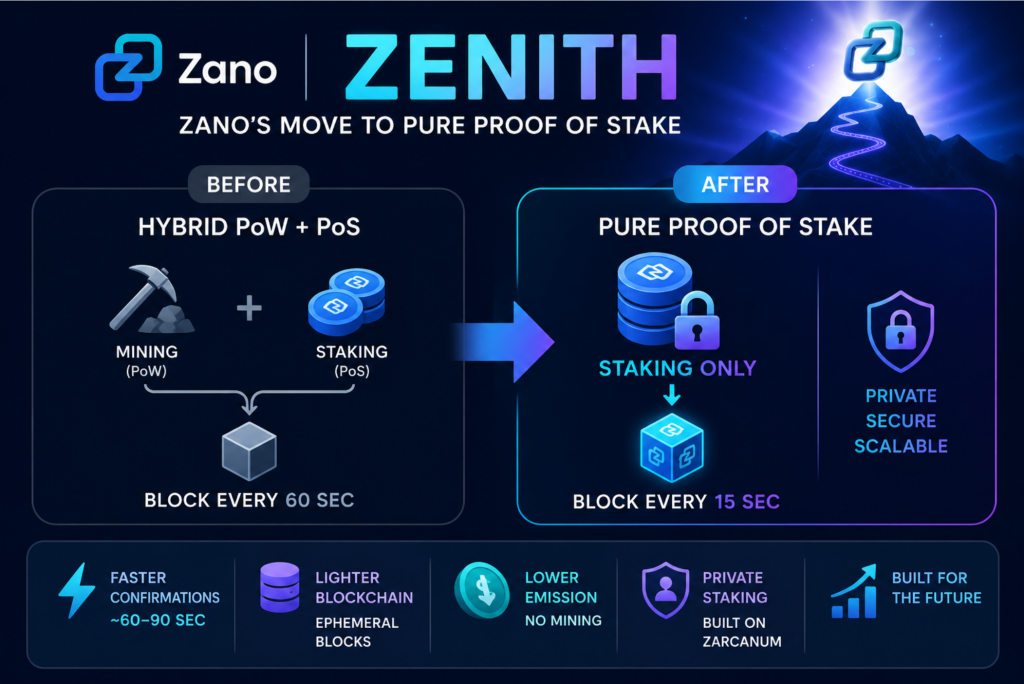
For years, Zano has focused on building a blockchain that puts privacy first. Now, the project has announced one of its biggest upgrades yet: Zenith, a new consensus system that will move Zano from its current hybrid model to a Pure Proof of Stake (PoS) network.

The goal isn’t just to modernize the blockchain. Zenith is designed to improve security, speed up transactions, reduce unnecessary blockchain growth, and strengthen Zano’s long-term sustainability—all while preserving the privacy features that make Zano unique.

Here’s a simple breakdown of what Zenith means for users.

Table of Contents

  1. What Is Zenith?
  2. Why Is Zano Changing?
  3. What Is Pure Proof of Stake?
  4. Faster Transactions and Confirmations
  5. Smaller Blockchain, Faster Sync
  6. Lower Coin Emission
  7. What This Means for Zano Users
  8. Source

1. What Is Zenith?

Zenith is Zano’s next-generation consensus protocol.

Today, Zano uses a Hybrid Proof of Work (PoW) and Proof of Stake (PoS) system. With Zenith, the network will transition to Pure Proof of Stake, meaning blocks will be created entirely by staking instead of combining mining and staking.

Unlike many Proof of Stake blockchains, Zenith is built on Zarcanum, allowing users to stake while keeping their balances and staking activity private.

2. Why Is Zano Changing?

The Zano team originally tried to improve its hybrid consensus system.

However, after years of research, every major improvement continued running into limitations caused by the Proof of Work component.

Rather than continuing to patch the existing design, the team worked with blockchain research company Common Prefix to develop a new privacy-preserving Proof of Stake protocol from the ground up.

The result was Zenith.

3. What Is Pure Proof of Stake?

Proof of Stake secures a blockchain using coins that users stake instead of computers that perform mining.

In simple terms:

  • Current Zano: Mining + Staking
  • Zenith: Staking only

One important difference is that Zano’s implementation keeps staking private.

Most Proof of Stake networks publicly show validator balances and staking activity. Zenith is designed so users can help secure the network without revealing their holdings.

4. Faster Transactions and Confirmations

One of the biggest improvements for everyday users will be speed.

The proposed Zenith targets include:

Current ZanoZenith
Block every 60 secondsBlock every 15 seconds
Around 10 confirmationsAround 4–6 confirmations
Several minutes to confirmAround 60–90 seconds

That means payments, wallet transfers and decentralized applications should all feel much faster once Zenith is live.

5. Smaller Blockchain, Faster Sync

Normally, creating four times as many blocks would make a blockchain much larger.

Zenith introduces something called Ephemeral Blocks.

Instead of storing every old block forever, the network keeps only the important cryptographic information once older blocks are finalized.

This allows Zano to:

  • Keep fast block times
  • Reduce storage requirements
  • Improve synchronization for new nodes
  • Offer optional archival storage for anyone who wants the complete history

In short, users get faster confirmations without permanently increasing blockchain size.

6. Lower Coin Emission

Moving away from Proof of Work also changes how new coins enter circulation.

Today, miners receive approximately:

  • 720 ZANO per day
  • 21,600 ZANO per month
  • 262,800 ZANO per year

Because miners must pay electricity, hardware and operating costs, many sell part of their rewards.

Once Zenith launches, Proof of Work mining will end. The Zano team is still finalizing exactly how future rewards will be distributed, but the network’s security will rely entirely on staking instead of mining.

7. What This Means for Zano Users

Zenith represents one of the biggest upgrades in Zano’s history.

If everything performs as expected after testing and implementation, users can look forward to:

  • Faster transaction confirmations
  • Private Proof of Stake
  • Improved security
  • Lower long-term storage requirements
  • Better performance for wallets, merchants and applications
  • A blockchain designed for long-term growth

The upgrade is still under development and will undergo extensive testing before activation, but it marks an important milestone in Zano’s evolution toward a faster, more scalable and privacy-focused blockchain.

8. Source

  1. Zano Blog: Zenith: Zano’s Move to Pure Proof of Stake
  2. Zano Official Announcement (X)

Disclaimer: ZanoNews.com is an independent news and information website. This article is for informational purposes only and does not constitute financial or investment advice.
Why Every Zano Transaction Burns Coins 🔥

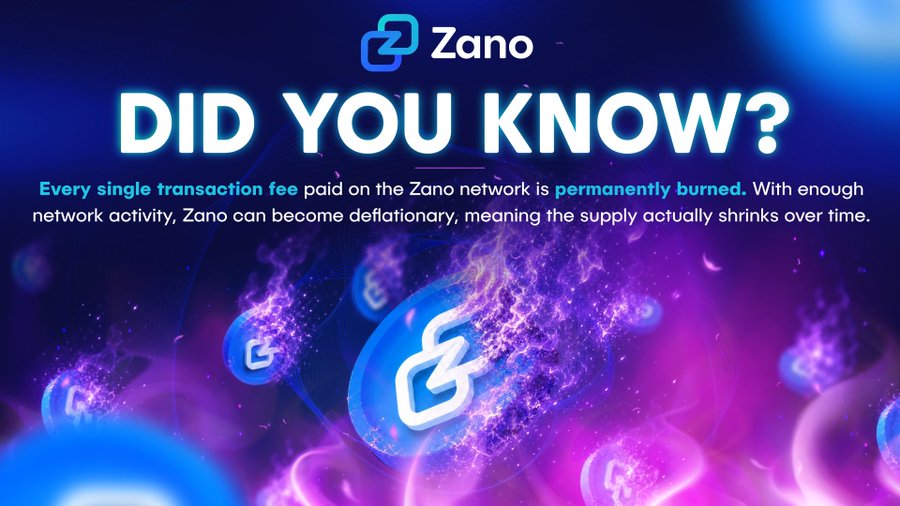
Did you know that every transaction fee paid on the Zano network is permanently burned?

Unlike many blockchain networks that redistribute transaction fees, Zano removes every fee from circulation forever. This unique mechanism means that increased network activity can contribute to reducing the overall supply of ZANO over time.

As adoption grows, this feature could play an important role in Zano’s long-term tokenomics.

Table of Contents

  1. What Does “Burning Coins” Mean?
  2. How Zano’s Fee Burn Mechanism Works
  3. Why Every Transaction Matters
  4. Can Zano Become Deflationary?
  5. What Makes Zano Different?
  6. Key Takeaways
  7. Sources

What Does “Burning Coins” Mean?

In cryptocurrency, burning coins means permanently removing them from circulation.

Once coins are burned, they cannot be recovered, spent, or reintroduced into the supply. This reduces the total number of coins available over time.

Many projects conduct occasional token burns, but Zano has incorporated burning directly into its network activity.

How Zano’s Fee Burn Mechanism Works

Every transaction on the Zano blockchain requires a network fee.

Instead of distributing those fees back into circulation, Zano permanently destroys them.

ActionResult
User sends a transactionNetwork fee is paid
Fee is processedFee is burned
Burn completedCoins are permanently removed from supply

Every fee burned. No exceptions.

Why Every Transaction Matters

Each transaction contributes to reducing the circulating supply of ZANO.

As more people use the network:

  • More transactions occur
  • More fees are paid
  • More ZANO is burned

This creates a direct relationship between blockchain usage and supply reduction.

Can Zano Become Deflationary?

A deflationary asset is one where the total supply decreases over time.

If enough transaction fees are burned through network activity, the amount of ZANO removed from circulation can increase, causing the overall supply to shrink.

While future outcomes depend on adoption and transaction volume, the mechanism is already built into the protocol.

What Makes Zano Different?

Many blockchain networks use fees to reward validators, miners, or other participants.

Zano follows a different approach.

Traditional Blockchain NetworksZano
Fees are redistributedFees are burned
Supply often growsSupply can shrink
Burns may be occasionalBurns occur with every transaction

This means network activity itself can contribute to scarcity.

Key Takeaways

🔥 Every transaction fee on Zano is permanently burned.

🔥 Burned coins are removed from circulation forever.

🔥 Increased network activity results in more ZANO being burned.

🔥 Supply can decrease over time if burn activity is significant.

🔥 Every transaction contributes to Zano’s long-term tokenomics.

Sources

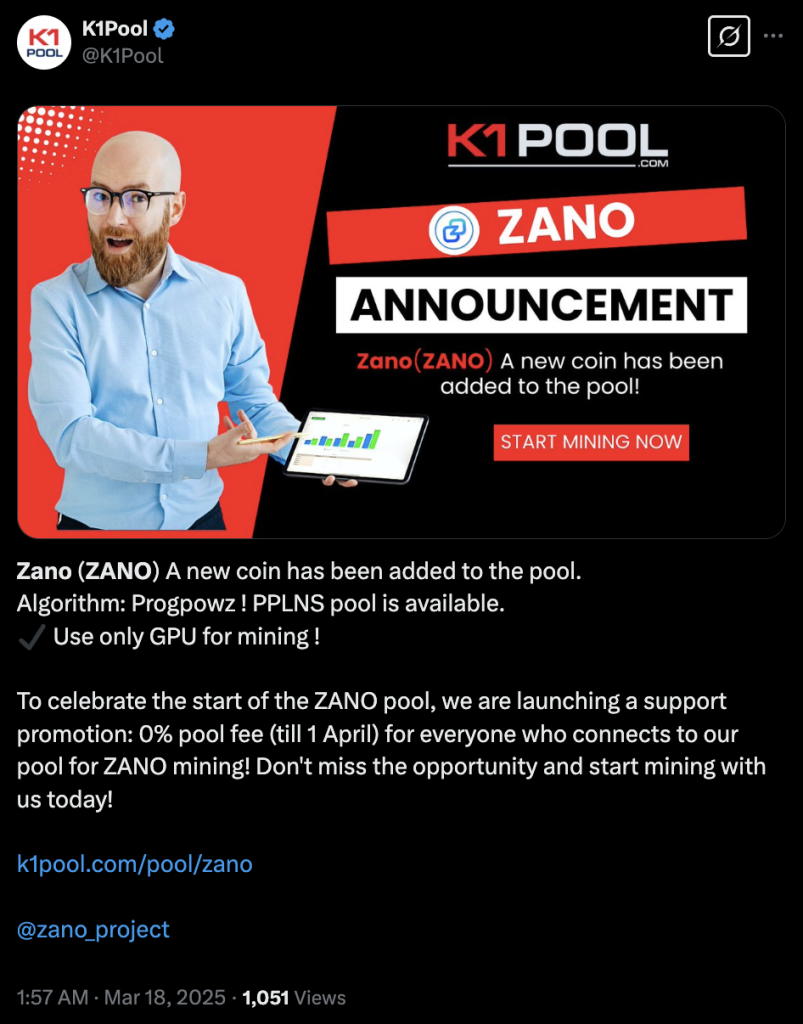
Zano (ZANO) has been added to the K1Pool

K1Pool, a multicoin mining pool, has added Zano (ZANO) to its platform, using the Progpowz algorithm optimized for GPU mining, as part of its mission to support profitable and accessible mining options.

Zano is a privacy-focused cryptocurrency aiming for mass adoption, with a decentralized mining ecosystem resistant to ASIC domination, as detailed on its official website and mining guides.

The promotion of a 0% pool fee for Zano mining until April 1, 2025, incentivizes miners to join K1Pool, leveraging its PPLNS pool structure and automatic payouts.

k1pool.com/pool/zano