
How Zano’s Hybrid Consensus Keeps Its Network Secure 🕊️ 🔐

How does a blockchain decide which transactions are valid? The answer is consensus. It is the process that allows thousands of computers to agree on the same version of a digital ledger.

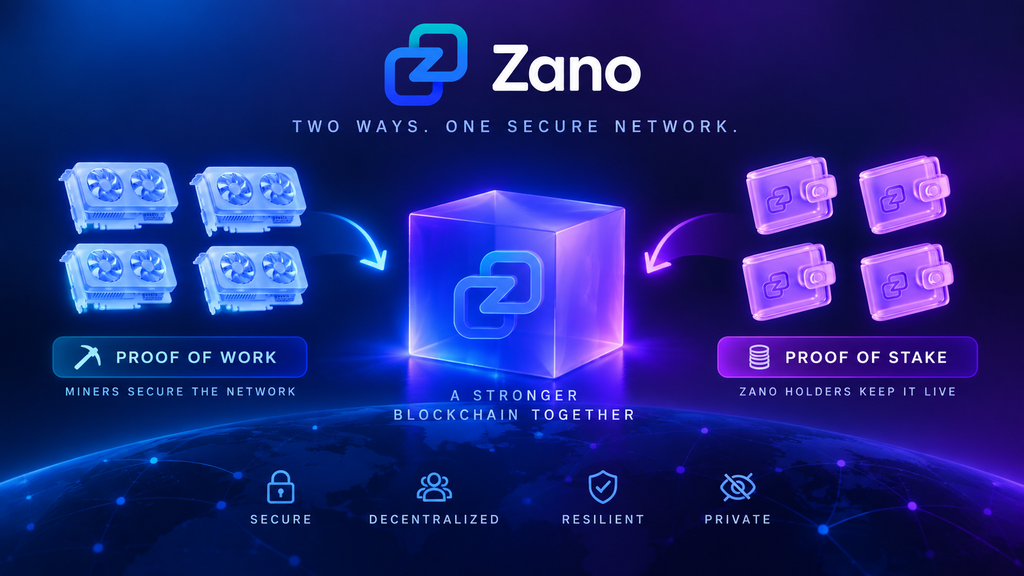
Zano uses a combination of Proof of Work (PoW) and Proof of Stake (PoS) to help maintain network security, resilience, and participation.
Check out the video here 🎥 👇

Table of Contents

  1. What Is Blockchain Consensus?
  2. How Zano’s Hybrid Model Works
  3. Proof of Work: The Mining Side
  4. Proof of Stake: The Staking Side
  5. Why Combine Both Methods?
  6. Key Takeaway

1. What Is Blockchain Consensus?

A blockchain is maintained by a network of computers called nodes. These nodes need to agree on which transactions happened and in what order.

Consensus is the process that makes this agreement possible. Without it, different computers could have different versions of the ledger, making digital money unreliable.

2. How Zano’s Hybrid Model Works

Zano uses a hybrid consensus model, alternating blocks between Proof of Work and Proof of Stake.

Some blocks are produced by miners, while others are produced by stakers. Regardless of how a block is created, the result is the same: a verified addition to the blockchain.

This approach combines the security benefits of mining with the participation and resilience of staking.

3. Proof of Work: The Mining Side

In Proof of Work, miners compete to solve a computational puzzle. The first miner to find a valid solution can propose the next block.

Zano’s mining is GPU-friendly, allowing participants to use graphics processing units to contribute to block production.

In simple terms, miners use computing power to help secure the network and confirm transactions.

4. Proof of Stake: The Staking Side

Proof of Stake allows Zano holders to participate in block creation and validation by running a Zano node and staking their coins.

Stakers earn rewards for helping keep the network operating honestly and reliably.

According to Zano’s model, there are no lockups or minimum staking requirements, and it does not support delegated staking. Each staker operates their own wallet rather than handing control to a large staking pool.

This design aims to keep participation more distributed among individual coin holders.

5. Why Combine Both Methods?

The hybrid approach provides multiple layers of protection and helps the network remain resilient.

Proof of Work contributes computational security, while Proof of Stake allows coin holders to participate directly in network operations. Staking can also help maintain block production when mining activity changes.

For users, the important outcome is that transactions continue to be confirmed on a single, verified ledger. This helps protect against issues such as double spending.

6. Key Takeaway

Zano’s hybrid consensus combines mining and staking to support a secure and distributed blockchain.

By involving both miners and coin holders, the model is designed to provide resilience while supporting Zano’s broader goal of private digital money and the assets built on its network.

Learn More

Disclaimer: ZanoNews.com is an independent news and information website. This article is for informational purposes only and does not constitute financial or investment advice.
How Zano Keeps Your Staking Amount Private 🔒

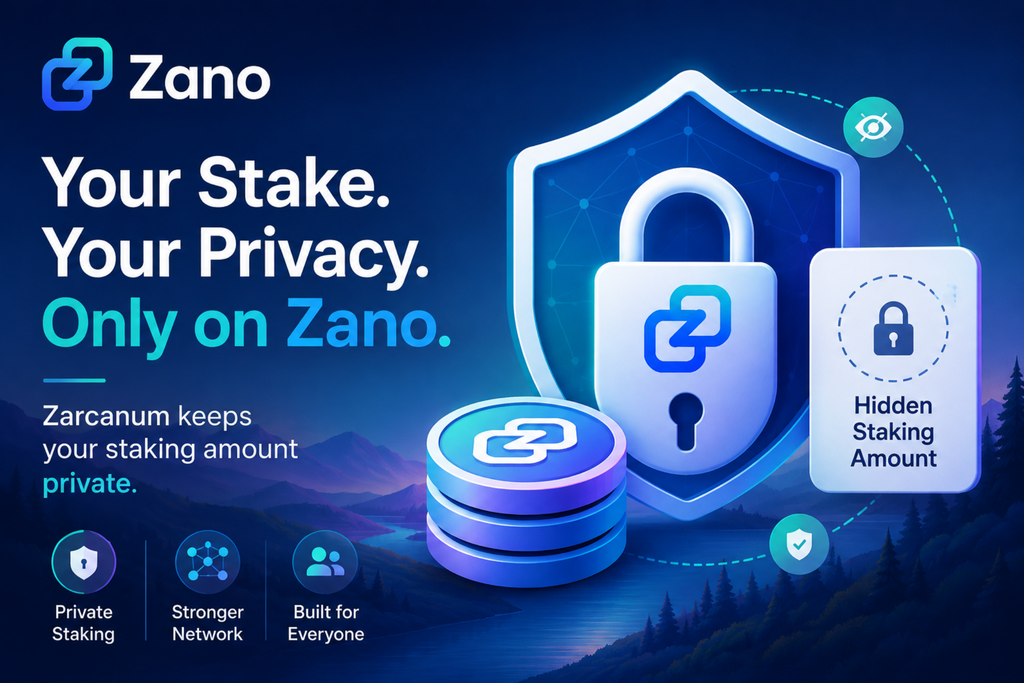
When you stake cryptocurrency, the network normally needs to know how much you have staked. Zano takes a different approach.

With Zarcanum, Zano can use your stake to help secure the network while keeping the amount hidden.

For everyday users, the idea is simple: you can help secure Zano without publicly showing how much you are staking.

Table of Contents

  1. What Is Staking?
  2. What Is Zarcanum?
  3. How Can Zano Hide Your Staking Amount?
  4. Why Does This Matter?
  5. Zarcanum Is Already Live

1. What Is Staking?

Staking is a way of helping a blockchain network operate and stay secure.

Instead of using computers to mine blocks, people can stake their coins and help the network confirm transactions and create new blocks.

Generally, the more someone stakes, the greater their chance of being selected to create a block.

This can create a privacy problem because many Proof of Stake networks make staking amounts visible.

2. What Is Zarcanum?

Zarcanum is Zano’s privacy focused Proof of Stake technology.

It was designed to solve a simple but important problem: how can a network use someone’s stake without publicly revealing how much they have?

Zarcanum uses cryptography to hide the amount being staked while still allowing the network to verify that everything is valid. Zano describes it as the first Proof of Stake scheme designed with hidden amounts.

If you want to understand Zarcanum in more detail, we have already covered it here:

👉 Zarcanum: Zano’s Private Proof of Stake

3. How Can Zano Hide Your Staking Amount?

Think of it like a competition.

The organiser needs to know that you qualify to participate, but does not necessarily need to know your exact score.

Zarcanum uses cryptography to achieve something similar.

The network can verify that your stake is valid and use it when deciding who can create a block without publicly revealing the exact amount. Zano’s documentation explains that confidential transactions, commitments, range proofs and ring signatures work together to hide the amount and staking output while still allowing the network to verify the block.

For everyday users, the main idea is:

Your stake can help secure the network without exposing how much you have staked.

4. Why Does This Matter?

On a transparent blockchain, visible staking information can reveal more about someone’s financial position.

For people who value financial privacy, that may be information they would rather keep private.

Zano’s approach allows staking and financial privacy to work together.

Instead of choosing between Proof of Stake and privacy, Zarcanum was designed to provide both.

5. Zarcanum Is Already Live

Zarcanum is not just a future plan.

The Zarcanum upgrade went live on the Zano mainnet in 2024, introducing private Proof of Stake with hidden amounts and Confidential Assets.

The technology also forms the foundation for Zenith, Zano’s planned move to a fully Proof of Stake network. Zenith is designed to keep staking private while making the network more efficient.

👉 Want to learn what Zenith means for Zano? Read our guide: Zenith: Zano’s Move to Pure Proof of Stake Explained

Sources

Disclaimer: ZanoNews.com is an independent news and information website. This article is for informational purposes only and does not constitute financial or investment advice.