
How Zanoโ€™s Hybrid Consensus Keeps Its Network Secure ๐Ÿ•Š๏ธ ๐Ÿ”

How does a blockchain decide which transactions are valid? The answer is consensus. It is the process that allows thousands of computers to agree on the same version of a digital ledger.

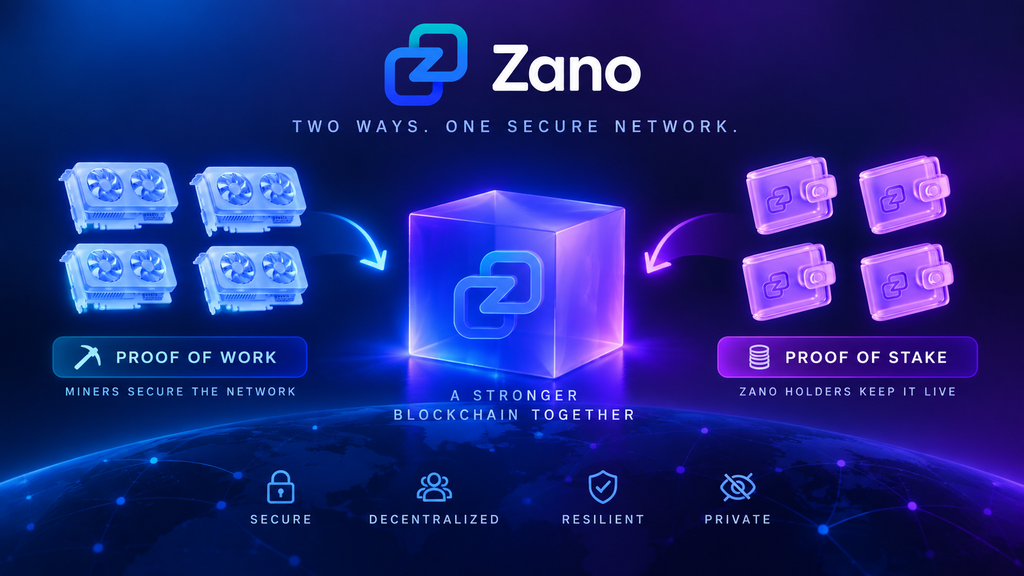
Zano uses a combination of Proof of Work (PoW) and Proof of Stake (PoS) to help maintain network security, resilience, and participation.
Check out the video here ๐ŸŽฅ ๐Ÿ‘‡

Table of Contents

  1. What Is Blockchain Consensus?
  2. How Zanoโ€™s Hybrid Model Works
  3. Proof of Work: The Mining Side
  4. Proof of Stake: The Staking Side
  5. Why Combine Both Methods?
  6. Key Takeaway

1. What Is Blockchain Consensus?

A blockchain is maintained by a network of computers called nodes. These nodes need to agree on which transactions happened and in what order.

Consensus is the process that makes this agreement possible. Without it, different computers could have different versions of the ledger, making digital money unreliable.

2. How Zanoโ€™s Hybrid Model Works

Zano uses a hybrid consensus model, alternating blocks between Proof of Work and Proof of Stake.

Some blocks are produced by miners, while others are produced by stakers. Regardless of how a block is created, the result is the same: a verified addition to the blockchain.

This approach combines the security benefits of mining with the participation and resilience of staking.

3. Proof of Work: The Mining Side

In Proof of Work, miners compete to solve a computational puzzle. The first miner to find a valid solution can propose the next block.

Zanoโ€™s mining is GPU-friendly, allowing participants to use graphics processing units to contribute to block production.

In simple terms, miners use computing power to help secure the network and confirm transactions.

4. Proof of Stake: The Staking Side

Proof of Stake allows Zano holders to participate in block creation and validation by running a Zano node and staking their coins.

Stakers earn rewards for helping keep the network operating honestly and reliably.

According to Zanoโ€™s model, there are no lockups or minimum staking requirements, and it does not support delegated staking. Each staker operates their own wallet rather than handing control to a large staking pool.

This design aims to keep participation more distributed among individual coin holders.

5. Why Combine Both Methods?

The hybrid approach provides multiple layers of protection and helps the network remain resilient.

Proof of Work contributes computational security, while Proof of Stake allows coin holders to participate directly in network operations. Staking can also help maintain block production when mining activity changes.

For users, the important outcome is that transactions continue to be confirmed on a single, verified ledger. This helps protect against issues such as double spending.

6. Key Takeaway

Zanoโ€™s hybrid consensus combines mining and staking to support a secure and distributed blockchain.

By involving both miners and coin holders, the model is designed to provide resilience while supporting Zanoโ€™s broader goal of private digital money and the assets built on its network.

Learn More

Disclaimer: ZanoNews.com is an independent news and information website. This article is for informational purposes only and does not constitute financial or investment advice.
How Zano Keeps Your Staking Amount Private ๐Ÿ”’

When you stake cryptocurrency, the network normally needs to know how much you have staked. Zano takes a different approach.

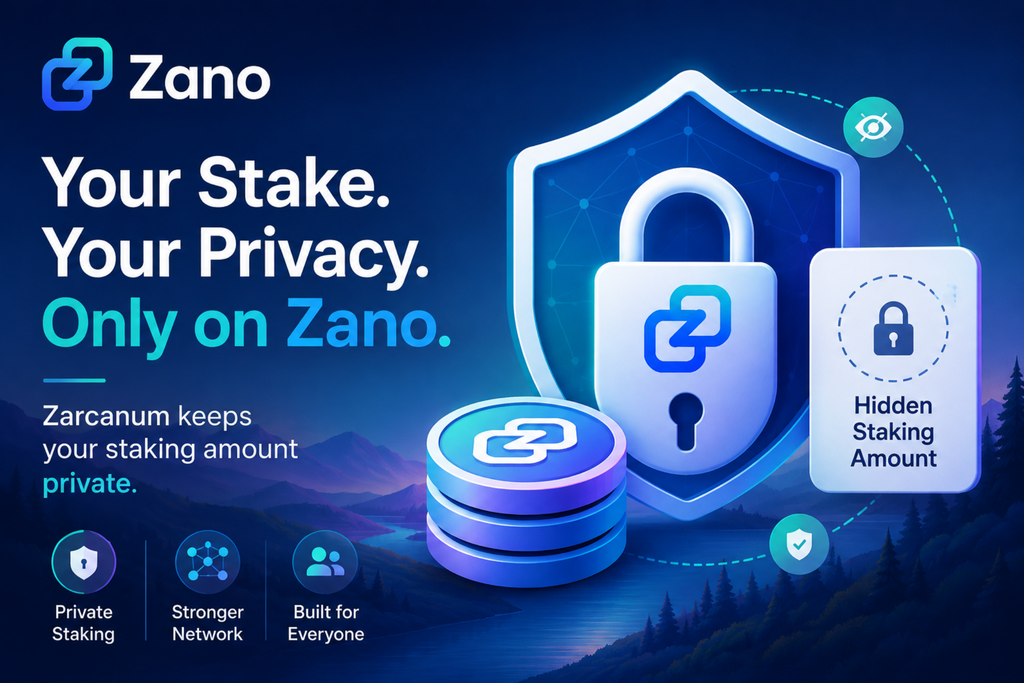
With Zarcanum, Zano can use your stake to help secure the network while keeping the amount hidden.

For everyday users, the idea is simple: you can help secure Zano without publicly showing how much you are staking.

Table of Contents

  1. What Is Staking?
  2. What Is Zarcanum?
  3. How Can Zano Hide Your Staking Amount?
  4. Why Does This Matter?
  5. Zarcanum Is Already Live

1. What Is Staking?

Staking is a way of helping a blockchain network operate and stay secure.

Instead of using computers to mine blocks, people can stake their coins and help the network confirm transactions and create new blocks.

Generally, the more someone stakes, the greater their chance of being selected to create a block.

This can create a privacy problem because many Proof of Stake networks make staking amounts visible.

2. What Is Zarcanum?

Zarcanum is Zanoโ€™s privacy focused Proof of Stake technology.

It was designed to solve a simple but important problem: how can a network use someone’s stake without publicly revealing how much they have?

Zarcanum uses cryptography to hide the amount being staked while still allowing the network to verify that everything is valid. Zano describes it as the first Proof of Stake scheme designed with hidden amounts.

If you want to understand Zarcanum in more detail, we have already covered it here:

๐Ÿ‘‰ Zarcanum: Zanoโ€™s Private Proof of Stake

3. How Can Zano Hide Your Staking Amount?

Think of it like a competition.

The organiser needs to know that you qualify to participate, but does not necessarily need to know your exact score.

Zarcanum uses cryptography to achieve something similar.

The network can verify that your stake is valid and use it when deciding who can create a block without publicly revealing the exact amount. Zano’s documentation explains that confidential transactions, commitments, range proofs and ring signatures work together to hide the amount and staking output while still allowing the network to verify the block.

For everyday users, the main idea is:

Your stake can help secure the network without exposing how much you have staked.

4. Why Does This Matter?

On a transparent blockchain, visible staking information can reveal more about someone’s financial position.

For people who value financial privacy, that may be information they would rather keep private.

Zano’s approach allows staking and financial privacy to work together.

Instead of choosing between Proof of Stake and privacy, Zarcanum was designed to provide both.

5. Zarcanum Is Already Live

Zarcanum is not just a future plan.

The Zarcanum upgrade went live on the Zano mainnet in 2024, introducing private Proof of Stake with hidden amounts and Confidential Assets.

The technology also forms the foundation for Zenith, Zanoโ€™s planned move to a fully Proof of Stake network. Zenith is designed to keep staking private while making the network more efficient.

๐Ÿ‘‰ Want to learn what Zenith means for Zano? Read our guide: Zenith: Zanoโ€™s Move to Pure Proof of Stake Explained

Sources

Disclaimer: ZanoNews.com is an independent news and information website. This article is for informational purposes only and does not constitute financial or investment advice.
Zano Updates Its Introduction Guide With the Latest Developments ๐Ÿ“˜

New to Zano or trying to explain it to someone else?

Zano has updated its official Introduction Guide to include some of its latest developments, including Gateway Addresses, the Zano Execution Layer and Zenith. It gives newcomers a simple place to learn about Zano, its privacy technology and where the project is heading.

Table of Contents

  1. What Is the Zano Introduction Guide?
  2. What Has Been Updated?
  3. Gateway Addresses
  4. The Zano Execution Layer
  5. Zenith
  6. Who Is the Guide For?
  7. Where Can You Read It?
  8. What This Means for New Users

1. What Is the Zano Introduction Guide?

The Zano Introduction Guide is a beginner friendly resource designed to explain the Zano ecosystem in one place.

It helps readers understand the basics of Zano, including its privacy features, wallets, Confidential Assets, staking, mining and other parts of the ecosystem.

The latest version has now been updated to reflect some of Zano’s newest developments.

2. What Has Been Updated?

The updated guide includes information about three important areas of Zano’s development:

Gateway Addresses
A new address system designed to make it easier for exchanges, bridges and other services to connect with Zano.

Zano Execution Layer
A planned environment for smart contracts and decentralized applications that works alongside Zano’s privacy focused main blockchain.

Zenith
A planned upgrade that would move Zano from its current hybrid Proof of Work and Proof of Stake system toward pure Proof of Stake.

Each of these developments could play an important role in Zano’s future.

3. Gateway Addresses

Gateway Addresses are designed to make Zano easier for exchanges, wallets, bridges and other crypto services to integrate.

For everyday users, the idea is simple: make it easier for more services to support Zano without removing its privacy.

We have already explained Gateway Addresses in more detail here:

๐Ÿ‘‰ How Gateway Addresses Could Bring Zano to More Exchanges

You can also read our earlier overview:

๐Ÿ‘‰ Gateway Addresses Are Coming: The Game-Changer for Zano Adoption

4. The Zano Execution Layer

The Zano Execution Layer, or ZEL, is designed to give Zano a separate environment for smart contracts and decentralized applications.

Think of it simply as an additional layer that can handle applications such as trading, lending and other Web3 services, while Zano’s main blockchain continues to focus on privacy.

We have already covered ZEL in detail:

๐Ÿ‘‰ Zano Execution Layer (ZEL) Explained: Smart Contracts Without Changing Zanoโ€™s Privacy

5. Zenith

Zenith is Zano’s longer term plan to move from its current hybrid Proof of Work and Proof of Stake system to pure Proof of Stake.

In simple terms, Proof of Stake allows users to help secure the network by staking their coins instead of relying on mining.

Zenith is still under development, so it is a future upgrade rather than something users need to change today.

For a deeper explanation, read:

๐Ÿ‘‰ Zenith: Zanoโ€™s Move to Pure Proof of Stake Explained

We also covered the bigger picture behind Zenith here:

๐Ÿ‘‰ The Biggest Change in Zanoโ€™s History Is Coming ๐Ÿงญ

6. Who Is the Guide For?

You do not need to be a blockchain expert to use the guide.

It is useful if you:

  • Are completely new to Zano
  • Want to understand Zano’s privacy features
  • Want to learn about the Zano ecosystem
  • Want to explain Zano to a friend or colleague
  • Want a simple overview of where Zano is heading

Instead of searching through different articles and technical documents, the guide brings the main information together in one place.

7. Where Can You Read It?

You can read the updated Zano Introduction Guide here:

๐Ÿ‘‰ Zano Introduction Guidebook

You can also visit the Zano introduction website for more information about the project and its ecosystem:

๐Ÿ‘‰ Zano Introduction Website

8. What This Means for New Users

Zano continues to develop beyond its original focus on private cryptocurrency transactions.

Gateway Addresses are designed to make integrations easier, the Execution Layer could bring more applications and smart contracts to the ecosystem, and Zenith represents a future move toward pure Proof of Stake.

For someone discovering Zano today, the updated guide provides a useful starting point to understand where Zano is now and where it could be heading next.

If you have been curious about Zano but did not know where to start, this is a good place to begin. ๐Ÿ‘‡

Sources

Disclaimer: ZanoNews.com is an independent news and information website. This article is for informational purposes only and does not constitute financial or investment advice.
Zano July Project Update: Zenith, HF6, Forum and More ๐Ÿ”’

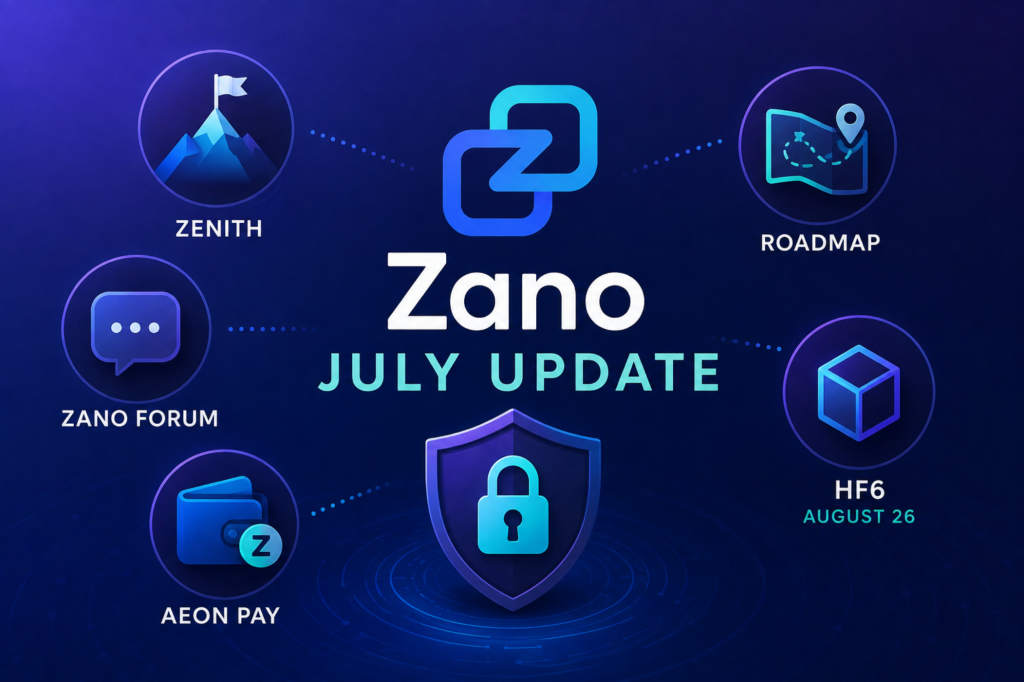
Zano has released its July Monthly Project Update, highlighting several important developments across the network, roadmap and community.

From the future move to pure Proof of Stake to the upcoming HF6 upgrade, July brought several updates worth knowing about.

Table of Contents

  1. Zenith Moves Toward Pure Proof of Stake
  2. Zano Execution Layer Added to the Roadmap
  3. Zano Forum Is Open
  4. HF6 Remains on Track
  5. AEON Pay Cashback Campaign
  6. What July Means for Zano
  7. Sources

1. Zenith Moves Toward Pure Proof of Stake

One of the biggest updates is the publication of the Zenith design, which outlines Zanoโ€™s planned move toward a pure Proof of Stake (PoS) system.

In simple terms, Proof of Stake allows users to help secure a blockchain by staking their coins instead of relying on mining.

Zenith represents a major part of Zanoโ€™s longer-term development and is designed to move the network away from its current hybrid approach.

2. Zano Execution Layer Added to the Roadmap

Zano has also updated its roadmap, with the Zano Execution Layer becoming a key addition.

The Execution Layer is part of Zanoโ€™s plans to expand what can be built and executed on the network.

This could become an important piece of Zanoโ€™s future as the ecosystem continues to develop beyond private transactions and assets.

3. Zano Forum Is Open

The Zano Forum is available at forum.zano.org, where users can sign in with their Zano alias.

Users can sign in using their Zano alias, connecting the forum experience with Zanoโ€™s on-chain identity system.

The new forum gives the community a dedicated place to discuss Zano, ask questions, share ideas and follow project developments.

4. HF6 Remains on Track

Hard Fork 6 (HF6) is also progressing as planned.

According to the July update, HF6 is scheduled to activate at block 3,833,000, with activation expected around August 26, 2026.

HF6 is an important network upgrade that introduces changes designed to improve Zanoโ€™s connectivity with the wider crypto ecosystem.

5. AEON Pay Cashback Campaign

The Zano and AEON Pay cashback campaign is also live.

The campaign gives Zano users another opportunity to use their cryptocurrency for payments through AEON Pay while participating in a cashback promotion.

This adds another practical use case to the growing Zano payment ecosystem.

6. What July Means for Zano

July’s update shows that Zano is working on several areas at the same time.

The project is looking ahead with Zenith and the Zano Execution Layer, improving community infrastructure with the new forum, preparing for HF6, and continuing to explore real-world payment use cases through AEON Pay.

Taken together, these updates show that Zano’s development is moving across multiple areas โ€” from blockchain infrastructure and consensus to community and everyday crypto payments.

7. Sources

Disclaimer: ZanoNews.com is an independent news and information website. This article is for informational purposes only and should not be considered financial, investment, or legal advice.

Inside the Zano-Verse Episode 3: What Zarcanum Means for Zano ๐Ÿ”

Originally recorded on February 8, 2024, Episode 3 of Inside the Zano-Verse focused on Zarcanum and the major privacy improvements it was designed to bring to Zano.

Some details discussed in the video were plans at the time and have since changed. So instead of asking you to watch the full video, weโ€™ve broken down the main ideas in simple terms and added some current context.

๐ŸŽฅ The full hour-long Episode 3 is here if youโ€™d like to check it out: ๐Ÿ‘‡

Table of Contents

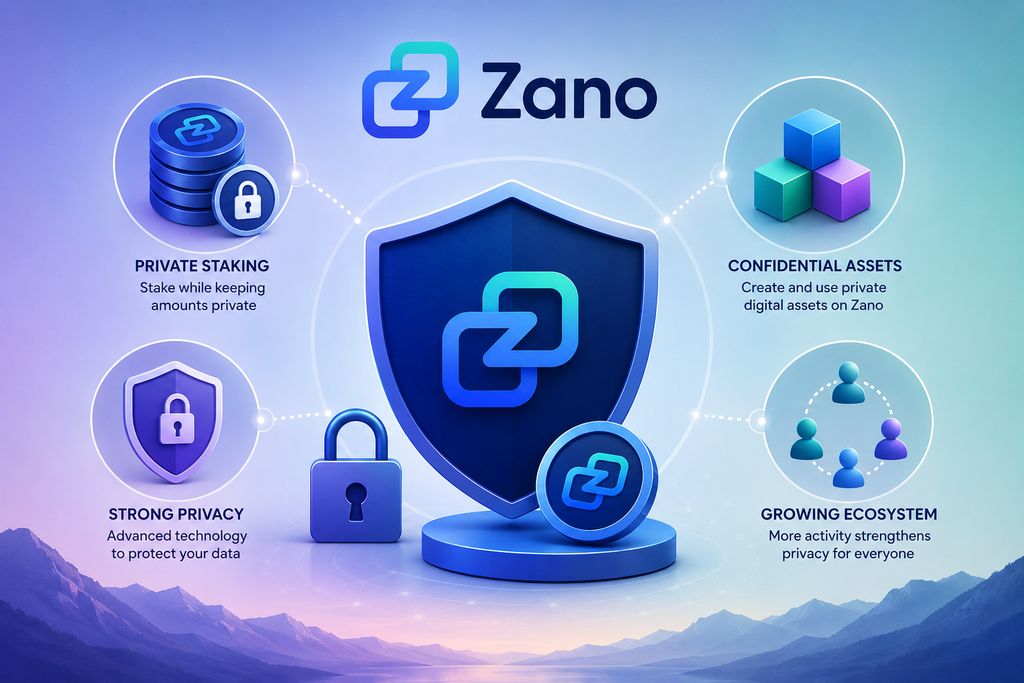
  1. What Is Zarcanum?
  2. Private Staking With Hidden Amounts
  3. Create Private Assets on Zano
  4. Why More Activity Can Help Privacy
  5. What Does This Mean for Developers?
  6. How Zano Has Evolved Since the Video

1. What Is Zarcanum?

Zarcanum is a major privacy technology used by Zano.

It introduced a new approach to Proof of Stake, allowing people to help secure the network while keeping their staking amounts hidden. The episode described this as one of the biggest privacy upgrades planned for Zano at the time.

In simple terms:

Zarcanum helps Zano keep more financial information private. ๐Ÿ”’

๐Ÿ‘‰ Weโ€™ve explained this part in more detail in How Zano Keeps Your Staking Amount Private ๐Ÿ”’.

2. Private Staking With Hidden Amounts

Staking means putting your crypto to work to help support and secure a blockchain while earning staking rewards.

The challenge is that a blockchain normally needs to know how much someone has staked.

Zarcanum was designed to solve this while keeping the amount hidden.

The network can still use the stake, but people looking at the blockchain don’t simply see the amount being staked.

The team also discussed improvements to transaction selection to strengthen Zano’s privacy.

3. Create Private Assets on Zano

Another major part of Zarcanum is Confidential Assets.

Confidential Assets are digital assets on Zano where important transaction details, such as amounts and addresses, can remain private.

This could include things such as:

  • Stablecoins
  • Tokens
  • Other digital assets

The idea was to expand Zano from a network focused mainly on ZANO into a privacy-focused platform for multiple assets.

๐Ÿ‘‰ You can also read our guide on Zano Confidential Assets.

4. Why More Activity Can Help Privacy

Privacy can become stronger when there are more users and transactions taking place.

Think of it like trying to find one person in a crowd.

A small crowd makes it easier to identify someone. A much larger crowd makes it harder.

The same basic idea applies to privacy technology: more activity can create a larger pool of transactions and information to hide among.

5. What Does This Mean for Developers?

Zarcanum wasn’t designed only for people who want to hold or send ZANO.

It also gives developers the ability to build privacy-focused applications and assets on Zano.

The episode discussed the potential for projects such as private stablecoins, decentralised exchanges and other privacy-focused applications.

These were ideas discussed during the episode, rather than promises of specific future products.

The bigger idea is simple:

Developers can use Zano’s privacy technology instead of building an entire privacy blockchain from scratch.

6. How Zano Has Evolved Since the Video

A lot has changed since this 2024 episode.

For example, Zano now has several wallet options, including its mobile wallet, full desktop wallet, Lite Wallet beta, Edge Wallet, Cake Wallet and other third-party options.

The Lite Wallet is designed to connect to a remote node instead of requiring users to download the entire blockchain, making Zano easier to access for everyday users.

Zano has also continued expanding its ecosystem with Confidential Assets, wallet integrations and other privacy-focused applications.

So while the video is now more than two years old, its main discussion around private staking, Confidential Assets and building a privacy-focused ecosystem remains useful for understanding why Zarcanum is important.

The Simple Takeaway

You don’t need to watch the entire video to understand the main idea.

Zarcanum was designed to make Zano more private while also giving developers more ways to build on the network.

Private staking.
Private assets.
More possibilities for privacy-focused applications.

That’s the bigger picture behind Zarcanum. ๐Ÿ”

Sources

Disclaimer: ZanoNews.com is an independent news and information website. This article is for informational purposes only and does not constitute financial or investment advice.