How Zano Keeps Your Staking Amount Private ๐Ÿ”’

When you stake cryptocurrency, the network normally needs to know how much you have staked. Zano takes a different approach.

With Zarcanum, Zano can use your stake to help secure the network while keeping the amount hidden.

For everyday users, the idea is simple: you can help secure Zano without publicly showing how much you are staking.
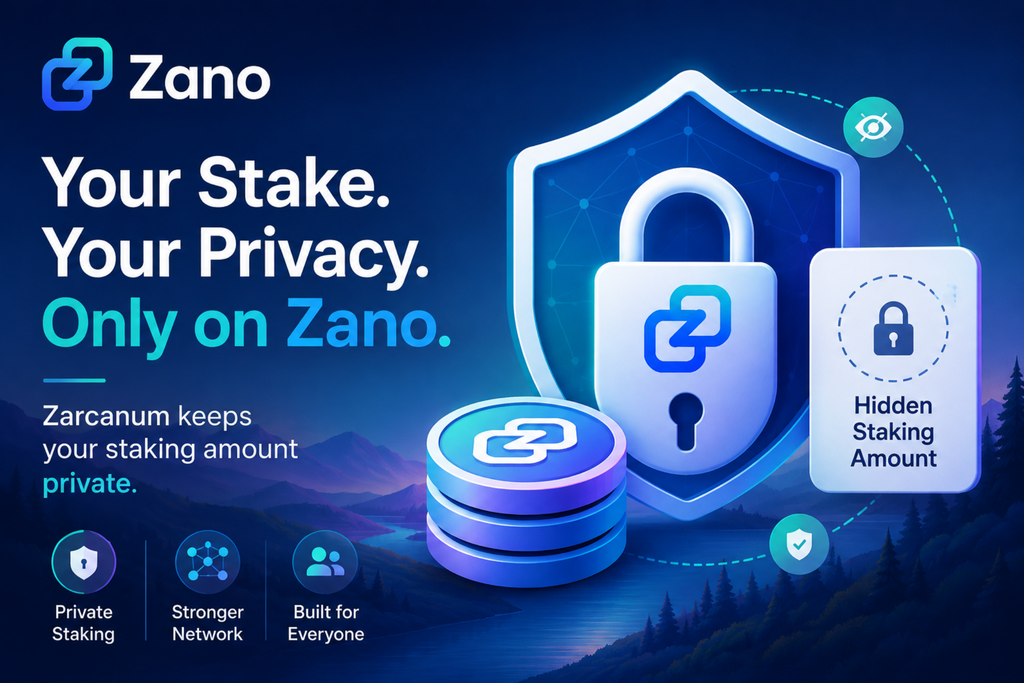
Table of Contents

  1. What Is Staking?
  2. What Is Zarcanum?
  3. How Can Zano Hide Your Staking Amount?
  4. Why Does This Matter?
  5. Zarcanum Is Already Live

1. What Is Staking?

Staking is a way of helping a blockchain network operate and stay secure.

Instead of using computers to mine blocks, people can stake their coins and help the network confirm transactions and create new blocks.

Generally, the more someone stakes, the greater their chance of being selected to create a block.

This can create a privacy problem because many Proof of Stake networks make staking amounts visible.

2. What Is Zarcanum?

Zarcanum is Zanoโ€™s privacy focused Proof of Stake technology.

It was designed to solve a simple but important problem: how can a network use someone’s stake without publicly revealing how much they have?

Zarcanum uses cryptography to hide the amount being staked while still allowing the network to verify that everything is valid. Zano describes it as the first Proof of Stake scheme designed with hidden amounts.

If you want to understand Zarcanum in more detail, we have already covered it here:

๐Ÿ‘‰ Zarcanum: Zanoโ€™s Private Proof of Stake

3. How Can Zano Hide Your Staking Amount?

Think of it like a competition.

The organiser needs to know that you qualify to participate, but does not necessarily need to know your exact score.

Zarcanum uses cryptography to achieve something similar.

The network can verify that your stake is valid and use it when deciding who can create a block without publicly revealing the exact amount. Zano’s documentation explains that confidential transactions, commitments, range proofs and ring signatures work together to hide the amount and staking output while still allowing the network to verify the block.

For everyday users, the main idea is:

Your stake can help secure the network without exposing how much you have staked.

4. Why Does This Matter?

On a transparent blockchain, visible staking information can reveal more about someone’s financial position.

For people who value financial privacy, that may be information they would rather keep private.

Zano’s approach allows staking and financial privacy to work together.

Instead of choosing between Proof of Stake and privacy, Zarcanum was designed to provide both.

5. Zarcanum Is Already Live

Zarcanum is not just a future plan.

The Zarcanum upgrade went live on the Zano mainnet in 2024, introducing private Proof of Stake with hidden amounts and Confidential Assets.

The technology also forms the foundation for Zenith, Zanoโ€™s planned move to a fully Proof of Stake network. Zenith is designed to keep staking private while making the network more efficient.

๐Ÿ‘‰ Want to learn what Zenith means for Zano? Read our guide: Zenith: Zanoโ€™s Move to Pure Proof of Stake Explained

Sources

Disclaimer: ZanoNews.com is an independent news and information website. This article is for informational purposes only and does not constitute financial or investment advice.
From Bitcoinโ€™s Original Vision to Zanoโ€™s Private Digital Economy ๐Ÿ”

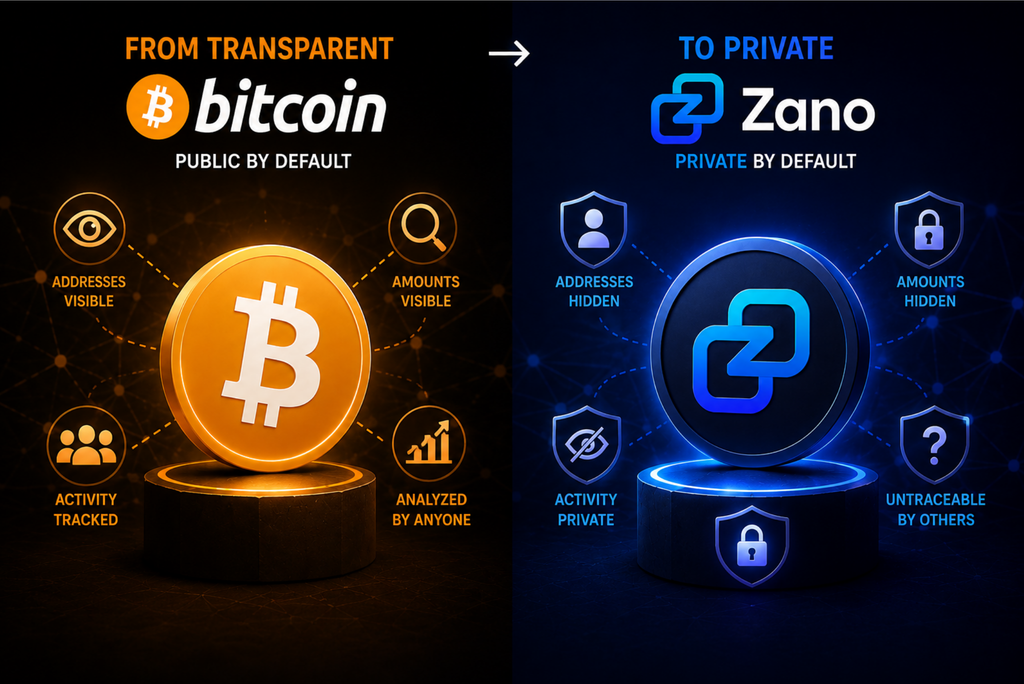
Bitcoin started with a simple idea: people should be able to send money directly to each other without needing a bank in the middle.

But Bitcoin transactions are publicly recorded, meaning wallet addresses, amounts and transaction history can be analysed. Zano takes a different approach by making privacy part of the network from the beginning.

๐ŸŽฅ From Bitcoinโ€™s Original Vision to Zanoโ€™s Private Digital Economy ๐Ÿ‘‡

Table of Contents

  1. Bitcoinโ€™s Original Idea
  2. What Changed Over Time?
  3. Why Privacy Matters
  4. What Makes Zano Different?
  5. More Than Just Private Payments
  6. From Bitcoin to Private Digital Assets
  7. Why This Matters

1. Bitcoinโ€™s Original Idea

When Bitcoin was introduced in 2008, its goal was to create peer to peer electronic cash.

In simple terms, that means one person could send digital money directly to another person without relying on a bank or other middleman.

That idea changed how people thought about money and financial control.

2. What Changed Over Time?

Bitcoin has grown far beyond its early use as digital cash.

Today, many people see Bitcoin primarily as a long term investment or digital store of value.

Bitcoin itself still works as a peer to peer network, but its public blockchain creates an important difference from traditional cash:

Bitcoin transactions can be viewed and analysed by anyone.

Wallet addresses, transaction amounts and the movement of funds are recorded publicly.

For users who value financial privacy, this can be a serious concern.

3. Why Privacy Matters

Imagine if every time you paid for something, anyone could look up:

  • How much you spent
  • Where your money came from
  • Where you sent it
  • How much money remained in your wallet

That is essentially the problem with transparent blockchains.

Your real name may not appear next to a wallet address, but activity can potentially be analysed and connected to people over time.

Zano was designed with a different approach.

4. What Makes Zano Different?

On Zano, privacy is enabled by default.

The network is designed to hide important transaction information, including:

  • The sender
  • The receiver
  • The amount
  • The type of asset being transferred

Instead of making users find and activate privacy tools themselves, Zano builds privacy directly into the blockchain.

This means privacy is part of the normal experience rather than an optional extra.

5. More Than Just Private Payments

Zano is not focused only on sending its native $ZANO coin.

The network also supports Confidential Assets, which are private digital tokens that can represent different types of value.

For example, Zano supports private versions of assets such as Bitcoin and other cryptocurrencies through its broader ecosystem.

This means the idea is bigger than simply creating a private cryptocurrency.

The goal is to build a private digital economy where different types of digital assets can be used while keeping transaction information confidential.

6. From Bitcoin to Private Digital Assets

One example is BTCx, a Bitcoin backed asset on Zano.

The basic idea is:

BTC โ†’ Zano โ†’ BTCx

Bitcoin can be brought into the Zano ecosystem and represented as BTCx, allowing users to benefit from Zano’s privacy features while maintaining exposure to Bitcoin.

We have explained this in more detail here:

๐Ÿ‘‰ From Bitcoin to BTCx: A More Private Way to Use Bitcoin

This approach could give people another choice: keep exposure to familiar digital assets while using them in a more private environment.

7. Why This Matters

Bitcoin showed that digital money could work without a traditional bank sitting in the middle.

Zano is taking that idea in another direction by asking another important question:

Can digital money also give people greater control over their financial privacy?

For Zano, privacy is not an optional feature added later. It is part of the foundation of the network.

And with Confidential Assets, the idea goes beyond private payments toward a broader private digital economy.

Sources

Disclaimer: ZanoNews.com is an independent news and information website. This article is for informational purposes only and does not constitute financial or investment advice.
Zano Development Update: 20 Commits and 880 Lines of Code Added ๐Ÿ”ฅ

Development on Zano continued during the third week of August, with the project team reporting another week of activity across its codebase.

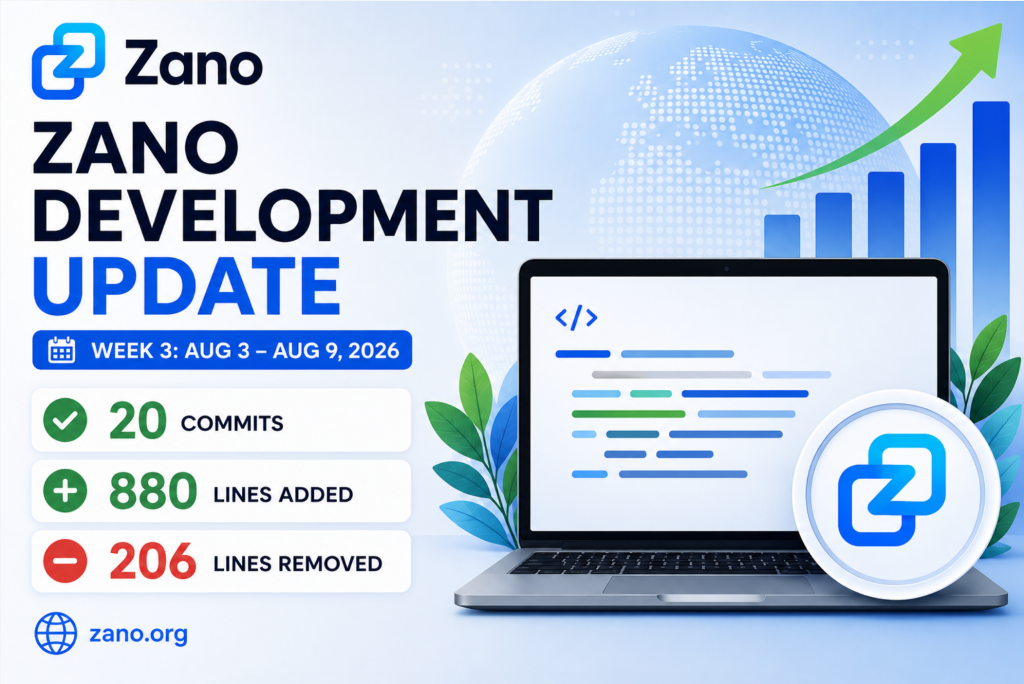
From August 3 to August 9, 2026, the Zano team recorded:

  • โœ… 20 commits
  • โž• 880 lines of code added
  • โž– 206 lines of code removed

But what do these numbers actually mean? Let’s break them down in simple terms.

Table of Contents

  1. What Happened During Week 3?
  2. What Is a Commit?
  3. What Do 880 Lines Added Mean?
  4. Why Were 206 Lines Removed?
  5. What Do These Numbers Tell Us?
  6. Why Development Activity Matters for Zano
  7. The Bigger Picture
  8. The Road Ahead
  9. Sources

1. What Happened During Week 3?

According to the latest development update shared by We Are Zano, the team recorded 20 commits between August 3 and August 9, 2026.

During the same period, developers:

Added: 880 lines of code
Removed: 206 lines of code

That gives a simple picture of continued development work happening behind the scenes.

Zano is a privacy-focused blockchain where privacy is built into the protocol by default. Its ecosystem includes private transactions, Confidential Assets, staking, trading and other applications.

2. What Is a Commit?

A commit is simply a recorded set of changes made to a software project.

Think of it like editing a document. You make several changes, save those changes as a group, and record what was changed. That recorded update is a commit.

So when Zano reports 20 commits, it means developers recorded 20 separate sets of changes to the project’s code during that week.

It doesn’t mean there were only 20 individual changes. A single commit can contain many different changes.

3. What Do 880 Lines Added Mean?

The team reported 880 lines added.

This means developers added 880 lines of code to the relevant project repositories during the week.

It’s important to remember that:

More lines of code don’t necessarily mean better software.

One line of code can be extremely important, while hundreds of lines can sometimes be removed or replaced with a more efficient solution.

The number is better understood as a measure of development activity, rather than a direct measurement of progress or software quality.

4. Why Were 206 Lines Removed?

The update also shows that developers removed 206 lines of code.

Removing code is completely normal in software development.

Developers may remove code when they:

  • Replace an older solution
  • Fix bugs
  • Simplify the software
  • Improve efficiency
  • Remove code that is no longer needed
  • Refactor existing components

In other words, removing code isn’t necessarily a bad thing.

Sometimes, taking code away can make software cleaner, easier to maintain and more efficient.

5. What Do These Numbers Tell Us?

The simplest takeaway is that Zano development remains active.

During one week, developers recorded 20 commits while making both additions and removals to the codebase.

The numbers don’t tell us exactly what every commit accomplished, however.

For that reason, it would be misleading to say that 880 lines added automatically means Zano became 880 lines “better.”

Instead, these figures give the community a quick snapshot of developer activity.

The individual code changes provide more detail, but the overall message is simple:

The project continues to be actively developed.

6. Why Development Activity Matters for Zano

Software projects need continuous development to remain useful, secure and adaptable.

This is especially important for a blockchain because the technology has to support several areas at the same time, including:

  • Network security
  • Privacy
  • Wallet functionality
  • Developer tools
  • Confidential Assets
  • Trading
  • Ecosystem applications

Zano’s developer resources include APIs, blockchain data tools, Confidential Asset tools and resources for developers building applications on the network.

Zano also continues to work on major network improvements. For example, Hard Fork 6 is scheduled to activate at block 3,833,000, expected between August 25 and August 27, 2026, according to Zano’s official announcement.

This puts weekly development activity into a bigger context: blockchain development is an ongoing process rather than something that happens only when a major update is released.

7. The Bigger Picture

It is easy to focus on major announcements in crypto:

New partnerships.
New listings.
New products.
Major upgrades.

But much of the work required to make those developments possible happens quietly in the codebase.

Weekly development statistics provide a small window into that work.

For Zano, this includes maintaining and improving a privacy-focused blockchain that supports not only $ZANO but also Confidential Assets and applications built around the network.

So while 20 commits, 880 lines added and 206 lines removed may not sound exciting to everyone, they represent another week of work behind the scenes.

8. The Road Ahead

The latest numbers provide a simple snapshot of where development activity stood during August 3โ€“9, 2026.

The more important question is what these ongoing development efforts contribute to over time.

For developers, the individual code changes matter.

For crypto users, what ultimately matters is what those changes deliver:

A more capable network, better tools, stronger privacy and a growing ecosystem.

As Zano continues developing its technology and preparing for major network changes such as Hard Fork 6, weekly development activity will remain one of the quieter but important parts of the project’s progress.

9. Sources

Disclaimer:ย ZanoNews.comย is an independent news and information website. This article is for informational purposes only and should not be considered financial, investment, or legal advice.

How to Back Up Your Zano Wallet

If you’re using a self-custody wallet, you are responsible for keeping your wallet safe.

Backing up your wallet means you’ll still be able to access your ZANO if your phone or computer is lost, stolen, damaged, or replaced.

The good news is that creating a backup only takes a few minutes and can save you from permanently losing your funds.

Table of Contents

  1. What Is a Wallet Backup?
  2. Why Is Backing Up Your Wallet Important?
  3. What Should You Back Up
  4. How to Back Up Your Zano Wallet
  5. Where Should You Store Your Backup?
  6. What to Avoid
  7. How to Test Your Backup
  8. Common Questions
  9. Key Takeaways
  10. Sources

1. What Is a Wallet Backup?

A wallet backup is a copy of the important information needed to restore access to your wallet.

If something happens to your device, you can use your backup to recover your wallet on another device.

Without a backup, your ZANO may be impossible to recover.

2. Why Is Backing Up Your Wallet Important?

Many people assume their wallet is automatically backed up like photos or contacts on a phone.

That is usually not the case with self-custody wallets.

Creating a backup helps protect you if:

  • Your phone is lost or stolen.
  • Your computer stops working.
  • You accidentally delete your wallet.
  • You buy a new phone or computer.

A backup gives you peace of mind because you know you can restore your wallet if needed.

3. What Should You Back Up?

According to the official Zano documentation, there are two important things According to the official Zano documentation, there are two important things you should protect:

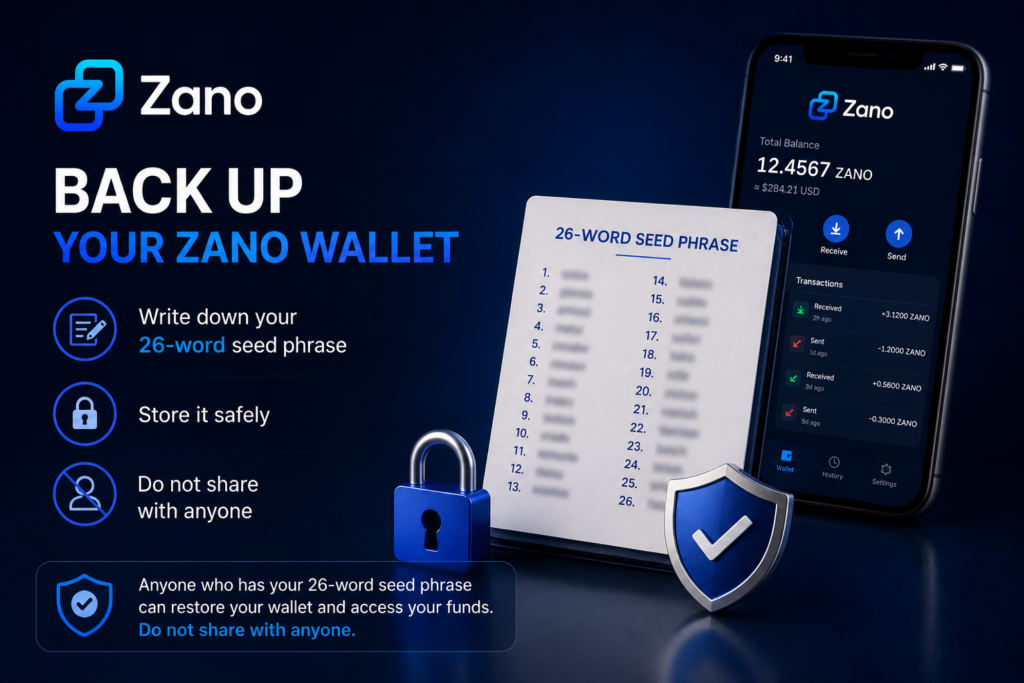
  • Your 26-word seed phrase โ€“ This is the most important part of your backup because it allows you to recover your wallet if your phone or computer is lost, damaged, or replaced.
  • Your wallet file โ€“ This is a copy of your wallet that can be useful if you want to use the same wallet on another device. It should be stored securely alongside your 26-word seed phrase.

Both should be stored securely and never shared with anyone.

4. How to Back Up Your Zano Wallet

Follow these simple steps:

  1. Create your wallet using the official Zano Wallet.
  2. Write down your 26-word seed phrase exactly as shown.
  3. Store the seed phrase in a safe place where only you can access it.
  4. Keep a copy of your wallet file in a secure location if you plan to use another device in the future.
  5. Make sure your wallet is protected with a strong password.

If you haven’t created a wallet yet, read our guide:

๐Ÿ‘‰ How to Create Your First Zano Wallet

5. Where Should You Store Your Backup?

Once you’ve backed up your wallet, it’s important to store it somewhere safe.

Here are some best practices:

  • Store your 26-word seed phrase in a secure place that only you can access.
  • Keep a copy of your wallet file in a safe location if you choose to back it up.
  • If possible, keep a second backup in another secure location.
  • Make sure your backup is protected from theft, loss, or accidental damage.

Avoid storing sensitive wallet information where other people can easily access it.

Remember:

Anyone who has access to your 26-word seed phrase can restore your wallet and access your funds. Always keep it private.

6. What to Avoid

To help keep your wallet safe, avoid these common mistakes:

  • Never share your 26-word seed phrase with anyone.
  • Never send your 26-word seed phrase to someone claiming to be “customer support.”
  • Don’t store your 26-word seed phrase where other people can easily find it.
  • Don’t lose or forget your wallet password.
  • Don’t rely on memory alone to remember your recovery information.

Remember:

Anyone who has your 26-word seed phrase can restore your wallet and access your funds. Keep it private at all times. If someone gains access to your wallet backup, they may also be able to access your funds.

7. How to Test Your Backup

Before you store your backup away, take a moment to make sure everything is correct.

Check that:

  1. Your 26-word seed phrase has been written down correctly.
  2. All 26 words are complete, easy to read, and in the correct order.
  3. Your wallet file has been safely copied, if you chose to back it up.
  4. Your wallet password has been stored securely, if needed.

Taking a few extra minutes to check your backup now can save you a lot of trouble in the future.

8. Common Questions

What is the most important thing to back up?

Your 26-word seed phrase is the most important part of your backup. It allows you to recover your wallet if your phone or computer is lost, damaged, or replaced.

Can I create another backup later?

Yes. You can create another backup whenever you want. It’s a good idea to make a new backup if you create a new wallet or make important changes to your wallet.

Can someone access my wallet if they have my 26-word seed phrase?

Yes. Anyone who has your 26-word seed phrase can restore your wallet and access your funds. Never share it with anyone.

9. Key Takeaways

  • Always back up your 26-word seed phrase.
  • Keep your wallet file in a secure location if you choose to back it up.
  • Never share your 26-word seed phrase with anyone.
  • Store your backups somewhere safe and private.
  • Checking your backup now can help protect your ZANO in the future.

10. Sources

Disclaimer:ย ZanoNews.comย is an independent news and information website. This article is for informational purposes only and should not be considered financial, investment, or legal advice.

What Is Zano? A Beginner’s Guide

If you’re new to cryptocurrency, you’ve probably heard about Bitcoin and Ethereum. But what is Zano, and why are more people paying attention to it?

Zano is a privacy-focused blockchain designed to make digital payments secure, confidential, and easy to use. It combines modern privacy technology with features for businesses, developers, and everyday users.

Whether you’re completely new to crypto or simply curious about Zano, this guide explains everything in simple language.

Table of Contents

  1. What Is Zano?
  2. Why Was Zano Created?
  3. Key Features of Zano
  4. What Can You Do With Zano?
  5. Is Zano Good for Beginners?
  6. Where Should You Start?
  7. Frequently Asked Questions
  8. Final Thoughts

1. What Is Zano?

Zano is a Layer 1 blockchain launched in 2019 that focuses on privacy, security, and usability.

Unlike many cryptocurrencies where transactions can be viewed publicly, Zano keeps transaction details private by default. This means the sender, receiver, and transaction amount remain confidential while still being securely verified on the blockchain.

Its goal is to provide digital money that protects financial privacy without sacrificing security.

2. Why Was Zano Created?

Many blockchains allow anyone to view wallet balances and transaction history.

While transparency has advantages, it also means anyone can potentially track your financial activity.

Zano was built to give users greater financial privacy while remaining decentralized and secure.

3. Key Features of Zano

3.1 Privacy by Default

Every Zano transaction is private, helping protect your financial information from public view.

3.2 Low Transaction Fees

Sending Zano costs only a small network fee, making it suitable for everyday payments.

3.3 Fast Transactions

Transactions are confirmed quickly, allowing users to send and receive funds without long waiting times.

3.4 Hybrid Consensus

Zano uses a hybrid Proof-of-Work and Proof-of-Stake (PoW + PoS) consensus model to help secure the network while allowing eligible holders to earn staking rewards.

3.5 Confidential Assets

One of Zano’s standout features is Confidential Assets, which allow developers and businesses to create private digital assets while keeping transaction information confidential.

3.6 Cross-Chain Transfers

Recent network upgrades allow native ZANO to move between supported blockchain ecosystems while maintaining Zano’s privacy-focused infrastructure.

4. What Can You Do With Zano?

Zano can be used in many different ways:

  • Send private payments
  • Receive payments securely
  • Stake ZANO to earn rewards
  • Create Confidential Assets
  • Buy and sell on ZanoBay
  • Explore decentralized applications built on Zano

5. Is Zano Good for Beginners?

Yes.

Zano is designed to be beginner-friendly while offering advanced privacy features for experienced users.

If you’re just starting, learning how to install the wallet and securely back up your recovery seed is the best place to begin.

6. Where Should You Start?

If you’re new to Zano, these guides are recommended:

  1. Install the Zano Wallet
  2. Create Your First Wallet
  3. Back Up Your Recovery Seed
  4. Learn How Staking Works
  5. Understand Zano Privacy
  6. Explore Confidential Assets

7. Frequently Asked Questions

7.1 Is Zano anonymous?

Zano is privacy-focused, meaning transaction details are confidential by default while the blockchain remains secure and verifiable.

7.2 Can I stake Zano?

Yes. Eligible holders can stake ZANO to help secure the network and earn rewards.

7.3 Is Zano open source?

Yes. Zano is an open-source blockchain project, allowing anyone to inspect the code and contribute to development.

8. Final Thoughts

Zano is more than just another cryptocurrency. It is a privacy-first blockchain designed for secure payments, confidential digital assets, and long-term usability.

Whether you’re looking to make private transactions, earn staking rewards, or simply learn about privacy-focused blockchain technology, Zano provides a solid starting point.

If you’re completely new to Zano, continue with the Getting Started guides below to learn how to install your wallet, create your first address, and begin exploring the ecosystem.

Learn more:

Disclaimer: ZanoNews.com is an independent news and information website. This article is for informational purposes only and should not be considered financial, investment, or legal advice.

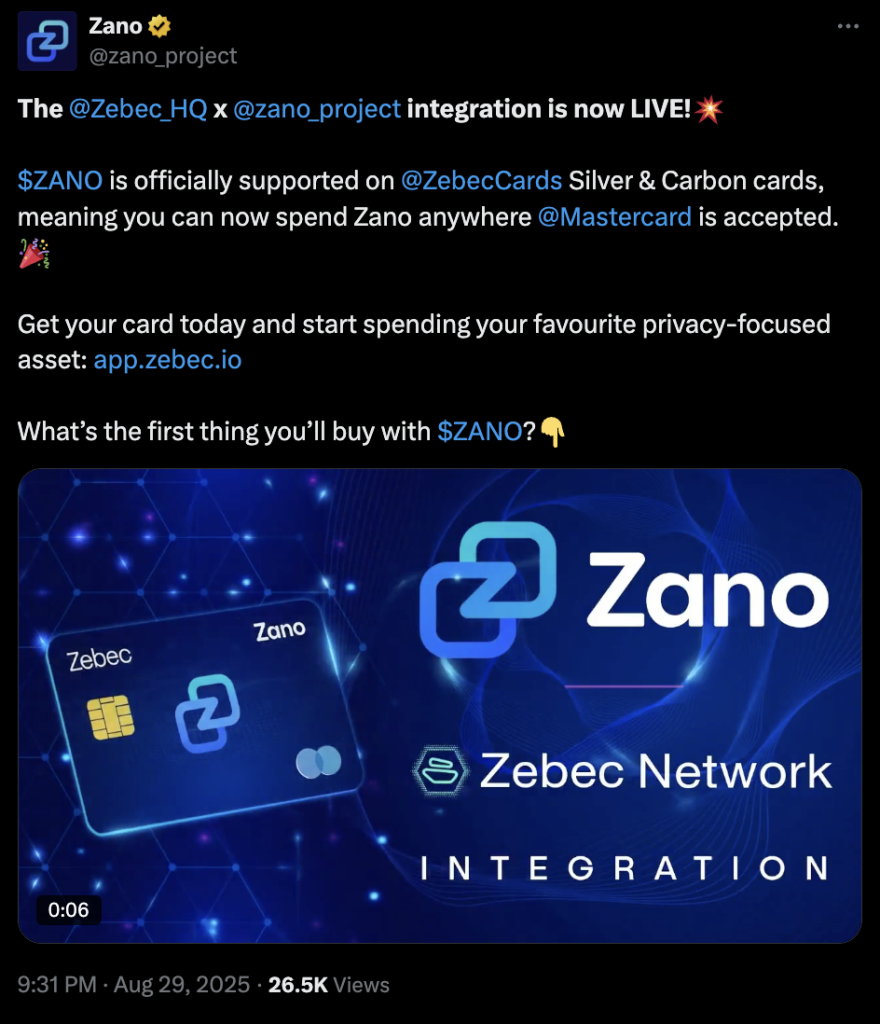
The Zebec Network x Zano integration is now LIVE!

Inside the Zano-Verse Episode 3: What Zarcanum Means for Zano ๐Ÿ”

Originally recorded on February 8, 2024, Episode 3 of Inside the Zano-Verse focused on Zarcanum and the major privacy improvements it was designed to bring to Zano.

Some details discussed in the video were plans at the time and have since changed. So instead of asking you to watch the full video, weโ€™ve broken down the main ideas in simple terms and added some current context.

๐ŸŽฅ The full hour-long Episode 3 is here if youโ€™d like to check it out: ๐Ÿ‘‡

Table of Contents

  1. What Is Zarcanum?
  2. Private Staking With Hidden Amounts
  3. Create Private Assets on Zano
  4. Why More Activity Can Help Privacy
  5. What Does This Mean for Developers?
  6. How Zano Has Evolved Since the Video

1. What Is Zarcanum?

Zarcanum is a major privacy technology used by Zano.

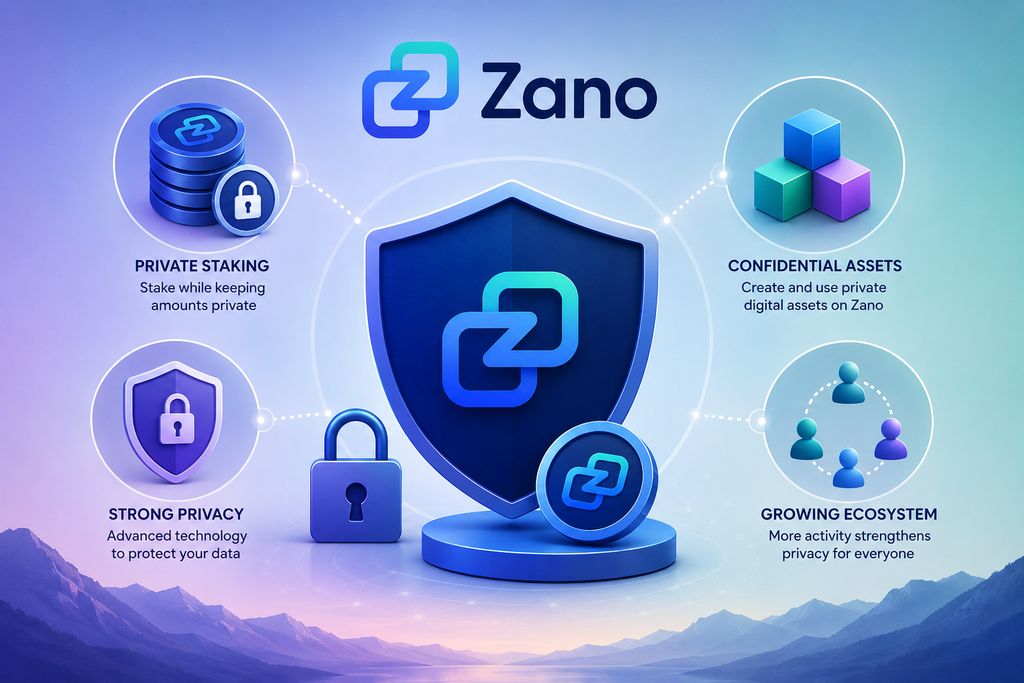
It introduced a new approach to Proof of Stake, allowing people to help secure the network while keeping their staking amounts hidden. The episode described this as one of the biggest privacy upgrades planned for Zano at the time.

In simple terms:

Zarcanum helps Zano keep more financial information private. ๐Ÿ”’

๐Ÿ‘‰ Weโ€™ve explained this part in more detail in How Zano Keeps Your Staking Amount Private ๐Ÿ”’.

2. Private Staking With Hidden Amounts

Staking means putting your crypto to work to help support and secure a blockchain while earning staking rewards.

The challenge is that a blockchain normally needs to know how much someone has staked.

Zarcanum was designed to solve this while keeping the amount hidden.

The network can still use the stake, but people looking at the blockchain don’t simply see the amount being staked.

The team also discussed improvements to transaction selection to strengthen Zano’s privacy.

3. Create Private Assets on Zano

Another major part of Zarcanum is Confidential Assets.

Confidential Assets are digital assets on Zano where important transaction details, such as amounts and addresses, can remain private.

This could include things such as:

  • Stablecoins
  • Tokens
  • Other digital assets

The idea was to expand Zano from a network focused mainly on ZANO into a privacy-focused platform for multiple assets.

๐Ÿ‘‰ You can also read our guide on Zano Confidential Assets.

4. Why More Activity Can Help Privacy

Privacy can become stronger when there are more users and transactions taking place.

Think of it like trying to find one person in a crowd.

A small crowd makes it easier to identify someone. A much larger crowd makes it harder.

The same basic idea applies to privacy technology: more activity can create a larger pool of transactions and information to hide among.

5. What Does This Mean for Developers?

Zarcanum wasn’t designed only for people who want to hold or send ZANO.

It also gives developers the ability to build privacy-focused applications and assets on Zano.

The episode discussed the potential for projects such as private stablecoins, decentralised exchanges and other privacy-focused applications.

These were ideas discussed during the episode, rather than promises of specific future products.

The bigger idea is simple:

Developers can use Zano’s privacy technology instead of building an entire privacy blockchain from scratch.

6. How Zano Has Evolved Since the Video

A lot has changed since this 2024 episode.

For example, Zano now has several wallet options, including its mobile wallet, full desktop wallet, Lite Wallet beta, Edge Wallet, Cake Wallet and other third-party options.

The Lite Wallet is designed to connect to a remote node instead of requiring users to download the entire blockchain, making Zano easier to access for everyday users.

Zano has also continued expanding its ecosystem with Confidential Assets, wallet integrations and other privacy-focused applications.

So while the video is now more than two years old, its main discussion around private staking, Confidential Assets and building a privacy-focused ecosystem remains useful for understanding why Zarcanum is important.

The Simple Takeaway

You don’t need to watch the entire video to understand the main idea.

Zarcanum was designed to make Zano more private while also giving developers more ways to build on the network.

Private staking.
Private assets.
More possibilities for privacy-focused applications.

That’s the bigger picture behind Zarcanum. ๐Ÿ”

Sources

Disclaimer: ZanoNews.com is an independent news and information website. This article is for informational purposes only and does not constitute financial or investment advice.