
Zano is preparing for one of the biggest upgrades in its history. Called Zenith, the upcoming upgrade will move the network from its current hybrid Proof of Work and Proof of Stake model to pure Proof of Stake.
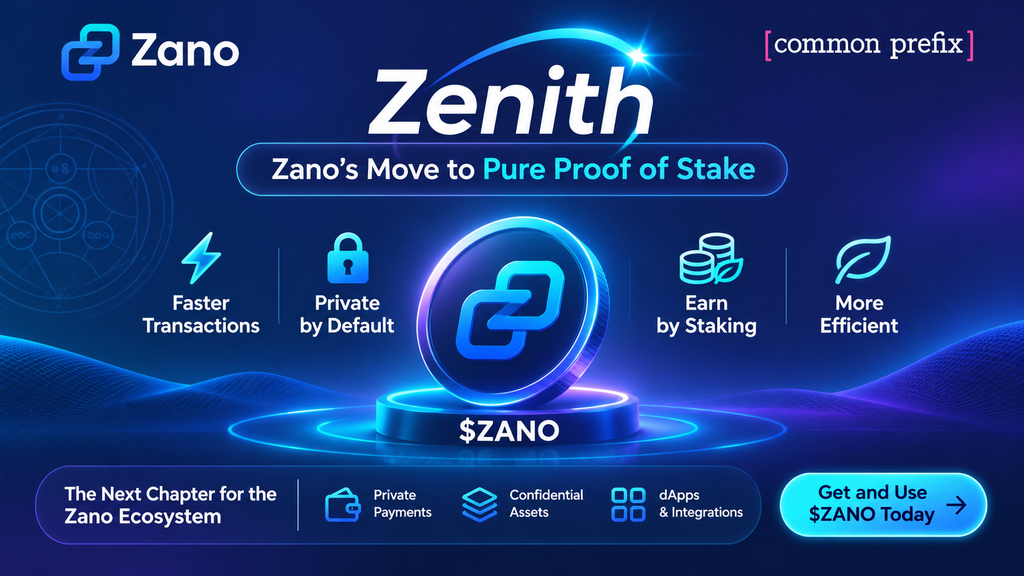
But this development didn’t happen overnight. It is the result of joint research between the Zano team and @CommonPrefix, a blockchain research and engineering company.
The work was recently presented at Common S3nse by Odysseas Sofikitis, giving the community a closer look at the research behind Zano’s next major upgrade.
So, what is behind Zenith, why did Zano work with Common Prefix, and what could this mean for the network?
Let’s take a look.
Table of Contents
- The Research Behind Zenith
- Why Did Zano Work With Common Prefix?
- Moving From Hybrid to Pure Proof of Stake
- Why Did Zano Choose Zenith?
- What Makes This Upgrade Important?
- When Can We Expect Zenith?
- Watch the Presentation
- What Comes Next for Zano?
1. The Research Behind Zenith
Zenith is the result of research into how Zano can improve its consensus system while keeping its privacy features intact.
Currently, Zano uses a hybrid model that combines Proof of Work (PoW) and Proof of Stake (PoS).
With Zenith, the goal is to remove the Proof of Work component and move towards a pure Proof of Stake system.
This means miners will no longer be needed to secure the network. Instead, staking will become the foundation of Zano’s consensus mechanism.
Importantly, the upgrade is designed to build on Zano’s existing privacy technology rather than compromise it.
If you want to understand how Zenith works in more detail, including its technical improvements and expected benefits, read our previous guide:
👉 Zenith: Zano’s Move to Pure Proof of Stake Explained
2. Why Did Zano Work With Common Prefix?
Developing a new consensus mechanism requires careful research and testing.
The Zano team worked with Common Prefix to examine the existing hybrid model and explore different ways to improve network security, privacy and performance.
The research explored two approaches:
- StakeNote: A Proof of Stake protocol designed for CryptoNote-style payments, focusing on privacy and staking.
- Zenith: A protocol built around Zano’s existing Zarcanum technology.
Both approaches explored how private transactions and Proof of Stake could work together.
After evaluating the different designs, Zano selected Zenith because it offered a more practical way to build on the network’s existing technology.
This collaboration helped establish the direction for Zano’s transition to pure Proof of Stake.
3. Moving From Hybrid to Pure Proof of Stake
Zano originally used a combination of mining and staking to secure its network.
However, research into improving the existing hybrid model revealed limitations associated with its Proof of Work component.
Instead of continuing to work around these limitations, the research explored a different approach: removing Proof of Work altogether.
This led to the development of Zenith.
The important difference is that Zano isn’t simply copying the Proof of Stake model used by other blockchains.
It wants to maintain private staking, allowing participants to help secure the network without publicly revealing their staking amounts.
In simple terms, Zano wants to remove mining without sacrificing privacy.
4. Why Did Zano Choose Zenith?
One of the main reasons Zenith stands out is its connection to Zarcanum, Zano’s existing private staking technology.
Zarcanum allows users to participate in staking without publicly revealing their staking balances.
Zenith builds on these foundations and aims to make private staking the basis of the entire network’s consensus mechanism.
The proposed improvements include:
- Moving to pure Proof of Stake.
- Maintaining private staking.
- Faster block production and transaction confirmations.
- More efficient handling of blockchain data.
- Improved network security.
The idea is to make Zano faster and more efficient while keeping financial privacy at its core.
5. What Makes This Upgrade Important?
Consensus is one of the most important parts of any blockchain.
It determines how transactions are confirmed, how new blocks are added and how the network agrees on the correct state of the blockchain.
For Zano, the challenge is improving this process without exposing the financial information of its users.
Zenith aims to address this challenge.
The proposed design targets block times of around 15–20 seconds, with transaction confirmations expected to take approximately 60–90 seconds.
It also introduces Ephemeral Blocks, which are designed to reduce the amount of historical blockchain data that needs to be stored in full.
These improvements could make Zano more practical for:
- Everyday private payments.
- Online merchants accepting ZANO.
- Confidential Assets and token transfers.
- Decentralised applications.
- Businesses building on the Zano blockchain.
These are proposed improvements, and actual performance will depend on implementation and testing.
6. When Can We Expect Zenith?
According to Zano’s November 2026 roadmap update, Zenith remains one of the project’s main development priorities.
The current estimated timeline is:
Q4 2026 – Development
Continued research and development of the Zenith protocol.
Q1 2027 – Testnet
Expected public testnet, allowing the new consensus mechanism to be tested.
Q2 2027 – Mainnet
Estimated mainnet activation, subject to development, testing and security reviews.
These dates are targets rather than guarantees. For an upgrade responsible for securing the entire blockchain, proper testing is essential.
7. Watch the Presentation
The research behind Zenith was presented publicly at Common S3nse by Odysseas Sofikitis.
His presentation, titled “Zenith: Zano’s Path to Pure Proof of Stake,” provides a closer look at the work carried out with Common Prefix and the direction Zano is taking.
🎥 Watch the full presentation below: 👇
The presentation is worth watching for anyone interested in blockchain technology, Proof of Stake and privacy-focused cryptocurrencies.
8. What Comes Next for Zano?
Zenith represents an important step in Zano’s development.
The collaboration with Common Prefix helped the team explore different consensus designs and identify an approach that builds on its existing privacy technology.
For everyday users, the expected benefits include faster confirmations, private staking and a more efficient network.
For developers and businesses, these improvements could create more opportunities to build payment services, applications and integrations on Zano.
There is still development and testing ahead, but the direction is clear.
Zano is working towards a faster and stronger blockchain where privacy remains at the centre of everything. 🔒
Sources and Further Reading
- Zano Official Website
- Common Prefix Official Website
- Zano Official Announcement on X – November 19
- Zenith: Zano’s Move to Pure Proof of Stake – Zano Official Blog
- Zano’s Path Forward: November 2026 Roadmap
- Zenith: Zano’s Move to Pure Proof of Stake Explained – ZanoNews.com
Disclaimer: ZanoNews.com is an independent news and information website. This article is for informational purposes only and should not be considered financial or investment advice.