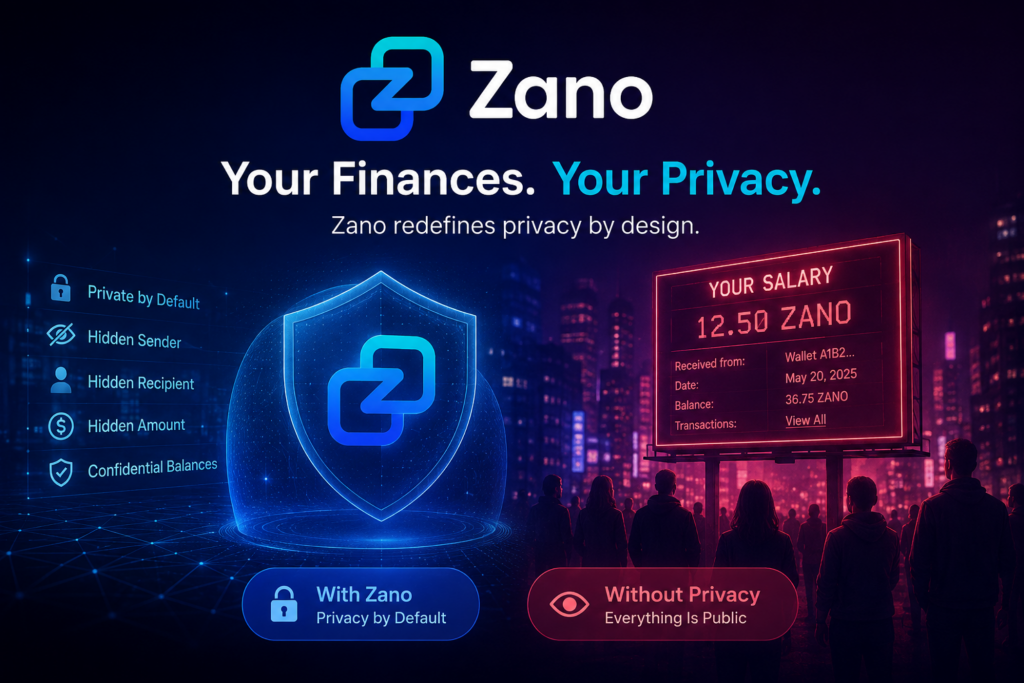
Bitcoin started with a simple idea: people should be able to send money directly to each other without needing a bank in the middle.
But Bitcoin transactions are publicly recorded, meaning wallet addresses, amounts and transaction history can be analysed. Zano takes a different approach by making privacy part of the network from the beginning.
🎥 From Bitcoin’s Original Vision to Zano’s Private Digital Economy 👇
Table of Contents
- Bitcoin’s Original Idea
- What Changed Over Time?
- Why Privacy Matters
- What Makes Zano Different?
- More Than Just Private Payments
- From Bitcoin to Private Digital Assets
- Why This Matters
1. Bitcoin’s Original Idea
When Bitcoin was introduced in 2008, its goal was to create peer to peer electronic cash.
In simple terms, that means one person could send digital money directly to another person without relying on a bank or other middleman.
That idea changed how people thought about money and financial control.
2. What Changed Over Time?
Bitcoin has grown far beyond its early use as digital cash.
Today, many people see Bitcoin primarily as a long term investment or digital store of value.
Bitcoin itself still works as a peer to peer network, but its public blockchain creates an important difference from traditional cash:
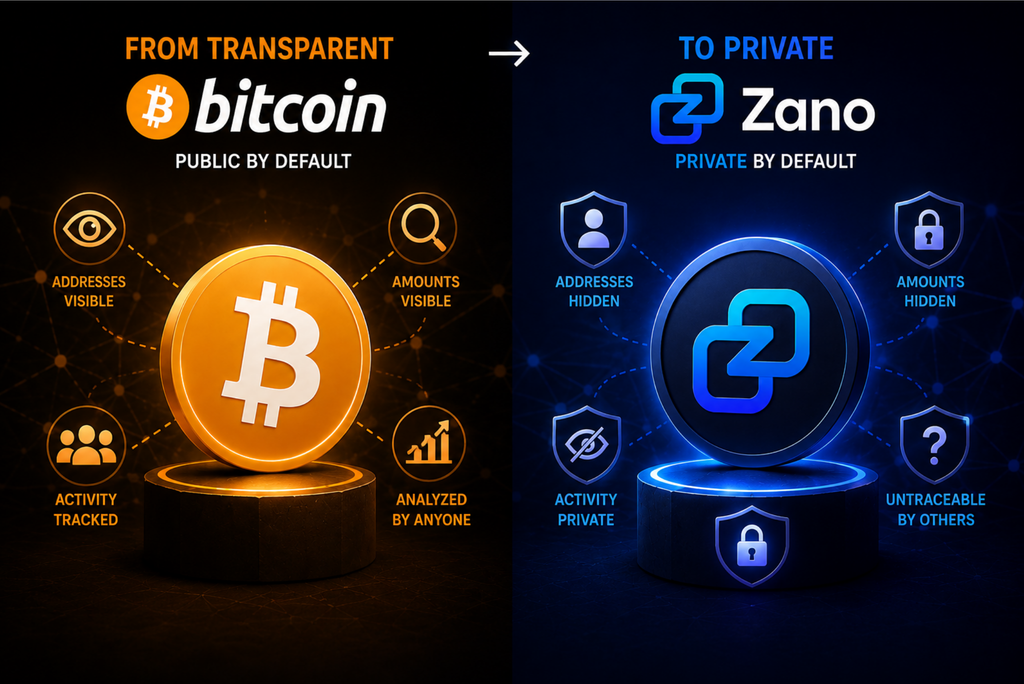
Bitcoin transactions can be viewed and analysed by anyone.
Wallet addresses, transaction amounts and the movement of funds are recorded publicly.
For users who value financial privacy, this can be a serious concern.
3. Why Privacy Matters
Imagine if every time you paid for something, anyone could look up:
- How much you spent
- Where your money came from
- Where you sent it
- How much money remained in your wallet
That is essentially the problem with transparent blockchains.
Your real name may not appear next to a wallet address, but activity can potentially be analysed and connected to people over time.
Zano was designed with a different approach.
4. What Makes Zano Different?
On Zano, privacy is enabled by default.
The network is designed to hide important transaction information, including:
- The sender
- The receiver
- The amount
- The type of asset being transferred
Instead of making users find and activate privacy tools themselves, Zano builds privacy directly into the blockchain.
This means privacy is part of the normal experience rather than an optional extra.
5. More Than Just Private Payments
Zano is not focused only on sending its native $ZANO coin.
The network also supports Confidential Assets, which are private digital tokens that can represent different types of value.
For example, Zano supports private versions of assets such as Bitcoin and other cryptocurrencies through its broader ecosystem.
This means the idea is bigger than simply creating a private cryptocurrency.
The goal is to build a private digital economy where different types of digital assets can be used while keeping transaction information confidential.
6. From Bitcoin to Private Digital Assets
One example is BTCx, a Bitcoin backed asset on Zano.
The basic idea is:
Bitcoin can be brought into the Zano ecosystem and represented as BTCx, allowing users to benefit from Zano’s privacy features while maintaining exposure to Bitcoin.
We have explained this in more detail here:
👉 From Bitcoin to BTCx: A More Private Way to Use Bitcoin
This approach could give people another choice: keep exposure to familiar digital assets while using them in a more private environment.
7. Why This Matters
Bitcoin showed that digital money could work without a traditional bank sitting in the middle.
Zano is taking that idea in another direction by asking another important question:
Can digital money also give people greater control over their financial privacy?
For Zano, privacy is not an optional feature added later. It is part of the foundation of the network.
And with Confidential Assets, the idea goes beyond private payments toward a broader private digital economy.
Sources
- Zano Official Website
- Zano Official Documentation
- Zano Introduction Guide
- From Bitcoin’s Original Vision to Zano’s Private Digital Economy | Zano Explainer Series
Disclaimer: ZanoNews.com is an independent news and information website. This article is for informational purposes only and does not constitute financial or investment advice.