Zano Hard Fork 6 Is Now Live: What It Means for Exchanges, Wallets and Users 🔥

Zano’s Hard Fork 6 (HF6) is now live, activating at block 3,833,000 on August 26, 2026.

The upgrade makes it easier for exchanges, wallets, bridges, DEXs and other crypto services to connect with Zano. For everyday users, this could eventually mean more ways to buy, sell, store and use ZANO, while keeping Zano’s privacy features.

HF6 also supports two-way cross-chain transfers, helping Zano connect with other blockchain networks.
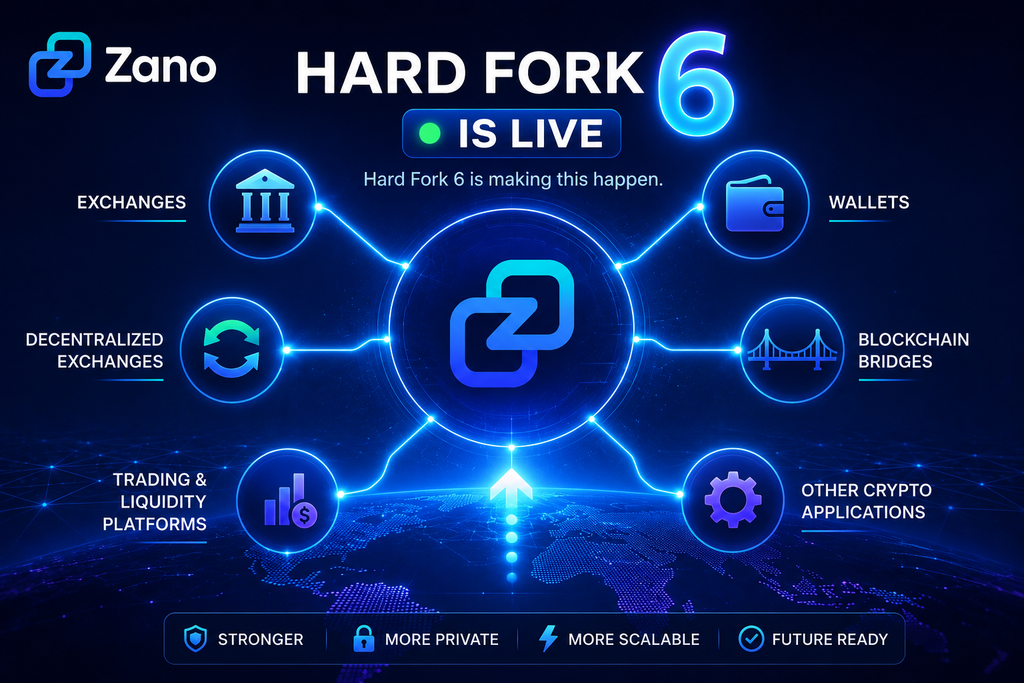
Table of Contents

  1. What Is Zano Hard Fork 6?
  2. What Changes With HF6?
  3. How Are HF6 and Gateway Addresses Connected?
  4. Why Gateway Addresses Matter
  5. Zano Can Now Move Across Chains
  6. What Does This Mean for Exchanges and Wallets?
  7. Does Hard Fork 6 Change Zano’s Privacy?
  8. What Do Zano Users Need to Know?
  9. Learn More About Hard Fork 6
  10. Sources

1. What Is Zano Hard Fork 6?

A hard fork is a major update to a blockchain.

Zano HF6 activated at block 3,833,000 on August 26, 2026, following more than a year of development.

The goal is simple: make Zano easier for the wider crypto industry to connect with while keeping its privacy-focused design.

2. What Changes With HF6?

One of the key changes is Gateway Addresses.

They give exchanges, bridges and other services a simpler way to work with Zano.

For regular Zano users, standard private Zano addresses continue to work as before.

👉 Want to understand Gateway Addresses in simple terms?
Read: How Gateway Addresses Could Bring Zano to More Exchanges

3. How Are HF6 and Gateway Addresses Connected?

Hard Fork 6 is the upgrade, and Gateway Addresses are one of its key features.

They are designed to make it easier for exchanges, wallets, bridges and DEXs to connect with Zano.

In simple terms:

HF6 → Gateway Addresses → Easier integration → More opportunities for Zano adoption.

Regular users can continue using Zano’s standard private addresses as before.

4. Why Gateway Addresses Matter

Imagine an exchange wants to support ZANO.

It needs an easy way to manage deposits, withdrawals and balances. Gateway Addresses are designed to make this simpler.

For everyday users:

Easier integration → more services can support Zano → more ways to use ZANO.

👉 Learn more about Gateway Addresses

HF6 also introduces per-output payment IDs, which can help exchanges identify deposits while protecting the recipient’s privacy.

5. Zano Can Now Move Across Chains

HF6 also supports two-way cross-chain transfers.

This means native ZANO and supported Confidential Assets can move between Zano and supported blockchain networks through bridging technology.

For example:

Zano → Bridge → Another blockchain

This can give ZANO access to more blockchain ecosystems, liquidity and potential DeFi applications.

👉 Want to understand how this works?
Read: How Does Zano’s Trustless Bridging Work After HF6? 🔗

6. What Does This Mean for Exchanges and Wallets?

This is where HF6 could become particularly important for everyday users.

If integrating Zano becomes easier, more services may have a simpler path toward supporting it.

That could include:

  • 🏦 Exchanges
  • 👛 Wallets
  • 🔄 Decentralized exchanges
  • 🌉 Blockchain bridges
  • 💱 Trading and liquidity platforms
  • 🛠️ Other crypto applications

The Zano team has previously discussed Gateway Addresses with platforms including THORChain, NEAR Intents and Maya Protocol, with the new infrastructure intended to make integrations easier.

This does not mean every exchange or wallet now supports Zano automatically.

Instead, HF6 removes an important technical barrier and gives these services a simpler way to integrate with the network.

7. Does Hard Fork 6 Change Zano’s Privacy?

No.

Zano’s privacy remains a core part of the network.

HF6 improves how external services can connect with Zano without replacing the privacy features of standard Zano addresses.

In simple terms:

More connectivity + privacy at the core. 🔒

8. What Do Zano Users Need to Know?

For most users, there is no complicated process involved with HF6.

If you use a full-node desktop wallet, make sure you are running the latest version and that it has fully synced with the network.

👉 Download the latest Zano wallet

If you use Zano through an exchange or third-party wallet, check that your provider has completed its HF6 upgrade where applicable.

9. Learn More About Hard Fork 6

Want to explore HF6 in more detail?

👉 Zano Hard Fork 6 Is Only a Few Days Away 🔥 — Introduction to HF6 and Gateway Addresses.

👉 How Gateway Addresses Could Bring Zano to More Exchanges — A simple explanation of Gateway Addresses.

👉 How Does Zano’s Trustless Bridging Work After HF6? 🔗 — How Zano can connect with other blockchains.

👉 How Does the Confidential Layer Bridge Work? — How BTC, ETH and other assets can move into Zano and use its privacy features.

👉 From Bitcoin to BTCx: A More Private Way to Use Bitcoin — How Bitcoin can become BTCx on Zano.

10. Sources

Disclaimer: ZanoNews.com is an independent news and information website. This article is for informational purposes only and does not constitute financial or investment advice.
Zano’s Private $fUSD Could Soon Reach More Crypto Markets

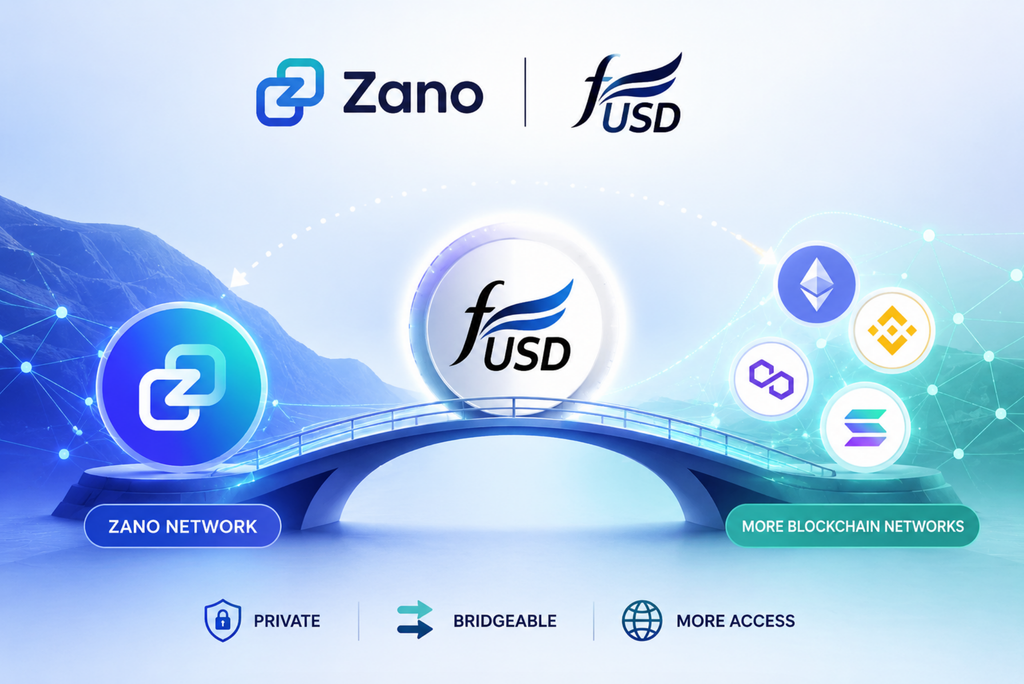
Zano is working on a way to connect its private stablecoin, $fUSD, with other crypto networks. This could let people keep their funds private on Zano while also accessing more crypto markets and services when they want.

Table of Contents

  1. Zano Is More Than $ZANO
  2. What Is $fUSD?
  3. Why Does $fUSD Need to Reach Other Networks?
  4. How Could Zano’s Execution Layer Help?
  5. A Simple Example
  6. What Could This Mean for Users?
  7. The Bigger Picture

1. Zano Is More Than $ZANO

When people hear about Zano, they often think about its native cryptocurrency, $ZANO.

But Zano is also building an ecosystem of private digital assets called Confidential Assets.

One example is $fUSD, a private stablecoin designed to maintain a value close to the US dollar while benefiting from Zano’s privacy features.

According to Zano, Confidential Assets such as fUSD will be able to move beyond the Zano network once the Zano Execution Layer arrives.

This could make private assets like fUSD useful in a much wider part of the crypto world.

2. What Is $fUSD?

A stablecoin is a type of cryptocurrency designed to keep a relatively stable value, usually by tracking a traditional currency such as the US dollar.

$fUSD is Zano’s private stablecoin.

The idea is to combine the convenience of a digital dollar with Zano’s focus on financial privacy.

For people who are new to crypto, you can think of fUSD as a private digital version of the US dollar that can be used within the Zano ecosystem.

If you want to understand fUSD before going deeper, check out our beginner friendly guide: 👉 What Is fUSD? Zano’s Private Stablecoin

3. Why Does $fUSD Need to Reach Other Networks?

Why would a private stablecoin need to leave Zano?

The simple answer is access.

Some of the biggest crypto markets and financial applications operate on other blockchain networks.

These include DeFi, short for decentralized finance. DeFi allows people to trade, lend and borrow digital assets using blockchain based applications rather than traditional banks.

Today, a private stablecoin like fUSD has limited access to these wider markets.

Bridging could change that.

4. How Could Zano’s Execution Layer Help?

Zano is developing an Execution Layer designed to expand what can be built and used around the Zano ecosystem.

According to Zano, once the Execution Layer arrives, Confidential Assets such as fUSD will be bridgeable to other blockchain networks.

In simple terms, a bridge is a way to move an asset between different blockchain networks so it can be used in another ecosystem.

This could allow users to:

  1. Hold fUSD privately on Zano.
  2. Bridge it to a supported blockchain.
  3. Use it in available DeFi applications and markets.
  4. Bring it back to Zano when they want.

The bigger idea is to give users more choice without forcing them to give up the privacy benefits available on Zano.

5. A Simple Example

Imagine you have $1,000 worth of fUSD.

You want to keep your funds private, so you hold them on Zano.

Later, you want to use some of that money in a DeFi application operating on another blockchain.

With the planned bridging capability, you could potentially move your fUSD to that network and use the available services.

When you are finished, you could bring the asset back to the Zano ecosystem.

Think of it like a bridge between two cities.

You can keep your money in one place when you want, but when you need access to something in another place, you have a way to get there.

6. What Could This Mean for Users?

If the planned functionality becomes available, it could make fUSD more useful beyond the Zano network.

For everyday users, this could mean:

More choice: Use fUSD privately on Zano or access supported markets elsewhere.

More opportunities: Potentially use fUSD for trading, lending and other DeFi activities on supported networks.

Privacy when needed: Keep your funds within Zano when privacy is your priority.

Access to wider markets: Connect a private stablecoin with markets and services available on other blockchain networks.

This could help address one of the challenges faced by private cryptocurrencies today: having privacy while still being able to access the wider crypto ecosystem.

7. The Bigger Picture

Zano is working toward a future where private assets do not have to stay isolated from the rest of the crypto world.

With the planned Execution Layer, Confidential Assets such as $fUSD are expected to become bridgeable to other blockchain networks.

That could allow users to keep their funds private on Zano, access wider crypto markets when they want, and return to Zano when they need its privacy features.

The idea is simple:

Privacy does not have to mean isolation.

If successful, Zano could give users a way to combine the privacy of its network with access to a much wider range of crypto markets and DeFi services.

Sources:

Disclaimer: ZanoNews.com is an independent news and information website. This article is for informational purposes only and does not constitute financial or investment advice.