How to Send ZANO

If you’ve already created your wallet and received your first ZANO, you’re ready to make your first transaction.

Sending ZANO is simple and usually takes just a few moments. This guide explains every step in plain language so that anyone—even if you’re completely new to cryptocurrency—can follow along with confidence.

Before continuing, make sure your wallet contains some ZANO.

👉 If you haven’t received any ZANO yet, read our guide: How to Receive ZANO
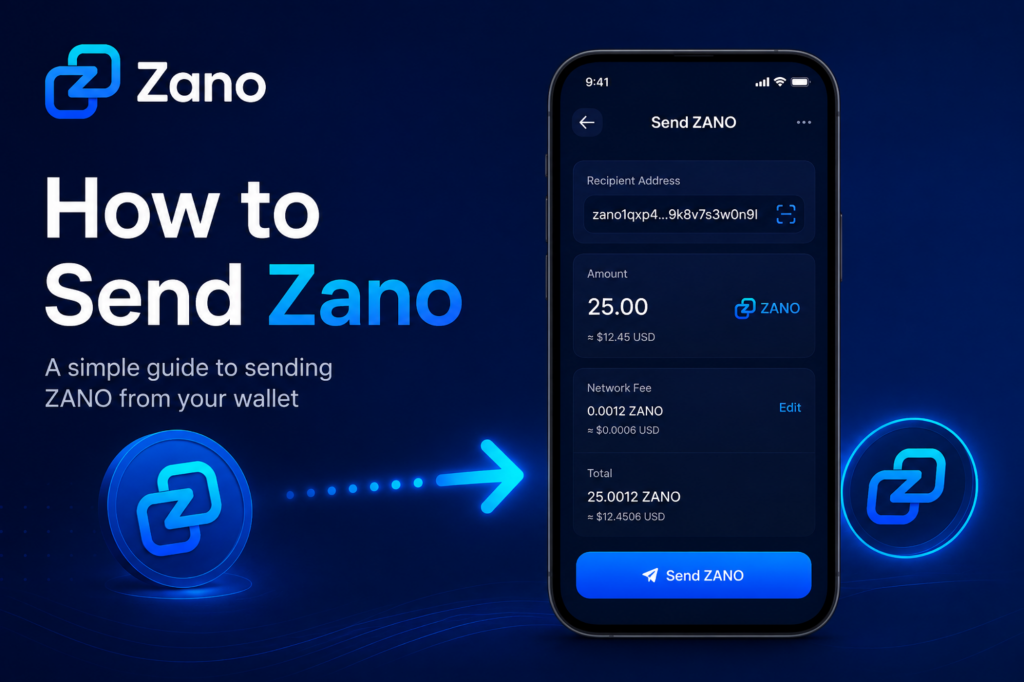
Table of Contents

  1. Before You Send ZANO
  2. Open Your Wallet
  3. Enter the Recipient’s Address
  4. Choose the Amount to Send
  5. Review the Transaction
  6. Confirm and Send
  7. Check Your Transaction
  8. Common Mistakes to Avoid
  9. Frequently Asked Questions
  10. Summary
  11. Sources

1. Before You Send ZANO

Before sending ZANO, make sure you have:

  • A Zano Wallet with some ZANO available.
  • The correct wallet address of the person you’re sending funds to.
  • An internet connection.

Always double-check the wallet address before sending. Cryptocurrency transactions cannot usually be reversed.

2. Open Your Wallet

Open your Zano Wallet on your mobile phone or desktop computer.

From the main wallet screen, select the Send option.

You’ll be asked to enter:

  • The recipient’s wallet address
  • The amount of ZANO to send

3. Enter the Recipient’s Address

Ask the recipient to provide their Zano wallet address.

You can:

  • Copy and paste the address.
  • Scan a QR code if you’re using the mobile wallet.

Always check that the first and last few characters match the address you were given before sending.

4. Choose the Amount to Send

Enter the amount of ZANO you’d like to send.

For example:

  • 1 ZANO
  • 10 ZANO
  • 25.5 ZANO

Your wallet will also show the network fee before you confirm the transaction.

5. Review the Transaction

Before sending, carefully review:

  • Recipient’s wallet address
  • Amount you’re sending
  • Network fee

Taking a few extra seconds here can help prevent mistakes.

6. Confirm and Send

If everything looks correct:

  1. Tap or click Send.
  2. Confirm the transaction if prompted.
  3. Wait a few moments while the transaction is processed.

Once confirmed, your wallet will show that the transaction has been sent.

7. Check Your Transaction

After sending, you can view the transaction in your wallet’s transaction history.

You should see:

  • Amount sent
  • Recipient address
  • Date and time
  • Confirmation status
  • Transaction ID (Hash)

The recipient will normally receive the funds once the transaction has been confirmed by the network.

8. Common Mistakes to Avoid

Here are a few simple tips:

  • Double-check the wallet address before sending.
  • Never send more than you intended.
  • Make sure you have enough ZANO to cover the network fee.
  • Never share your wallet’s recovery seed or private keys.

9. Frequently Asked Questions

Can I cancel a transaction after sending?

No. Once a transaction has been confirmed on the blockchain, it cannot normally be reversed.

What if I send ZANO to the wrong address?

Unfortunately, cryptocurrency transactions are generally irreversible. Always verify the address before confirming.

Is there a fee for sending ZANO?

Yes. Like most blockchains, Zano charges a small network fee to process transactions.

10. Summary

Sending ZANO is straightforward once you’ve used your wallet a few times.

Remember these simple steps:

  1. Open your wallet.
  2. Enter the recipient’s address.
  3. Choose the amount.
  4. Review the details.
  5. Confirm the transaction.

Taking a few extra moments to check the address and amount can help ensure your transaction is completed safely.

11. Sources

Disclaimer: ZanoNews.com is an independent news and information website. This article is for informational purposes only and should not be considered financial, investment, or legal advice.
How to Receive ZANO

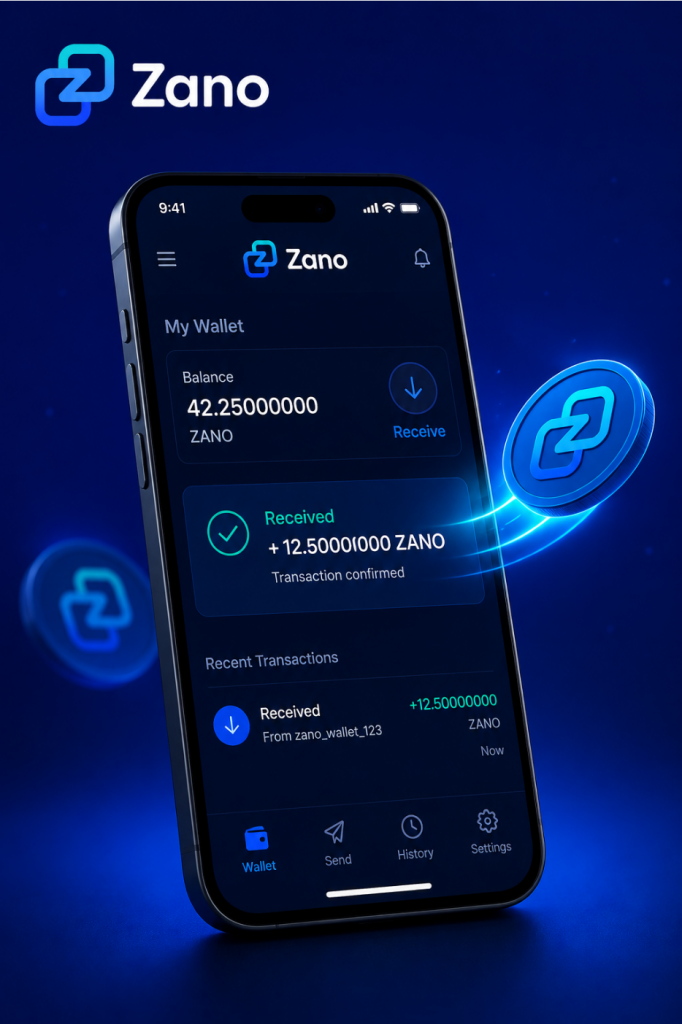
Now that you’ve created your Zano wallet, you’re ready to receive your first ZANO.

Whether you’re receiving ZANO from a friend, another wallet, or a cryptocurrency exchange, the process is simple and only takes a few steps.

This guide explains everything you need to know in easy-to-understand language.

If you haven’t created your wallet yet, read our guide 👇

How to Create Your First Zano Wallet

Table of Contents

  1. What Is a Wallet Address?
  2. Find Your Wallet Address
  3. Share Your Wallet Address
  4. Receive ZANO from Another Person
  5. Receive ZANO from a Cryptocurrency Exchange
  6. Check Your Wallet
  7. Common Mistakes to Avoid
  8. Frequently Asked Questions
  9. What’s Next?
  10. Sources

1. What Is a Wallet Address?

A wallet address is a unique address that allows you to receive ZANO.

Think of it like an email address.

Just as someone needs your email address to send you an email, they need your wallet address to send you ZANO.

Your wallet address is safe to share with others.

However, your password, recovery phrase, and private keys should never be shared.

2. Find Your Wallet Address

Open your Zano Wallet.

On the main screen, you’ll usually see a Receive button or section.

Click Receive to view your wallet address.

Most Zano wallets also display a QR code, which makes it easy for someone to send you ZANO by scanning it.

3. Share Your Wallet Address

When someone wants to send you ZANO:

  1. Click the Copy button to copy your wallet address.
  2. Paste the address into a message or email.
  3. Or let the sender scan your QR code.

Before sending your address, quickly check that it has copied correctly.

Using the Copy button is much safer than typing the address manually.

4. Receive ZANO from Another Person

If someone is sending you ZANO:

  1. Share your wallet address or QR code.
  2. Ask the sender to double-check the address before sending.
  3. Wait for the transaction to be processed by the Zano network.

Once the transaction is confirmed, your wallet balance will update automatically.

5. Receive ZANO from a Cryptocurrency Exchange

If you’ve bought ZANO on an exchange and want to move it into your wallet:

  1. Log in to your exchange account.
  2. Go to the Withdraw page.
  3. Select ZANO.
  4. Paste your Zano wallet address into the withdrawal address field.
  5. Enter the amount you want to withdraw.
  6. Review the details carefully.
  7. Confirm the withdrawal.

Before confirming, always make sure you’re sending ZANO to your Zano wallet address.

6. Check Your Wallet

After the transaction has been sent, it needs to be confirmed by the Zano blockchain.

Once confirmed:

  • Your wallet balance will increase.
  • The transaction will appear in your transaction history.
  • Your ZANO will be ready to use.

If you don’t see the transaction immediately, don’t panic. It can take a little time depending on network conditions.

7. Common Mistakes to Avoid

Avoid these common mistakes:

  • Copying only part of your wallet address.
  • Typing the address manually instead of copying it.
  • Sending ZANO to the wrong wallet address.
  • Sharing your password.
  • Sharing your recovery phrase or private keys.

Taking a few extra seconds to check the wallet address can help prevent mistakes.

8. Frequently Asked Questions

Is my wallet address private?

No.

Your wallet address is public and can safely be shared with anyone who wants to send you ZANO.

Can someone access my wallet if they know my wallet address?

No.

Your wallet address only allows people to send you ZANO.

Your password, recovery phrase, and private keys protect your wallet and should always remain private.

How long does it take to receive ZANO?

Most transactions are confirmed within a short time, although this can vary depending on network activity.

Can I receive ZANO more than once?

Yes.

You can use the same wallet address to receive ZANO as many times as you like.

9. What’s Next?

Congratulations!

You’ve successfully learned how to receive ZANO.

The next step is learning how to send ZANO to another wallet safely and securely.

We recommend reading:

How to Send Your ZANO

10. Sources

Disclaimer: ZanoNews.com is an independent news and information website. This article is for informational purposes only and should not be considered financial, investment, or legal advice.
How to Create Your First Zano Wallet

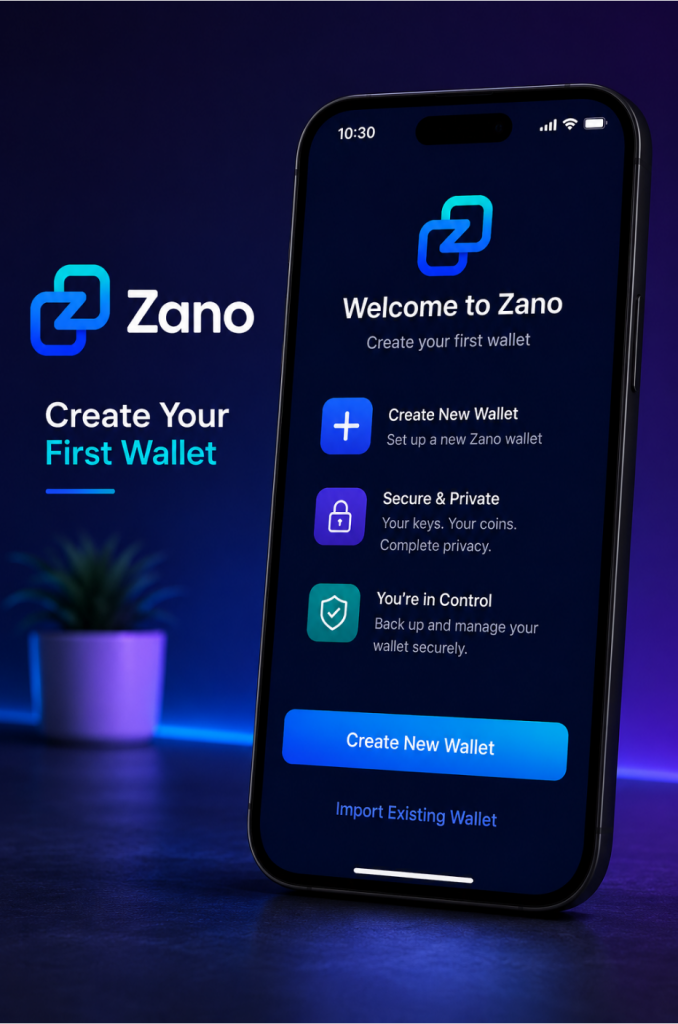
Now that you’ve downloaded and installed the official Zano Wallet, it’s time to create your first wallet.

If you haven’t downloaded and installed the wallet yet, read our guide 👉 How to Download and Install the Official Zano Wallet.

If you’re new to cryptocurrency, don’t worry. Creating a Zano wallet is quick, free, and only takes a few minutes.

This guide explains each step in simple language, helping you create your wallet safely and understand the information you’ll see during the setup process.

Table of Contents

  1. What Does It Mean to Create a Wallet?
  2. Before You Begin
  3. Creating Your First Wallet
  4. Choosing a Strong Password
  5. Back Up Your Wallet
  6. Understanding Your Wallet Address
  7. Your Wallet Is Ready
  8. Frequently Asked Questions
  9. What’s Next?
  10. Sources

1. What Does It Mean to Create a Wallet?

Creating a wallet doesn’t create cryptocurrency.

Instead, it creates a secure digital account that allows you to:

  • Store your ZANO
  • Send and receive payments
  • View your transaction history
  • Access features of the Zano ecosystem

Think of your wallet like a digital safe.

Only you should have access to it.

2. Before You Begin

Before creating your wallet, make sure you have:

  • Downloaded the official Zano Wallet.
  • Installed the wallet on your device.
  • A few minutes to complete the setup.
  • A safe place to store your recovery information.

If you haven’t installed the wallet yet, read our guide 👇

How to Download and Install the Official Zano Wallet

3. Creating Your First Wallet

Once you’ve opened the Zano Wallet:

  1. Select Create New Wallet.
  2. Enter a name for your wallet (optional, but helpful if you plan to create more than one wallet).
  3. Create a strong password.
  4. Confirm your password.
  5. Continue with the setup.

The wallet will then generate your new wallet.

This process only takes a few seconds.

4. Choosing a Strong Password

Your password helps protect your wallet if someone gains access to your computer or phone.

A good password should:

  • Be at least 12 characters long.
  • Include uppercase and lowercase letters.
  • Include numbers.
  • Include special characters.
  • Be unique and not used for any other account.

Avoid using:

  • Your name
  • Your birthday
  • Simple passwords like 123456 or password

A password manager can help you generate and securely store strong passwords.

5. Back Up Your Wallet

This is the most important step.

During the setup process, the wallet will provide recovery information that allows you to restore access to your wallet if your device is lost, stolen, or damaged.

Make sure you:

  • Write down your recovery seed or backup information.
  • Store it somewhere safe.
  • Keep more than one secure copy if possible.
  • Never share it with anyone.

If someone gains access to your recovery information, they can access your wallet.

6. Understanding Your Wallet Address

After your wallet has been created, you’ll see your wallet address.

This address is similar to an email address.

You can safely share it with others when you want to receive ZANO.

For example:

  • You can share your wallet address with a friend who wants to send you ZANO.
  • You can use it when withdrawing ZANO from an exchange.

Your wallet address is public.

Your password and recovery information are private and should never be shared.

7. Your Wallet Is Ready

Congratulations!

You now have your first Zano wallet.

From here, you can:

  • Receive your first ZANO.
  • Send ZANO to another wallet.
  • View your transaction history.
  • Explore other features of the Zano ecosystem.

Take a few moments to become familiar with the wallet interface before making your first transaction.

8. Frequently Asked Questions

Is creating a Zano wallet free?

Yes.

The official Zano Wallet is free to download, install, and use.

Can I create more than one wallet?

Yes.

Many users create separate wallets for different purposes, such as personal savings, business use, or testing.

Can I change my password later?

Yes.

If needed, you can change your wallet password after the wallet has been created.

What happens if I lose my computer?

If you’ve safely backed up your recovery information, you can restore your wallet on another device.

Without a backup, you may permanently lose access to your wallet.

9. What’s Next?

Now that you’ve created your wallet, you’re ready to receive your first ZANO.

We recommend continuing with these beginner guides:

  • How to Receive Your First ZANO
  • How to Send Your First ZANO
  • How to Back Up Your Zano Wallet
  • Understanding Confidential Assets
  • How Zano Staking Works

Each guide builds on the previous one, helping you become more confident using the Zano ecosystem.

10. Sources

Disclaimer: ZanoNews.com is an independent news and information website. This article is for informational purposes only and should not be considered financial, investment, or legal advice.
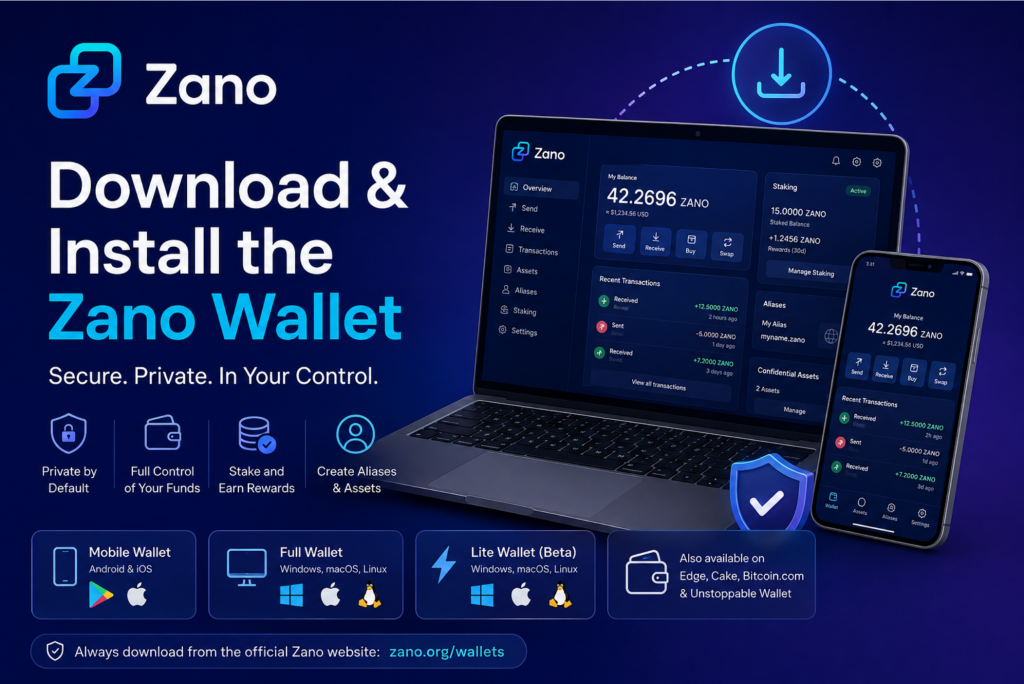
How to Download and Install the Official Zano Wallet

Whether you’re new to cryptocurrency or already familiar with blockchain, the first step to using Zano is choosing the right wallet.

This guide explains the different wallet options available, how to safely download the official wallet, and how to install it on Windows, macOS, or Linux.

By the end of this guide, you’ll know exactly which wallet is right for you and how to get started.

Table of Contents

  1. What Is a Zano Wallet?
  2. Why You Need a Wallet
  3. Choose the Right Zano Wallet
  4. Where to Download the Official Wallet
  5. Installing the Wallet
  6. Setting Up Your Wallet for the First Time
  7. Keeping Your Wallet Safe
  8. Frequently Asked Questions
  9. What’s Next?
  10. Sources

1. What Is a Zano Wallet?

A Zano wallet is software that allows you to access and manage your ZANO cryptocurrency.

Think of it like a digital wallet. Instead of holding cash or bank cards, it securely stores the information needed to access your cryptocurrency on the Zano blockchain.

With a Zano wallet, you can:

  • Store your ZANO securely
  • Send and receive ZANO
  • View your transaction history
  • Receive and manage Confidential Assets
  • Register Zano aliases
  • Stake ZANO (using the Full Wallet)

Unlike a traditional bank account, you remain in full control of your wallet and your funds.

2. Why You Need a Wallet

Before you can receive, buy, or send ZANO, you’ll need a wallet.

The official Zano wallets are designed to make using the network simple while giving you complete control over your cryptocurrency.

Using an official wallet also gives you access to the latest features developed for the Zano ecosystem.

3. Choose the Right Zano Wallet

Zano offers several wallet options depending on how you plan to use the network.

If you’re unsure which one to choose, the explanations below will help.

3.1 Official Mobile Wallet

The Official Zano Mobile Wallet is available for Android and iPhone.

It is ideal if you want to:

  • Access your wallet anywhere
  • Send and receive ZANO quickly
  • Manage your funds from your smartphone
  • Use Zano while travelling

Available for:

  • Android (Google Play)
  • Android (APK)
  • iPhone (App Store)

For most beginners, this is the easiest wallet to start with.

3.2 Full Wallet (Desktop)

The Full Wallet is the complete desktop version of the official Zano wallet.

It is available for:

  • Windows
  • macOS
  • Linux

The Full Wallet downloads a complete copy of the Zano blockchain to your computer.

It is recommended if you want to:

  • Stake your ZANO
  • Run a full node
  • Access every feature available on the Zano network
  • Help support the blockchain network

Because it stores the blockchain locally, you’ll need additional storage space, and the first synchronization may take some time.

3.3 Lite Wallet (Beta)

The Lite Wallet is a lightweight desktop wallet.

Instead of downloading the full blockchain, it connects to a trusted remote node.

Available for:

  • Windows
  • macOS
  • Linux

Choose the Lite Wallet if you:

  • Want to get started quickly
  • Have limited storage space
  • Don’t plan to run a full node

At the time of writing, the Lite Wallet is available as a Beta release.

3.4 Third-Party Wallets

ZANO is also supported by several trusted third-party wallets.

These include:

These wallets allow you to manage ZANO alongside many other cryptocurrencies.

However, if you’re completely new to Zano, it’s recommended to begin with one of the official Zano wallets.

4. Where to Download the Official Wallet

For your security, always download your wallet from the official Zano Wallet page.

Once you’re on the Wallets page:

  1. Choose the wallet that best suits your needs.
  2. Select your operating system.
  3. Download the latest version.
  4. Wait for the download to finish.
  5. Open the installer.

Avoid downloading wallet software from unofficial websites or links shared by unknown sources.

5. Installing the Wallet

Installing the wallet is simple.

Windows

  1. Download the Windows installer.
  2. Open the downloaded file.
  3. Follow the installation wizard.
  4. Click Install.
  5. Launch the wallet when the installation is complete.

macOS

  1. Download the macOS version.
  2. Open the downloaded DMG file.
  3. Drag the wallet into your Applications folder.
  4. Open the wallet.

Linux

  1. Download the Linux version.
  2. Follow the installation instructions for your Linux distribution.
  3. Launch the wallet.

If you’re using the Full Wallet, it will begin synchronizing with the blockchain after installation. Depending on your internet connection, this may take some time.

6. Setting Up Your Wallet for the First Time

When you launch the wallet for the first time, you’ll be given two options:

  • Create a new wallet
  • Restore an existing wallet

If you’re new to Zano:

  1. Select Create a New Wallet.
  2. Create a strong password.
  3. Write down your recovery seed or backup information.
  4. Store it in a safe location.

Your recovery information is the only way to restore access to your wallet if your computer or phone is lost, stolen, or damaged.

Never share your recovery seed or private keys with anyone.

7. Keeping Your Wallet Safe

Good security habits will help protect your cryptocurrency.

Always remember to:

  • Download wallets only from the official Zano website.
  • Keep your wallet software updated.
  • Use a strong password.
  • Back up your wallet.
  • Store your recovery seed somewhere secure.
  • Be cautious of phishing websites and fake wallet downloads.

Anyone who has access to your recovery phrase can access your cryptocurrency.

8. Frequently Asked Questions

Which wallet is best for beginners?

For most people, the official Mobile Wallet is the easiest way to get started.

Can I use both the Mobile Wallet and the Full Wallet?

Yes.

Many users keep smaller amounts in their Mobile Wallet for everyday transactions while using the Full Wallet for staking or long-term storage.

What’s the difference between the Lite Wallet and the Full Wallet?

The Lite Wallet connects to a remote node and doesn’t download the full blockchain.

The Full Wallet downloads the entire blockchain, giving you access to every feature while also helping support the network.

Are all official Zano wallets free?

Yes.

All official Zano wallets are free to download and use.

9. What’s Next?

Congratulations! You’ve successfully downloaded and installed your first Zano wallet.

Your next step is learning how to create your first wallet address, secure it properly, and prepare it to send and receive ZANO.

You may also find these guides helpful:

  • How to Create Your First Zano Wallet
  • How to Back Up Your Zano Wallet
  • How to Send and Receive ZANO
  • Understanding Confidential Assets
  • How Zano Staking Works

10. Sources

Disclaimer: ZanoNews.com is an independent news and information website. This article is for informational purposes only and should not be considered financial, investment, or legal advice.
What Is Zano? A Beginner’s Guide

If you’re new to cryptocurrency, you’ve probably heard about Bitcoin and Ethereum. But what is Zano, and why are more people paying attention to it?

Zano is a privacy-focused blockchain designed to make digital payments secure, confidential, and easy to use. It combines modern privacy technology with features for businesses, developers, and everyday users.

Whether you’re completely new to crypto or simply curious about Zano, this guide explains everything in simple language.

Table of Contents

  1. What Is Zano?
  2. Why Was Zano Created?
  3. Key Features of Zano
  4. What Can You Do With Zano?
  5. Is Zano Good for Beginners?
  6. Where Should You Start?
  7. Frequently Asked Questions
  8. Final Thoughts

1. What Is Zano?

Zano is a Layer 1 blockchain launched in 2019 that focuses on privacy, security, and usability.

Unlike many cryptocurrencies where transactions can be viewed publicly, Zano keeps transaction details private by default. This means the sender, receiver, and transaction amount remain confidential while still being securely verified on the blockchain.

Its goal is to provide digital money that protects financial privacy without sacrificing security.

2. Why Was Zano Created?

Many blockchains allow anyone to view wallet balances and transaction history.

While transparency has advantages, it also means anyone can potentially track your financial activity.

Zano was built to give users greater financial privacy while remaining decentralized and secure.

3. Key Features of Zano

3.1 Privacy by Default

Every Zano transaction is private, helping protect your financial information from public view.

3.2 Low Transaction Fees

Sending Zano costs only a small network fee, making it suitable for everyday payments.

3.3 Fast Transactions

Transactions are confirmed quickly, allowing users to send and receive funds without long waiting times.

3.4 Hybrid Consensus

Zano uses a hybrid Proof-of-Work and Proof-of-Stake (PoW + PoS) consensus model to help secure the network while allowing eligible holders to earn staking rewards.

3.5 Confidential Assets

One of Zano’s standout features is Confidential Assets, which allow developers and businesses to create private digital assets while keeping transaction information confidential.

3.6 Cross-Chain Transfers

Recent network upgrades allow native ZANO to move between supported blockchain ecosystems while maintaining Zano’s privacy-focused infrastructure.

4. What Can You Do With Zano?

Zano can be used in many different ways:

  • Send private payments
  • Receive payments securely
  • Stake ZANO to earn rewards
  • Create Confidential Assets
  • Buy and sell on ZanoBay
  • Explore decentralized applications built on Zano

5. Is Zano Good for Beginners?

Yes.

Zano is designed to be beginner-friendly while offering advanced privacy features for experienced users.

If you’re just starting, learning how to install the wallet and securely back up your recovery seed is the best place to begin.

6. Where Should You Start?

If you’re new to Zano, these guides are recommended:

  1. Install the Zano Wallet
  2. Create Your First Wallet
  3. Back Up Your Recovery Seed
  4. Learn How Staking Works
  5. Understand Zano Privacy
  6. Explore Confidential Assets

7. Frequently Asked Questions

7.1 Is Zano anonymous?

Zano is privacy-focused, meaning transaction details are confidential by default while the blockchain remains secure and verifiable.

7.2 Can I stake Zano?

Yes. Eligible holders can stake ZANO to help secure the network and earn rewards.

7.3 Is Zano open source?

Yes. Zano is an open-source blockchain project, allowing anyone to inspect the code and contribute to development.

8. Final Thoughts

Zano is more than just another cryptocurrency. It is a privacy-first blockchain designed for secure payments, confidential digital assets, and long-term usability.

Whether you’re looking to make private transactions, earn staking rewards, or simply learn about privacy-focused blockchain technology, Zano provides a solid starting point.

If you’re completely new to Zano, continue with the Getting Started guides below to learn how to install your wallet, create your first address, and begin exploring the ecosystem.

Learn more:

Disclaimer: ZanoNews.com is an independent news and information website. This article is for informational purposes only and should not be considered financial, investment, or legal advice.
Hard Fork 6 to Enable Cross-Chain Transfers for Native ZANO and Confidential Assets

New to cross-chain transfers? This 1 minute 34 second video from the Zano team explains how it works.

Table of Contents

  1. What Is Changing?
  2. How It Works Today
  3. What Changes After Hard Fork 6
  4. Why This Matters
  5. What Is Hard Fork 6?
  6. Sources

1. What Is Changing?

The Zano team has shared another preview of what users can expect after Hard Fork 6 (HF6).

Today, users can bridge cryptocurrencies such as Bitcoin (BTC), Ethereum (ETH), and Solana (SOL) into the Zano ecosystem, where they inherit Zano’s built-in privacy features.

After Hard Fork 6, the process will work in both directions. Native ZANO and supported Confidential Assets will also be able to move out of the Zano network through the bridge, making cross-chain transfers more flexible.

2. How It Works Today

Currently, supported cryptocurrencies can be bridged from public blockchains into the Zano network.

Once they arrive on Zano, these assets inherit the network’s privacy features, allowing users to benefit from confidential transactions while continuing to use familiar cryptocurrencies such as BTC, ETH, and SOL.

3. What Changes After Hard Fork 6

After Hard Fork 6 activates, Zano will support two-way cross-chain transfers.

This means:

  • BTC, ETH, and SOL can continue to be bridged into Zano and inherit its privacy features.
  • Native ZANO will be able to move from Zano to supported external blockchains.
  • Supported Confidential Assets will also be able to move to supported external networks.

This functionality is made possible by the new Gateway Addresses infrastructure introduced with Hard Fork 6. It is designed to simplify integrations for wallets, exchanges, payment providers, decentralized applications (dApps), and other blockchain services.

4. Why This Matters

Cross-chain transfers give users and developers more flexibility when moving assets between Zano and other blockchain ecosystems.

It could make it easier to:

  • Move assets between Zano and supported blockchains.
  • Improve interoperability across different blockchain networks.
  • Expand opportunities for wallets, exchanges, payment providers, and cross-chain services.
  • Bring Zano’s privacy technology to a wider range of blockchain users.

For people new to Zano, the concept is simple: assets can enter Zano to inherit its privacy features, and after Hard Fork 6, native ZANO and supported Confidential Assets can also move back to supported blockchains when needed.

5. What Is Hard Fork 6?

If you’d like to learn more about Hard Fork 6, visit our guide, where we explain the upgrade, Gateway Addresses, and how it could make Zano easier to integrate with wallets, exchanges, payment providers, and decentralized applications (dApps).

Article 👉: What Is Hard Fork 6?

6. Sources

Disclaimer: ZanoNews.com is an independent news and information website. This article is for informational purposes only and should not be considered financial, investment, or legal advice.
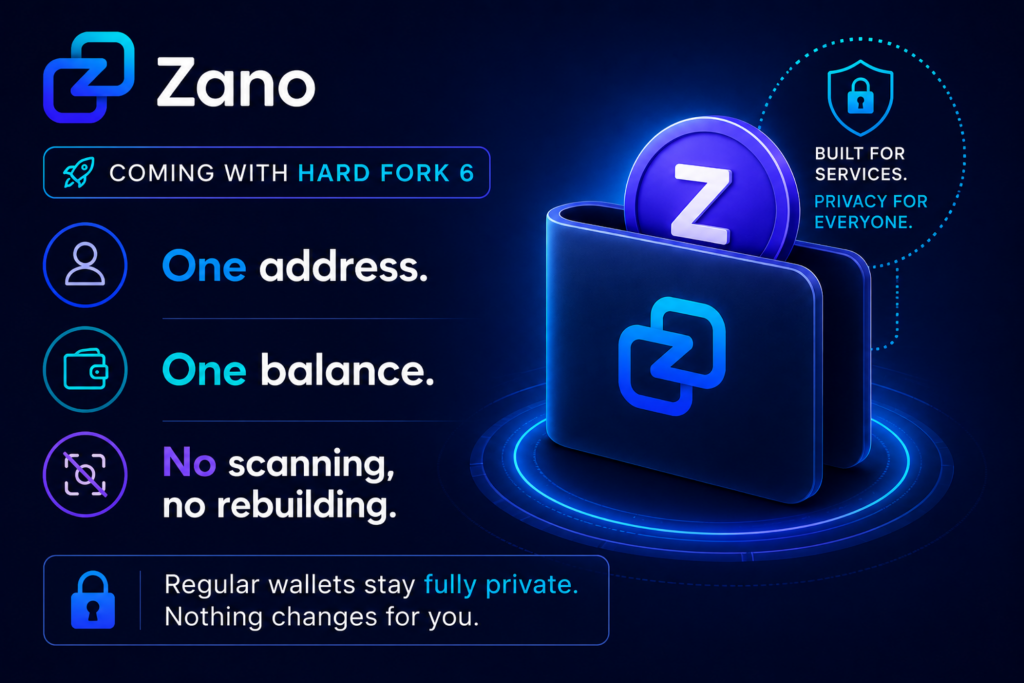
Zano Highlights How Gateway Addresses Make Services Simpler After Hard Fork 6

As Hard Fork 6 approaches, the Zano team continues to showcase how its new Gateway Addresses feature will improve the experience for exchanges, bridges, and decentralized exchanges (DEXs).

In a recent X post, Zano summarized the benefits in a simple message:

“One address. One balance. No scanning, no rebuilding.”

The announcement focuses on one of the biggest advantages of Gateway Addresses: making it much easier for services to integrate with Zano while keeping everyday users’ privacy exactly the same.

Table of Contents

1. One Address, One Balance
2. Learn About Gateway Addresses
3. Why This Matters for Services
4. Nothing Changes for Everyday Users
5. Looking Ahead

1. One Address, One Balance

Before Gateway Addresses, services built on Zano often had to scan the blockchain, rebuild wallet data, and manage complex infrastructure to keep balances up to date.

With Hard Fork 6, that process becomes much simpler.

Instead of constantly scanning the blockchain or rebuilding wallet information after downtime, services can work with a single address and a directly tracked balance. This reduces operational complexity and allows exchanges, bridges, and DEXs to get back online much faster after interruptions.

2. Learn About Gateway Addresses

👉 What Are Gateway Addresses?

We’ve already covered Gateway Addresses in detail as part of our Hard Fork 6 guide. If you’re new to the feature, check out that article to learn how Gateway Addresses work and why they’re considered one of the most important upgrades coming to the Zano ecosystem.

3. Why This Matters for Services

For exchanges and other infrastructure providers, reliability is essential.

If a service goes offline, lengthy rescans and rebuilding wallet data can delay getting back online. Gateway Addresses remove much of that complexity by allowing services to access a single balance without performing the same time-consuming processes as before.

For businesses looking to integrate Zano, this means a simpler setup, easier maintenance, and a smoother experience for both operators and users.

4. Nothing Changes for Everyday Users

While Gateway Addresses introduce significant improvements for infrastructure providers, regular Zano users don’t need to change how they use their wallets.

Standard wallets continue to provide the same privacy protections that Zano is known for.

As the Zano team emphasized in its announcement:

“Regular wallets stay fully private. Nothing changes for you.”

5. Looking Ahead

Gateway Addresses are one of the headline features of Hard Fork 6, helping remove technical barriers for exchanges, bridges, and decentralized applications without compromising user privacy.

By making integrations easier while preserving Zano’s privacy-first design, Hard Fork 6 continues to move the ecosystem toward broader adoption and improved accessibility.

Sources

Disclaimer: ZanoNews.com is an independent news and information website. This article is for informational purposes only and should not be considered financial, investment, or legal advice.
Is Self-Custody in Crypto Done For? Dash and Zano Invite the Community to Debate

As cryptocurrency continues to evolve, one topic remains at the heart of the industry’s future: self-custody.

Dash has invited the crypto community to discuss this important question during Crypto Quorum Episode 62, asking:

“Is self-custody in crypto done for? Can normies ever hold their own coins?”

The discussion is sponsored by Edge Wallet and co-hosted by Zano and RUNEBondApp, bringing together different perspectives on one of the biggest challenges facing digital assets today.

If you’re interested in where crypto is heading, this is a conversation worth following.

Table of Contents

1. What Is Self-Custody?
2. Why Is It Being Debated?
3. Why This Discussion Matters
4. Join the Conversation

1. What Is Self-Custody?

Self-custody means you hold and control your own cryptocurrency using a personal wallet instead of relying on a centralized exchange or third party.

With self-custody, only you have access to your private keys, giving you complete ownership of your digital assets. This approach aligns with one of crypto’s original principles: allowing individuals to be their own bank.

However, that freedom also comes with responsibility. If you lose your recovery phrase or private keys, there is usually no way to recover your funds.

2. Why Is It Being Debated?

For experienced crypto users, self-custody is often seen as the safest and most decentralized way to store digital assets.

But for newcomers, managing wallets, backing up seed phrases, and understanding blockchain transactions can feel overwhelming.

As crypto adoption grows, many believe wallets and user interfaces must become much simpler before self-custody can appeal to mainstream users. Others argue that education—not giving up control—is the real solution.

This debate explores whether self-custody is ready for mass adoption or whether the industry still has significant usability challenges to overcome.

3. Why This Discussion Matters

The future of cryptocurrency depends on striking the right balance between security, privacy, and ease of use.

Projects like Zano continue to focus on privacy-first technology while supporting discussions that help make crypto more accessible to everyone. Conversations like Crypto Quorum encourage the community to explore how digital asset ownership can evolve without sacrificing the core values of decentralization.

4. Join the Conversation

Crypto Quorum Episode 62 is open to anyone interested in the future of self-custody and digital asset ownership.

Whether you’re a long-time crypto enthusiast or just beginning your journey, the discussion offers an opportunity to hear different viewpoints and participate in one of crypto’s most important conversations.

You can watch the discussion and join the debate through the official X post linked below.e discussion and join the debate using the official event link shared by Dash.

Disclaimer: ZanoNews.com is an independent news and information website. This article is for informational purposes only and should not be considered financial, investment, or legal advice.
PegasusSwap Highlights Zano in New 2026 Review

Table of Contents

  1. PegasusSwap Publishes a Zano Review
  2. Why This Matters
  3. What the Review Covers
  4. About PegasusSwap
  5. Why More Platforms Are Covering Zano
  6. Sources

1. PegasusSwap Publishes a Zano Review

PegasusSwap, a cryptocurrency swap platform that allows users to exchange digital assets and publishes educational blockchain content, has released a new article introducing Zano to readers interested in privacy-focused cryptocurrencies.

The review describes Zano as a privacy-first blockchain created by one of the original developers behind the CryptoNote protocol. It is written for both newcomers and experienced crypto users, explaining the project in simple language while highlighting its long-term vision and technology.

The announcement was also shared on X, where PegasusSwap encouraged anyone exploring the next generation of privacy-focused cryptocurrencies to check out the guide.

2. Why This Matters

As more crypto projects compete for attention, independent articles help introduce new users to different blockchain ecosystems.

When established platforms publish educational content about Zano, it can:

  • Increase awareness of the project.
  • Help newcomers understand what makes Zano different.
  • Encourage readers to research privacy-focused technology.
  • Bring more attention to the growing Zano ecosystem.

Educational content is often one of the first places people learn about a cryptocurrency before deciding whether to explore it further.

3. What the Review Covers

According to PegasusSwap, the article explains several important aspects of Zano, including:

  • Zano’s privacy-focused design.
  • The history behind the CryptoNote developer who helped create the project.
  • Key blockchain features.
  • The technology behind the network.
  • The project’s future potential.

The review is designed as an introduction rather than a highly technical document, making it accessible for readers who are new to privacy coins.

4. About PegasusSwap

PegasusSwap is a cryptocurrency swap platform that allows users to exchange supported digital assets through its website.

Its platform focuses on providing a straightforward swapping experience while also publishing educational articles covering blockchain projects, cryptocurrencies, and industry topics. The addition of a dedicated Zano review shows the platform’s interest in highlighting privacy-focused technologies.

5. Why More Platforms Are Covering Zano

Over the past year, Zano has continued expanding its ecosystem with new integrations, wallet improvements, infrastructure upgrades, and preparations for Hard Fork 6. These developments have attracted increasing attention from exchanges, swap services, developers, and crypto media.

As more companies publish educational content about Zano, it becomes easier for people who have never heard of the project to discover its technology and learn how it differs from other privacy-focused cryptocurrencies.

While educational articles do not guarantee adoption, they can help increase visibility and encourage more people to explore the ecosystem.

6. Sources

Disclaimer: ZanoNews.com is an independent news and information website. This article is for informational purposes only and should not be considered financial, investment, or legal advice.
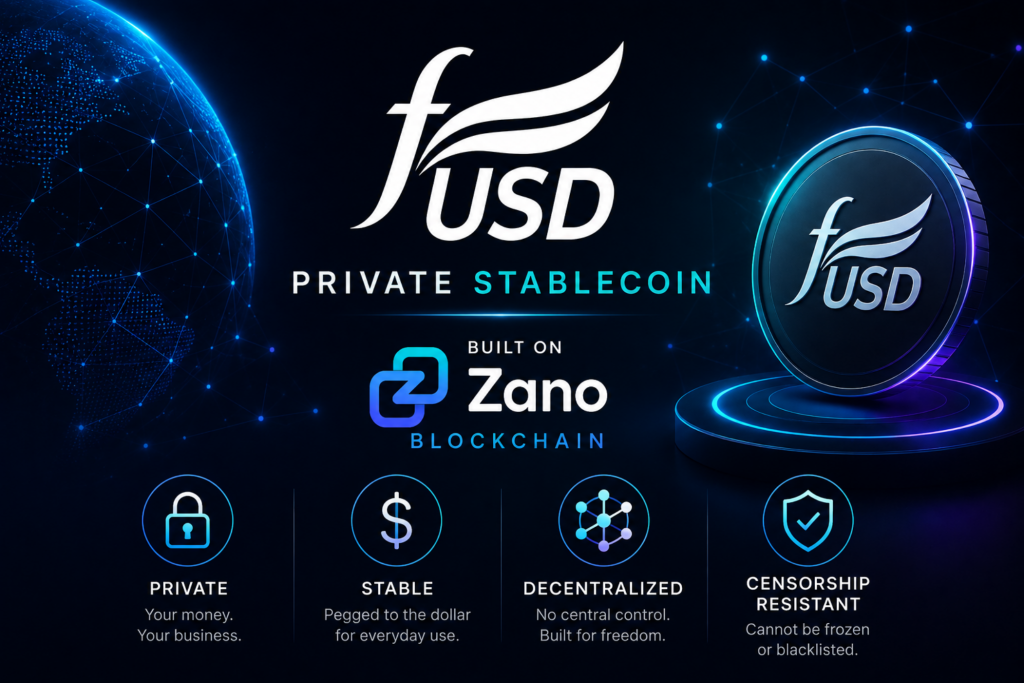
What Is fUSD? Zano’s Private Stablecoin

Stablecoins have become an essential part of the cryptocurrency ecosystem, allowing users to send and store digital dollars without the price volatility of many cryptocurrencies.

While USDT (Tether) is the world’s largest stablecoin, some users are looking for alternatives that offer greater privacy and decentralization. One of those alternatives is fUSD, a privacy-focused stablecoin built on Zano, a privacy-first blockchain designed for confidential transactions.

Table of Contents

  1. What Is fUSD?
  2. Why Was fUSD Created?
  3. How Does fUSD Compare to USDT?
  4. Who Is fUSD For?
  5. Looking Ahead

1. What Is fUSD?

fUSD (Freedom Dollar) is a decentralized stablecoin built on the Zano blockchain.

Its goal is to provide a digital dollar that combines price stability with the privacy and censorship resistance that Zano is known for.

According to the Freedom Dollar project, fUSD is designed to be:

  • Private
  • Decentralized
  • Censorship-resistant
  • Suitable for peer-to-peer digital payments

Unlike centrally issued stablecoins, fUSD is designed so that no single company controls user balances or can freeze individual wallets.

2. Why Was fUSD Created?

Most of today’s leading stablecoins are issued by centralized companies.

For example, Tether, the company that issues USDT, can freeze USDT held in specific wallet addresses. This capability is typically used to comply with legal orders, enforce sanctions, or help prevent the movement of funds linked to fraud, theft, or other illicit activity.

According to Freedom Dollar’s USDT Freeze Tracker, Tether has frozen more than $4.536 billion worth of USDT held in blacklisted wallet addresses to date.

This does not mean all USDT is frozen or that every USDT holder is affected. Instead, it highlights that USDT is a centrally issued stablecoin, meaning its issuer has the authority to freeze tokens held in specific wallet addresses when required.

Freedom Dollar developed fUSD as a privacy-focused, decentralized alternative built on the Zano blockchain for users who value financial privacy, censorship resistance, and greater control over their digital assets.

3. How Does fUSD Compare to USDT?

Although both are designed to maintain a stable value, they are built with different priorities.

USDT (Tether)

  • Issued by a centralized company.
  • Supported by most major exchanges and trading platforms.
  • Tether can freeze USDT held in specific wallet addresses when required.

fUSD (Freedom Dollar)

  • Built on the Zano blockchain.
  • Designed with privacy as a core feature.
  • Aims to be censorship-resistant.
  • Does not rely on a central issuer to control user funds.

Neither approach is inherently better—they simply serve different use cases. Some users prioritize liquidity and widespread adoption, while others prefer greater privacy and decentralization.

4. Who Is fUSD For?

fUSD may appeal to users who:

  • Want a privacy-focused stablecoin.
  • Prefer decentralized financial tools.
  • Value censorship resistance.
  • Are active within the Zano ecosystem.

As the Freedom Dollar project develops, it aims to provide a stable digital currency that aligns with Zano’s privacy-first approach to blockchain technology.

5. Looking Ahead

Stablecoins are likely to remain an important part of the cryptocurrency ecosystem, but not every stablecoin is built the same way.

USDT continues to be the most widely used stablecoin, offering deep liquidity and broad adoption. At the same time, its centralized design means Tether can freeze USDT held in specific wallet addresses when necessary.

For users who want a different approach, fUSD on the Zano blockchain offers a privacy-focused and decentralized alternative. As the project continues to evolve, it gives users another option for storing and transferring value while emphasizing privacy, censorship resistance, and greater control over their digital assets.

To learn more, visit:

Disclaimer: ZanoNews.com is an independent news and information website. This article is for informational purposes only and should not be considered financial, investment, or legal advice.

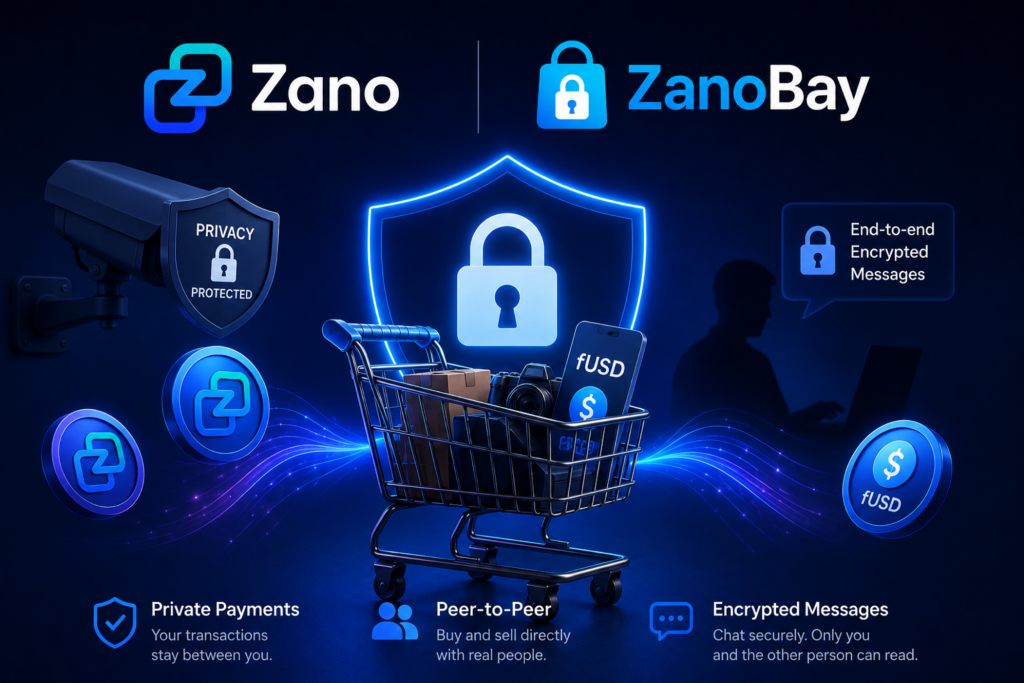
ZanoBay: The Marketplace That Doesn’t Watch You

When you shop online, you probably think about the price, shipping, or whether the seller is trustworthy. But have you ever wondered who else can see your purchase?

Traditional online marketplaces often collect and store information about what you buy, how you pay, and who you pay.

ZanoBay is different.

Built on the Zano blockchain, it’s a peer-to-peer marketplace where you can buy and sell using $ZANO or fUSD (Freedom Dollar). Payments stay private, messages are protected with end-to-end encryption, and you have greater control over your financial privacy.

📚 Table of Contents

  1. What Is ZanoBay?
  2. How Traditional Online Marketplaces Work
  3. Why Financial Privacy Matters
  4. What Makes ZanoBay Different?
  5. Why ZANO and fUSD Are Used
  6. What Can You Buy on ZanoBay?
  7. Who Is ZanoBay For?
  8. The Future of Private Commerce

1. What Is ZanoBay?

ZanoBay is a peer-to-peer online marketplace built on the Zano blockchain.

Instead of using traditional payment methods, buyers and sellers can complete transactions using:

The platform is currently in Beta and already includes more than 140 products and services across a growing number of categories.

Some of these include:

  • 🏠 Housing
  • 💼 Jobs
  • 👨‍💻 Freelancing
  • 🚗 Vehicles
  • 💻 Electronics
  • 👕 Fashion
  • 🍔 Food
  • 🏢 Businesses
  • 🎁 Gift Cards

The goal is simple: make it easy for people to trade directly with one another while keeping their payments private.

2. How Traditional Online Marketplaces Work

Most online marketplaces work through several different companies.

For example, when you buy something online, information may pass through:

  1. The marketplace
  2. Your payment processor
  3. Your bank
  4. Your card provider
  5. Analytics and fraud detection systems

Each part of the process may store information about your purchase.

That information can include:

  • What you bought
  • When you bought it
  • How much you spent
  • Who received the payment

These systems serve legitimate purposes, such as preventing fraud and processing payments efficiently. However, they also create detailed records of your shopping activity.

3. Why Financial Privacy Matters

Wanting financial privacy doesn’t mean you have something to hide. Just as you lock your home, protect your phone with a password, and use encrypted messaging apps, many people believe their payments should also stay private.

Your spending habits can reveal a lot about your life, so some people prefer marketplaces that collect as little personal information as possible.

4. What Makes ZanoBay Different?

ZanoBay was built with privacy at its core.

Here are three features that make it different from many traditional marketplaces.

🔒 Private Payments

Payments made with $ZANO and $fUSD use Zano’s privacy technology.

Unlike transparent blockchains, Zano is designed so transaction details such as wallet addresses, transferred amounts, and assets are not publicly visible by default.

This helps keep financial activity private between the people involved.

💬 End-to-End Encrypted Messaging

Communication between buyers and sellers is protected using end-to-end encryption.

That means only the people taking part in the conversation can read the messages.

🤝 Peer-to-Peer Trading

Instead of relying entirely on centralized payment systems, buyers and sellers interact directly using the Zano network.

This creates a marketplace where privacy is built into the experience rather than added later.

5. Why ZANO and fUSD Are Used

ZanoBay currently supports two digital assets.

🟦 ZANO

ZANO is the native cryptocurrency of the Zano blockchain.

It powers transactions across the network while providing privacy by default.

💵 fUSD

fUSD (Freedom Dollar) is a confidential stable asset on the Zano network.

Because its value is designed to remain relatively stable, it can be useful for buyers and sellers who want to avoid the price swings often associated with cryptocurrencies.

Together, $ZANO and $fUSD give users two ways to pay while benefiting from the privacy features built into the Zano ecosystem.

6. What Can You Buy on ZanoBay?

Although still in Beta, ZanoBay already offers a wide variety of listings.

You can browse categories such as:

  • 🏡 Housing
  • 💼 Jobs
  • 👨‍💻 Freelance Services
  • 🚘 Vehicles
  • 💻 Electronics
  • 🍔 Food
  • 👕 Fashion
  • 🏢 Businesses
  • 💳 Gift Cards

As more buyers and sellers join the platform, the range of products and services is expected to continue growing.

7. Who Is ZanoBay For?

ZanoBay isn’t designed for just one type of user.

It could appeal to:

👤 Privacy-conscious shoppers

People who prefer not to have every purchase linked to their identity whenever possible.

💼 Freelancers

Professionals who want to receive cryptocurrency payments directly from clients.

🏪 Businesses

Merchants interested in accepting $ZANO or $fUSD as payment while reaching customers in the growing Zano ecosystem.

🌍 Cryptocurrency users

People who already hold $ZANO or $fUSD and want to spend their digital assets instead of simply holding them.

8. The Future of Private Commerce

For many years, cryptocurrency has mainly been associated with investing and trading.

Platforms like ZanoBay are helping expand that vision by focusing on something people do every day—buying and selling goods and services.

As concerns about online privacy continue to grow, more users are beginning to ask how much personal information they share whenever they make a purchase.

ZanoBay offers a different answer.

Instead of treating privacy as an optional feature, it makes it part of the shopping experience through private payments, peer-to-peer trading, and end-to-end encrypted messaging.

Whether you’re buying a product, offering a freelance service, or simply exploring new ways to use cryptocurrency, ZanoBay demonstrates how blockchain technology can be used for more than speculation—it can support everyday commerce while giving users greater control over their financial privacy.

As the marketplace grows, it could become an important example of what private online commerce looks like in the years ahead.

To learn more, visit:

Disclaimer: ZanoNews.com is an independent news and information website. This article is for informational purposes only and should not be considered financial, investment, or legal advice.
How Zano Keeps Every Transaction Private by Default

Most people assume cryptocurrency transactions are private. In reality, many blockchains are completely transparent. Anyone can view wallet addresses, transaction amounts, and the movement of funds. While this transparency has its benefits, it also exposes users to scammers, hackers, and companies that track financial activity.

Zano takes a different approach.

Instead of asking users to enable privacy, Zano makes every transaction private by default. This means your financial information is protected automatically every time you send or receive funds.

🎥 Watch the Video

Before diving into the article, watch Episode 5 of the Zano Explainer Series to see how Zano’s privacy technologies work together to protect every transaction.

Watch here:

Table of Contents

  1. Why Privacy Matters
  2. How Zano Protects Every Transaction
  3. Ring Signatures Hide the Sender
  4. Stealth Addresses Protect the Receiver
  5. Confidential Transactions Hide the Amount
  6. Privacy Without Sacrificing Security
  7. Why Privacy by Default Matters

1. Why Privacy Matters

Many popular blockchains are transparent by design. Anyone can view wallet addresses, transaction amounts, and the movement of funds. While transparency can be useful for verifying transactions, it also means your financial activity is visible to anyone.

This level of exposure can make users targets for scammers, hackers, data trackers, or anyone interested in monitoring how their cryptocurrency is used.

2. How Zano Protects Every Transaction

Zano was built with privacy at its core. Unlike many cryptocurrencies that require users to choose privacy features, Zano protects every transaction automatically.

Whenever you send or receive ZANO, multiple privacy technologies work together behind the scenes to keep your financial information confidential while ensuring every transaction remains secure and verifiable.

3. Ring Signatures Hide the Sender

When you send ZANO, your transaction is combined with several other possible senders using a technology called Ring Signatures.

Think of it as signing a document in a room full of people. Everyone appears to be a possible signer, making it impossible for outside observers to determine who actually sent the transaction.

This protects the identity of the sender without affecting the security of the network.

4. Stealth Addresses Protect the Receiver

Every time someone sends you ZANO, the network automatically creates a unique one-time address for that payment.

Imagine receiving every letter through a brand-new anonymous mailbox. Even if someone knows your wallet address, they cannot identify where your payments are being received.

Your real wallet address remains hidden, giving you greater privacy with every transaction.

5. Confidential Transactions Hide the Amount

On many blockchains, anyone can see exactly how much cryptocurrency was sent.

Zano uses Confidential Transactions to hide the amount while still allowing the network to verify that the transaction is valid.

This means the blockchain can confirm that no coins were created or destroyed, but the transaction amount remains private.

6. Privacy Without Sacrificing Security

Zano’s privacy model combines three powerful technologies that work together seamlessly:

  • Ring Signatures hide the sender.
  • Stealth Addresses hide the receiver.
  • Confidential Transactions hide the amount.

Together, these technologies make it extremely difficult to trace payments, link wallet balances, or build a financial profile based on blockchain activity.

At the same time, every transaction is still verified by the network, ensuring strong security without compromising user privacy.

7. Why Privacy by Default Matters

Financial privacy is becoming increasingly important as more people use cryptocurrency for everyday transactions. While many blockchains make transaction details publicly visible, Zano was designed to protect users automatically from the moment they create a wallet.

By making privacy the default rather than an optional feature, Zano helps users keep their financial activity confidential without requiring additional steps or technical knowledge.

Whether you’re sending funds to a friend, making a purchase, or simply storing your assets, Zano ensures that your privacy is protected while maintaining the security and integrity of the blockchain.

To learn more, visit:

Disclaimer: ZanoNews.com is an independent news and information website. This article is for informational purposes only and should not be considered financial, investment, or legal advice.
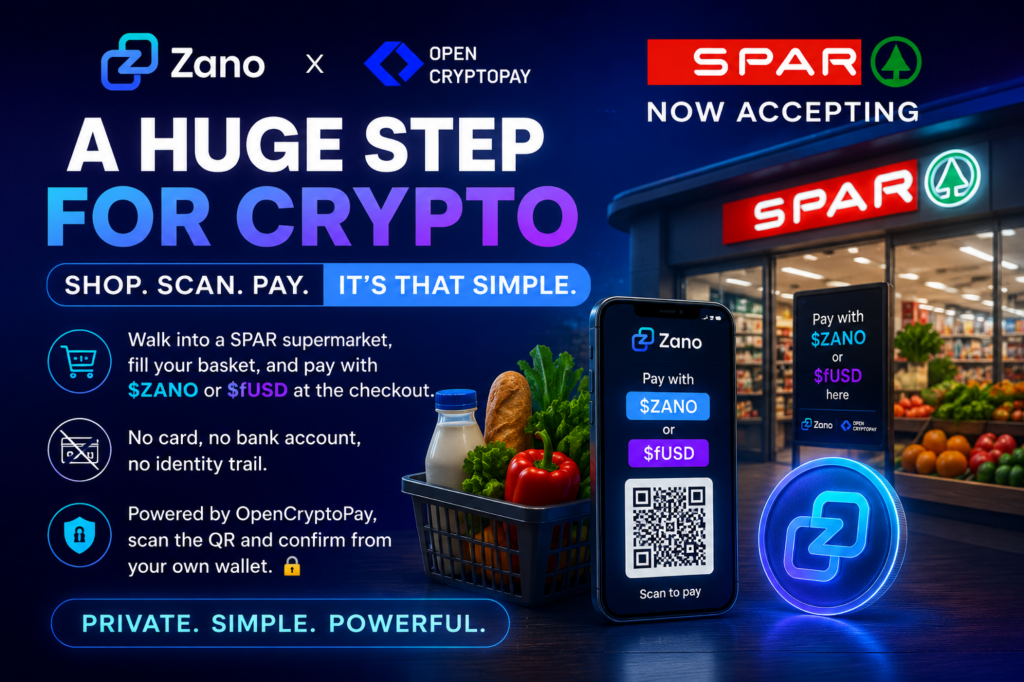
🛒 Shop at SPAR with ZANO or fUSD

Paying with cryptocurrency is becoming easier, and Zano has taken another step toward everyday adoption.

Customers can now shop at participating SPAR supermarkets and pay for their groceries using $ZANO or $fUSD directly from their crypto wallet. There’s no need for a bank card or even a bank account—simply scan a QR code at the checkout and confirm the payment from your wallet.

Table of Contents

  1. What Happened?
  2. How Does It Work?
  3. Why Is This Important?
  4. What Is OpenCryptoPay?
  5. A Step Towards Everyday Crypto Payments
  6. Learn More

1. What Happened?

Zano announced that customers can now use $ZANO or $fUSD to pay for purchases at participating SPAR supermarkets.

Instead of using cash or a debit card, shoppers simply scan a QR code at the checkout using their crypto wallet and approve the payment.

The experience is designed to be quick, simple, and private.

2. How Does It Work?

The payment process is straightforward:

  1. Fill your shopping basket.
  2. Go to the checkout.
  3. Scan the QR code displayed by the cashier.
  4. Confirm the payment from your Zano wallet.
  5. Your payment is completed.

There is no need to enter card details, carry cash, or use a traditional bank account. The Zano team also highlighted that merchants only need a phone and a QR code to accept payments through AEON Pay. Customers pay with $ZANO or $fUSD, while the merchant receives their local currency.

Want to learn how to use AEON Pay with ZANO? Check out our guide: 👇 How to Spend ZANO with AEON Pay 💳

3. Why Is This Important?

One of the biggest challenges facing cryptocurrency has always been using it in everyday life.

Being able to buy groceries with digital currency shows that crypto is moving beyond trading and into real-world spending.

For Zano users, this means they can spend their cryptocurrency directly while benefiting from the privacy features that the network is known for.

4. What Is OpenCryptoPay?

The system is powered by OpenCryptoPay, an open payment solution that allows customers to pay directly from their cryptocurrency wallets by scanning a QR code.

The goal is to make crypto payments as simple as paying with a mobile banking app while giving users greater control over how they pay.

5. A Step Towards Everyday Crypto Payments

Developments like this show how cryptocurrency is becoming more practical for everyday use.

Whether it’s buying groceries, paying for services, or shopping in stores, easier payment solutions help bring digital currencies closer to mainstream adoption.

For the Zano community, this announcement is another example of the project’s focus on combining privacy, ease of use, and real-world utility.

6. Learn More

Disclaimer: ZanoNews.com is an independent news and information website. This article is for informational purposes only and should not be considered financial, investment, or legal advice.

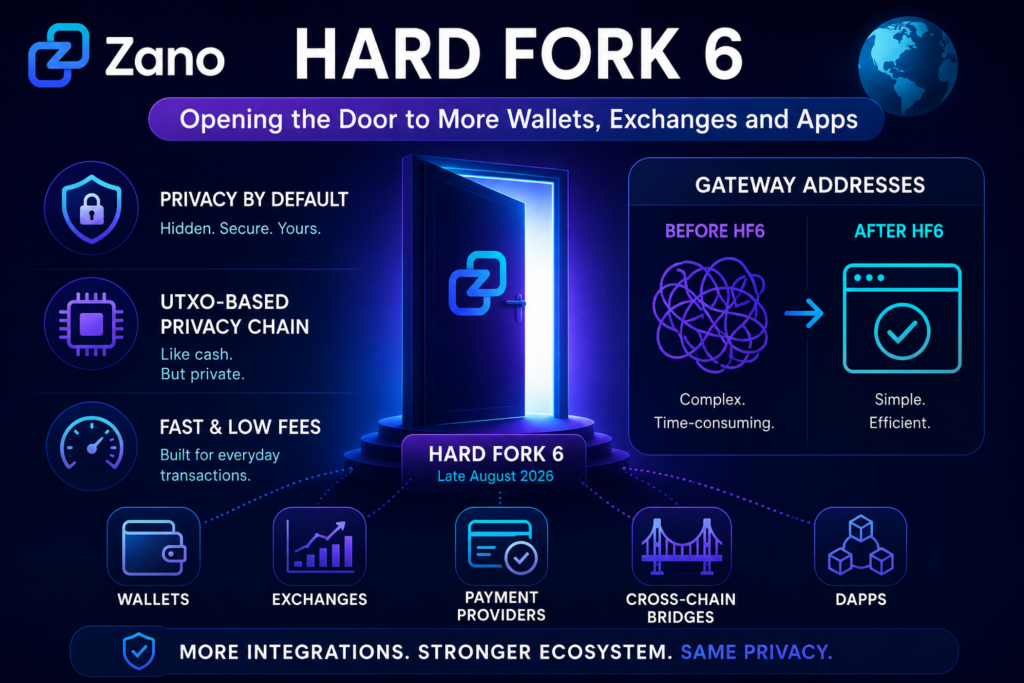
Zano Hard Fork 6: A New Era for Wallets & Exchanges 🌍

The Zano team has announced another exciting update about its upcoming Hard Fork 6 (HF6), and it could become one of the project’s most important upgrades yet.

Instead of only improving performance, Hard Fork 6 aims to make Zano much easier for wallets, exchanges, payment providers, and decentralized applications (dApps) to integrate.

A new feature called Gateway Addresses is designed to simplify the process by removing one of the biggest technical barriers developers have faced when integrating Zano. This could help bring Zano to more wallets, exchanges, payment providers, and blockchain applications while preserving the privacy that makes the network unique.

In this article, we’ll explain in simple terms what Hard Fork 6, Gateway Addresses, and a UTXO-based privacy chain are—and why this upgrade matters.

Table of Contents

  1. What Is Zano?
  2. What Is a UTXO-Based Privacy Chain?
  3. Why Has Integrating Zano Been Difficult?
  4. What Is Hard Fork 6?
  5. What Is a Gateway Address?
  6. Why This Upgrade Matters
  7. What It Means for Zano Users
  8. What This Upgrade Could Mean

1. What Is Zano?

Zano is a privacy-focused Layer 1 blockchain built for secure and confidential digital transactions.

Unlike many public blockchains where anyone can see wallet balances and transaction history, Zano keeps your financial activity private.

Some of its main features include:

  • Private transactions by default.
  • Hidden wallet balances.
  • Confidential Assets (privacy-preserving tokens built on Zano).
  • Low transaction fees.
  • Fast transaction processing.
  • A hybrid Proof-of-Work (PoW) and Proof-of-Stake (PoS) consensus model.

Its mission is simple: give users complete financial privacy while remaining secure and decentralized.

2. What Is a UTXO-Based Privacy Chain?

Zano uses a UTXO (Unspent Transaction Output) model, just like Bitcoin.

Think of it like paying with cash.

If you buy something costing €20 using a €50 note, you receive €30 in change.

Your wallet works in a similar way by using small pieces of cryptocurrency called UTXOs instead of one visible account balance.

What makes Zano different is that it also hides:

  • The sender.
  • The receiver.
  • The transaction amount.
  • Wallet balances.

This gives users much stronger financial privacy than most public blockchains.

3. Why Has Integrating Zano Been Difficult?

Because Zano protects user privacy, it has traditionally been harder for developers to integrate.

Instead of simply reading one wallet balance, developers often had to:

  • Scan the blockchain.
  • Track private transaction outputs.
  • Recalculate balances.
  • Keep wallets synchronized.

This extra work could take weeks, making Zano more difficult to integrate than many other cryptocurrencies.

4. What Is Hard Fork 6?

A hard fork is a major blockchain upgrade that introduces new features and rules.

Hard Fork 6 is expected to activate in late August 2026.

Its goal isn’t to reduce privacy—it is to make building on Zano much easier while keeping the same privacy protections users already enjoy.

5. What Is a Gateway Address?

The biggest feature in Hard Fork 6 is Gateway Addresses.

These are special addresses created for:

  • Cryptocurrency exchanges.
  • Wallet providers.
  • Payment services.
  • Cross-chain bridges.
  • Decentralized applications.

Before Hard Fork 6

Developers had to:

  • Scan the blockchain.
  • Track thousands of private outputs.
  • Continuously rebuild balances.

After Hard Fork 6

Developers simply:

  1. Register a Gateway Address.
  2. Read one account balance.
  3. Process deposits and withdrawals much more efficiently.

This could reduce integration time from weeks to a much simpler process.

Regular Zano users won’t notice any difference in how they use their wallets, and their privacy remains protected.

6. Why This Upgrade Matters

Making Zano easier to integrate could encourage more companies to support it.

Potential benefits include:

  • More exchange listings.
  • More wallet support.
  • Lower development costs.
  • Easier maintenance.
  • More blockchain applications built on Zano.

The easier a blockchain is to integrate, the more likely businesses are to adopt it.

7. What It Means for Zano Users

Although this upgrade mainly targets developers, everyday users could also benefit.

As integration becomes easier, Zano could see:

  • More wallets supporting ZANO.
  • More exchanges listing the coin.
  • Better payment options.
  • Increased liquidity.
  • More developers building useful applications.

Ultimately, a stronger ecosystem benefits everyone.

8. What This Upgrade Could Mean

Hard Fork 6 is more than just another software upgrade.

By introducing Gateway Addresses, Zano is making it easier for businesses and developers to support one of the crypto industry’s most privacy-focused blockchains while preserving the privacy that makes the network unique.

If more wallets, exchanges, and applications adopt Zano after Hard Fork 6, it could become one of the most important milestones in the project’s growth.

For the Zano community, it’s another step toward making privacy-focused cryptocurrency more accessible while staying true to the principles that have always set Zano apart.

Why these changes?

“one of the most important milestones” is a little stronger and flows better than “a major milestone”, while still being careful not to overstate the outcome.

“while preserving the privacy that makes the network unique” reads more naturally than “without compromising on privacy” and emphasizes Zano’s key strength.

Learn More:

Disclaimer: ZanoNews.com is an independent news and information website. This article is for informational purposes only and should not be considered financial, investment, or legal advice.

The Biggest Change in Zano’s History Is Coming 🧭

If you’ve been following Zano for a while, you probably know the project has never been afraid to do things differently.

From private transactions and Confidential Assets to Confidential Smart Contracts, the team has focused on building technology that puts privacy first.

Now, they’re working on what could become the biggest change the network has ever seen.

It’s called Zenith.

Instead of making small improvements to the existing network, Zenith is designed to completely change how Zano secures its blockchain. If everything goes as planned, Zano will move from its current hybrid Proof of Work (PoW) and Proof of Stake (PoS) system to a fully private Proof-of-Stake network.

Before we go any further, there’s one important thing to know:

Nothing is changing today.

Mining continues as normal, staking continues as normal, and the current Zano network isn’t going anywhere yet. Zenith is still being developed and is currently planned for 2027, following testing, security reviews, and community approval.

So, what is Zenith, and why is everyone talking about it?

Table of Contents

1. What Is Zenith?
2. Why Is Zano Changing?
3. Will the Network Be Faster?
4. What About Privacy?
5. What Are Ephemeral Blocks?
6. What Happens to Mining?
7. When Will Zenith Launch?
8. Why This Matters

1. What Is Zenith?

Every blockchain needs a way to decide who creates the next block and confirms transactions.

That’s called consensus.

Right now, Zano uses two different systems at the same time.

The first is Proof of Work, where miners use computing power to help secure the network.

The second is Proof of Stake, where people lock up (or “stake”) their ZANO to help secure the blockchain.

This hybrid approach has worked well for years.

But according to the Zano team, running two different systems together also makes the network more complicated to improve over time.

That’s where Zenith comes in.

Instead of continuing to build on the existing design, the developers created a completely new consensus system that’s simpler while still keeping privacy at the heart of the network.

According to the project, Zenith is the result of more than 12 years of blockchain research, including work with blockchain security researchers at Common Prefix.

2. Why Is Zano Changing?

This is probably the biggest question people have.

If the current network works, why change it?

Interestingly, the developers say they didn’t originally plan to remove mining.

Their first idea was simply to improve the current hybrid system.

But after years of research, they realised that supporting both mining and staking together made the network harder to develop.

Instead of making the existing system even more complicated, they decided to build something simpler.

According to the team, Zenith should make the network:

  • Easier to improve.
  • Easier to maintain.
  • More efficient.
  • Better prepared for future upgrades.

Most importantly, they believe they can do all of this without giving up the privacy that makes Zano different.

3. Will the Network Be Faster?

Yes—that’s one of the biggest goals.

Today, Zano creates a new block about every 60 seconds.

With Zenith, the target is around 15 seconds.

That doesn’t necessarily mean your transaction will be confirmed in 15 seconds, but it should reduce waiting times considerably.

The team also plans to reduce the recommended number of confirmations from 10 blocks to around 4 to 6 blocks.

For everyday users, that simply means sending ZANO could feel much quicker than it does today.

4. What About Privacy?

Privacy isn’t going away.

In fact, it’s still one of the main goals behind Zenith.

On many Proof-of-Stake blockchains, it’s possible to see how much someone has staked or identify the wallets producing blocks.

Zenith is designed differently.

Using Zano’s Zarcanum privacy technology, the network aims to keep staking activity private by hiding stake amounts and making it much harder to link block production to individual users.

In other words, the team wants to improve the technology without sacrificing privacy.

5. What Are Ephemeral Blocks?

This is probably the most technical part of Zenith, but the idea is actually quite simple.

If the blockchain creates blocks four times faster, it also creates much more data.

Over time, that could make the blockchain much larger.

To help solve this, Zenith introduces something called ephemeral blocks.

Think of them as a smarter way of storing older blockchain data.

Instead of keeping every old block forever in exactly the same form, the network can safely reduce how much information needs to be stored while still keeping everything secure and verifiable.

The goal is to keep the blockchain growing more efficiently as the network becomes faster.

6. What Happens to Mining?

Nothing changes right now.

Miners continue securing the network exactly as they do today.

However, if Zenith is activated in the future, Proof-of-Work mining will come to an end, and Zano will become a fully Proof-of-Stake blockchain.

Today, miners receive approximately:

  • 720 ZANO every day
  • 21,600 ZANO every month
  • 262,800 ZANO every year

Under Zenith, those mining rewards would no longer exist in their current form.

The proposal also includes two other changes:

  • Fewer new ZANO entering circulation over time.
  • Transaction fees being burned instead of redistributed.

According to the Zano team, these changes are designed to create a more sustainable long-term economic model for the network.

7. When Will Zenith Launch?

Zenith is still under development.

The team is currently targeting 2027, but no official launch date has been announced.

Before the upgrade can happen, Zenith will go through more development, testing, security reviews, and community evaluation.

Until then, Zano continues operating exactly as it does today.

8. Why This Matters

Every blockchain releases upgrades from time to time.

Zenith is different.

Instead of adding another feature, it’s changing the way the entire network works.

If everything goes according to plan, Zano will move to a simpler, fully private Proof-of-Stake network that’s designed to be faster, easier to improve, and better prepared for the future.

For current users, nothing changes today.

But if Zenith is successfully delivered, it could mark the beginning of the next chapter in Zano’s history.

To learn more, visit:

Disclaimer: ZanoNews.com is an independent news and information website. This article is for informational purposes only and should not be considered financial, investment, or legal advice.

Why More Investors Are Watching Zano

Privacy-focused cryptocurrencies have been around for years, but only a few continue to introduce new technology while staying true to their original mission.

One project that has been gaining more attention is Zano. At the time of writing, its market capitalization is around $139 million, yet many people in the crypto community believe it remains one of the most overlooked privacy blockchain projects today.

So, why are more investors starting to pay attention?

Let’s take a closer look.

Table of Contents

  1. Why Is Zano Getting More Attention?
  2. A Smaller Market Cap Than Many Expect
  3. Hybrid Proof of Work and Private Proof of Stake
  4. More Than Just a Privacy Coin
  5. Why Zano Doesn’t Focus on EVM
  6. Private Stablecoins Could Be a Major Advantage
  7. Is Zano Still Early?
  8. Is Zano Worth Watching?

1. Why Is Zano Getting More Attention?

A recent post from Unstoppable Privacy Wallet sparked discussion across the crypto community by asking a simple question:

“Is this the most underrated privacy coin?”

The post highlighted several features that set Zano apart from many blockchain projects:

  • Hybrid Proof of Work (PoW) and private Proof of Stake (PoS)
  • A growing private blockchain ecosystem
  • A focus on private assets instead of EVM compatibility
  • Support for private stablecoins
  • A relatively small market capitalization

Rather than focusing on price, the conversation centered on Zano’s technology and long-term vision.

As more people discover what the project has been building, interest continues to grow.

2. A Smaller Market Cap Than Many Expect

One reason investors are beginning to notice Zano is its relatively modest size.

At the time of writing, Zano has a market capitalization of approximately $139 million. Compared to many well-known blockchain projects, that is still relatively small.

A smaller market cap doesn’t automatically mean a cryptocurrency is undervalued. However, it often means there is more room for the market to discover a project if it continues to deliver meaningful development and adoption.

For many investors, that raises an interesting question:

Can a project with advanced privacy technology remain under the radar forever?

Only time will tell.

3. Hybrid Proof of Work and Private Proof of Stake

Most cryptocurrencies secure their networks using either Proof of Work or Proof of Stake.

Zano combines both.

Proof of Work (PoW)

Miners validate transactions and help secure the blockchain through computational work.

Private Proof of Stake (PoS)

Users who hold ZANO can stake their coins to help secure the network while earning staking rewards.

Unlike many staking systems, Zano is designed with privacy as a core feature. Transaction amounts, wallet addresses, and asset information remain confidential, helping users protect their financial activity while supporting network security.

By combining two consensus mechanisms, Zano also makes it more difficult and costly for an attacker to compromise the network.

4. More Than Just a Privacy Coin

Many people think of Zano as simply another privacy cryptocurrency.

In reality, the project aims to build an entire ecosystem focused on confidential digital assets.

Developers can create custom assets that benefit from the same privacy features as the Zano blockchain itself. This opens the door to applications where sensitive financial information doesn’t have to be visible to everyone.

Instead of only providing private payments, Zano is building infrastructure for businesses, developers, and users who value financial confidentiality.

5. Why Zano Doesn’t Focus on EVM

Many blockchain projects prioritize compatibility with the Ethereum Virtual Machine (EVM).

Zano has chosen a different direction.

Rather than trying to become another Ethereum-compatible blockchain, the project focuses on developing native privacy technologies from the ground up.

This approach allows developers to build applications specifically designed for confidential transactions and private assets instead of adapting public blockchain infrastructure.

For users who place privacy first, this specialized approach may offer advantages over general-purpose blockchains.

6. Private Stablecoins Could Be a Major Advantage

Stablecoins have become one of cryptocurrency’s most widely used applications.

However, most stablecoins operate on transparent blockchains where balances and transaction histories can often be viewed by anyone.

Before understanding private stablecoins, it’s helpful to know what Confidential Assets are. In simple terms, Confidential Assets allow developers to create digital assets on the Zano blockchain while keeping important information—such as transaction amounts, wallet balances, and the type of asset being transferred—private by default. Unlike many public blockchains, this information isn’t visible to everyone.

This technology creates the possibility for private stablecoins, allowing users to benefit from price stability while keeping their financial activity confidential.

If demand for financial privacy continues to grow, Confidential Assets could become one of Zano’s biggest strengths and make private stablecoins one of its most valuable real-world use cases.

7. Is Zano Still Early?

Whether Zano is undervalued is ultimately a matter of personal opinion.

What we do know is that the project continues to develop its technology while remaining focused on privacy.

Today, Zano offers:

  • Hybrid PoW and private PoS security
  • Confidential Assets technology
  • A growing privacy-focused ecosystem
  • Support for private stablecoin development
  • A market capitalization of around $139 million

For some investors, these factors suggest Zano could still be in the early stages of broader market recognition.

Others may prefer to wait and see how adoption develops over the coming years.

As always, everyone should conduct their own research before making investment decisions.

8. Is Zano Worth Watching?

Zano isn’t trying to be everything to everyone. Instead, it has stayed focused on what it does best: building a blockchain where privacy comes first.

Its hybrid PoW and private PoS security model, Confidential Assets technology, and vision for private stablecoins give it a strong foundation that few blockchain projects can match.

While many projects chase the latest trends, Zano has continued to develop its technology with a clear long-term vision. That consistency is one reason more investors, developers, and privacy advocates are beginning to take notice.

No one can predict the future, but if demand for financial privacy continues to grow, Zano is well positioned to play an important role in the next generation of blockchain technology. It’s no longer just a project for privacy enthusiasts—it’s becoming a blockchain that more of the crypto industry is starting to watch.

To learn more, visit:

Disclaimer: ZanoNews.com is an independent news and information website. This article is for informational purposes only and should not be considered financial, investment, or legal advice.

Zano Launches Official Community Forum with Verified On-Chain Identity

The Zano ecosystem has introduced an official community forum, giving users a dedicated place to ask questions, share ideas, and receive support from verified community members.

Unlike many online forums where it’s difficult to know who you’re speaking with, Zano adds a unique blockchain-powered feature: users can verify their on-chain alias and receive a badge that proves their identity within the community.

Whether you’re new to Zano or an experienced community member, the new forum aims to make discussions more trustworthy and easier to navigate.

Table of Contents

  1. What Is the Zano Forum?
  2. Why Zano Created an Official Forum
  3. Verified On-Chain Identity Explained
  4. Why This Matters for the Community
  5. What You Can Do on the Forum
  6. Looking Ahead

1. What Is the Zano Forum?

The Official Zano Forum is a new online platform where community members can:

  • Ask technical questions
  • Get help from experienced users
  • Discuss privacy technology
  • Share ideas and feedback
  • Follow announcements from the Zano team
  • Publish community blogs and guides

Instead of conversations being scattered across multiple social media platforms, the forum brings everything together in one organized place.

2. Why Zano Created an Official Forum

As the Zano ecosystem continues to grow, so does its community.

While platforms like X, Telegram, and Discord are useful for quick conversations, they aren’t always ideal for long-term discussions or finding older information.

The new forum gives users a permanent place where important discussions can be easily searched and revisited. It also provides a structured environment for support, feature requests, tutorials, and community collaboration.

3. Verified On-Chain Identity Explained

One of the forum’s most interesting features is on-chain identity verification.

Every Zano user has the option to verify their blockchain alias and receive a verification badge.

This helps answer one important question:

“Is this person really who they claim to be?”

If someone has a verified badge, other users can confidently know the account belongs to the owner of that on-chain alias.

If there’s no verification badge, there’s no proof that the person represents the identity they’re claiming.

This simple system helps reduce impersonation and makes it much easier to trust the people you’re interacting with.

4. Why This Matters for the Community

Online communities often struggle with fake accounts and impersonators.

Zano’s verification system helps solve this problem by connecting forum identities to blockchain-owned aliases.

That creates several benefits:

  • Greater trust between community members
  • Easier identification of legitimate contributors
  • Reduced risk of impersonation
  • More confidence when receiving technical support or guidance

It’s a practical example of blockchain technology being used for more than just financial transactions.

5. What You Can Do on the Forum

Whether you’re completely new to Zano or have been part of the community for years, the forum offers something for everyone.

You can:

  • Ask beginner questions
  • Learn about Zano’s privacy technology
  • Discuss confidential assets
  • Share feature suggestions
  • Read community blogs
  • Report bugs
  • Stay updated with official announcements
  • Help other members solve problems

Because conversations are organized into categories, it’s much easier to find information than scrolling through endless chat messages.

6. Looking Ahead

The launch of the Official Zano Forum marks another milestone in the growth of the Zano ecosystem.

By combining a dedicated discussion platform with blockchain-based identity verification, the forum helps create a more trustworthy environment where users can confidently ask questions, share knowledge, and connect with others.

As the community continues to expand, the forum is expected to become a central hub for support, learning, collaboration, and future ecosystem discussions.

To learn more, visit:

Disclaimer: ZanoNews.com is an independent news and information website. This article is for informational purposes only and should not be considered financial, investment, or legal advice.